Key takeaways:
A box of salmon arrives weighing 48.6 pounds. It was ordered as a case, it will be inventoried as a case, and it will be invoiced at the per-pound price against whatever it actually weighs when it leaves the building. Multiply that by every line on every order and you have the reason seafood distributors stop trying to run on general-purpose software.
Catch weight is the reason seafood ERP software exists as its own category, and it is only the first problem. Lot numbers arrive already assigned by somebody upstream, and species and grade determine price even though both can change between order and shipment.
Two federal recordkeeping regimes apply, written by two different agencies, with different scopes and different dates. And the whole thing sits on a clock, because the product is perishable and often frozen in a way that has to stay unbroken.
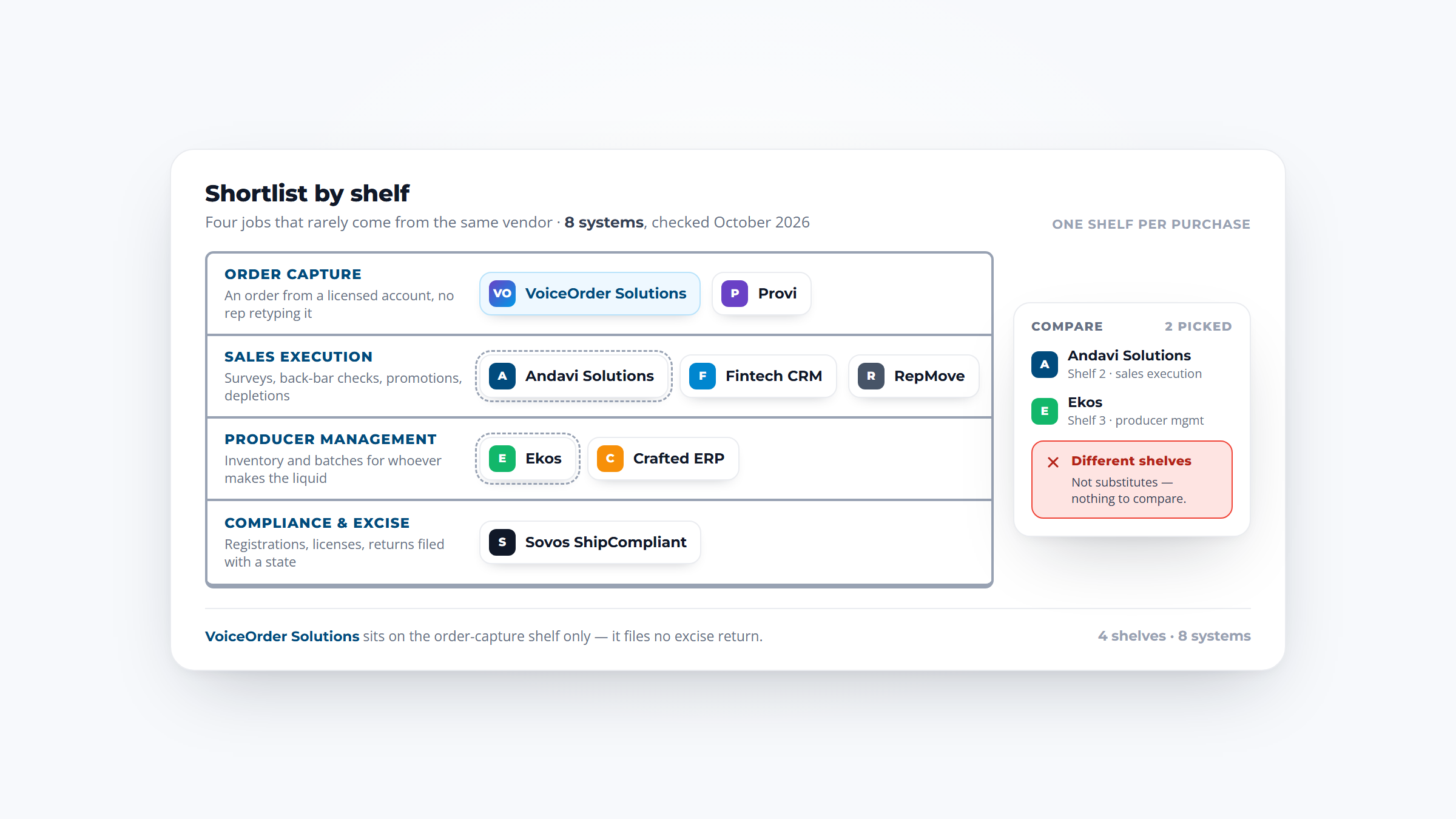
Upstream of all of that sits the order itself, which in seafood still arrives by phone more often than not, and which a separate class of tool such as VoiceOrder Solutions exists to capture.
The eight systems below were researched in October 2026 directly from what each vendor publishes. Seafood distribution software is not one category but three: five of these are full ERP systems, two are traceability platforms, and one is a capability suite you add to an ERP you already have. The table says which is which, because picking the wrong class is the most expensive mistake available here.
ERP for seafood processing is food manufacturing software with four additions, and a system either has them or works around them.
The first is dual-unit inventory. The system has to hold a quantity in cases and a quantity in pounds or kilograms at the same time, adjust the weight when the product is actually weighed, and keep the invoice and the stock record consistent afterward.
The second is intake from a vessel or a farm. Wild-catch and aquaculture receipts carry data no general ERP has a field for: vessel, catch location, catch date, species and grade, captured at offloading and carried forward into production and settlement.
The third is yield. Whole fish becomes fillets, portions and trim at a rate that varies with the quality of what came in, and a system that cannot tie yield variance back to incoming raw material cannot tell you which supplier is actually cheap.
The fourth is traceability depth, which is where most of the regulatory pressure on seafood ERP software lands. Distributors already running general food traceability software usually find it handles the recall paperwork and none of the first three.
The table compares what class of software each one is, how it handles catch weight, how far its traceability reaches, and what it costs. Software class is the first column to read, because an inventory add-on and a full ERP solve different problems at different prices.
| System | Best for | Software class | Catch weight | Traceability reach | Price |
|---|---|---|---|---|---|
| inecta | Processors and distributors wanting one system | ERP on Dynamics 365 Business Central | Native across purchase, processing, warehouse, sales | Vessel to customer, including SIMP and First Land-Based Receiver | No rate card, but a stated $150,000 budget floor |
| CAI Software | Established processors with cold storage | ERP, proprietary | Yes, through processing and distribution | Catch or procurement through to finance | Not published |
| VISCO | Seafood importers | ERP, proprietary | Yes, reconciled at weigh-out | Packer, on the water, cold storage, customer | Not published |
| VAI S2K Enterprise for Food | Meat, poultry and seafood distributors together | ERP, proprietary | Yes, with broken case tracking | Lot and date tracking with FIFO and FEFO | Not published |
| Crystal Systems | QuickBooks shops wanting seafood depth | ERP built on Acctivate and QuickBooks | Yes, in fish and seafood inventory | Head to tail, raw delivery to delivery | Not published |
| Folio3 FoodTech | Distributors already on NetSuite or Dynamics | Capability suite plus ERP implementation | Yes, floor to invoice | FSMA 204 records, HACCP, recall | Not published |
| BlueTrace | Shellfish producers and small processors | Traceability platform | No | Tags, labels and FDA receiving and shipping logs | Not published |
| Trace Register | Importers managing supplier chains | Traceability platform | No | Global chain of custody across suppliers | Not published |
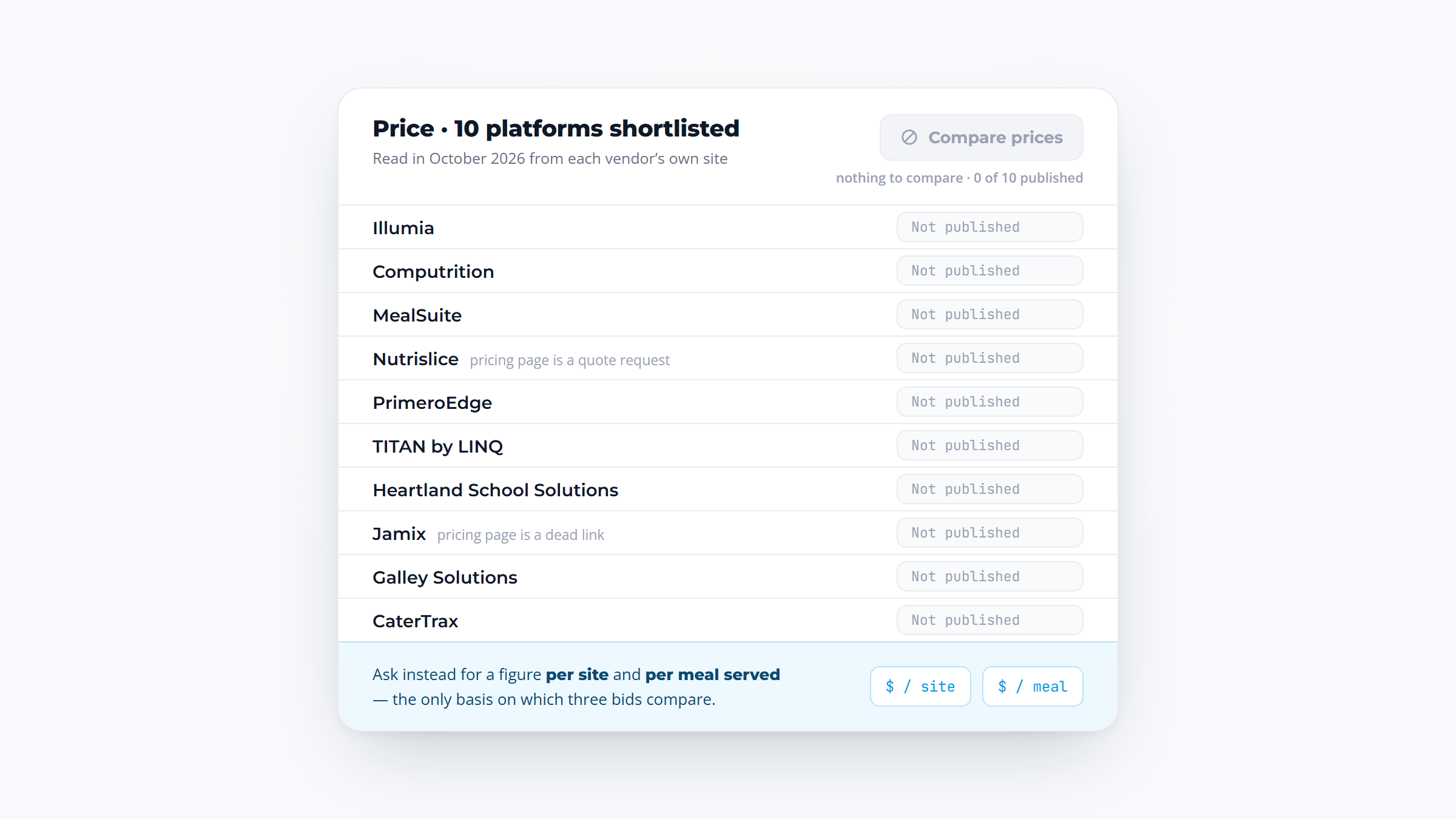
Not one of the eight publishes a rate card, and only inecta names a figure of any kind. That is a category fact rather than a mark against any vendor, and it means every shortlist here ends in a scoping conversation. The entries below are organized so you can rule classes out quickly.

Overview: inecta is ERP for seafood processing and distribution, built on Microsoft Dynamics 365 Business Central, with seafood as its deepest vertical. It covers catch and harvest intake, processing, cold chain and distribution in one system, with Microsoft handling the financial core underneath.
Its intake handling is the most specific of any system here.
Key features:
Pricing: No rate card. Its licensing page does name a floor, though: inecta puts the minimum budget it normally works with at $150,000, rising with the number of users and devices. A paid requirements and gap analysis workshop comes before any proposal, and licensing runs in four levels, two for distribution and wholesale and two for manufacturing and processing.
Pros: Runs on Microsoft's Dynamics 365 Business Central platform, deepest intake and settlement handling here, genuine yield tracking through filleting and portioning, offices across North America and Europe.
Cons: No published price, Business Central licensing is a separate cost, more system than a pure importer needs.
Why it earns a place here: It documents the offloading dock in more detail than anything else here, down to the vessel, the location, the date, the species and the grade.
Final verdict: The strongest all-round choice for a business that both processes and distributes.

Overview: CAI has been selling ERP for seafood processors and distributors since 1978, and its seafood product covers catch or procurement, production, inventory, cold storage, logistics and finance in a single platform.
CAI also sells its cloud seafood product under a separate brand, which is worth knowing before you compare quotes.
Key features:
Pricing: Not published. CAI sells through a seafood specialist and scopes each deployment.
Pros: Longest track record in the category, strong cold storage handling, a cloud option under the Maritech brand, EDI included.
Cons: No published price, the multi-brand portfolio makes it harder to tell which product you are actually buying, heavier than a small processor needs.
Where it fits: Established processors where cold storage and logistics are as complex as production.
Final verdict: A safe choice with the deepest institutional memory of the seafood supply chain.

Overview: VISCO is built specifically for seafood importing, and it says so plainly: standard ERP applications do not handle catch weights, lot-level tracking and in-transit visibility out of the box, so VISCO built for that case instead of generalizing.
Its view of inventory stretches further upstream than the warehouse.
Key features:
Pricing: Not published.
Pros: Purpose-built for importers, in-transit visibility most systems lack, honest about what generic ERP cannot do, strong lot handling.
Cons: No published price, narrower fit for a domestic processor, less production depth than inecta or CAI.
Why buyers shortlist it: Importers spend months with product in somebody else's custody, and VISCO treats that as inventory rather than as a gap.
Final verdict: The clearest fit in this list if most of your product arrives by container.

Overview: VAI's S2K Enterprise serves meat, poultry and seafood distributors together, which suits protein houses carrying more than one category. It pairs catch weight processing with the commercial machinery distributors need.
Its strength is the distribution side rather than the processing floor.
Key features:
Pricing: Not published.
Pros: Covers several protein categories in one system, strong rebate and billback handling, real distribution functionality, established vendor.
Cons: No published price, less seafood-specific than inecta or VISCO, intake handling is lighter.
Its real strength: Rebates and billbacks, which quietly decide margin for any distributor selling branded protein.
Final verdict: Choose it when seafood is one of several protein lines rather than the whole business.

Overview: Crystal Systems sells Clarity, a seafood ERP built on top of Acctivate and QuickBooks rather than on its own financial core. That makes it the lowest-friction option for a business already running QuickBooks.
Its processing controls are more developed than the price bracket suggests.
Key features:
Pricing: Not published, and the Acctivate and QuickBooks licensing sits alongside whatever Clarity costs.
Pros: Keeps an existing QuickBooks ledger, real cut room functionality, purpose-built for fish and seafood, lighter implementation than a full ERP replacement.
Cons: No published price, three products to license and support, QuickBooks sets a ceiling on financial complexity.
Where it beats the alternatives: A processor that wants seafood depth without replacing its accounting system in the same project.
Final verdict: The pragmatic middle path for QuickBooks shops that have outgrown spreadsheets but not their ledger.

Overview: Folio3 FoodTech is the odd entry here, and deliberately so. It sells a food safety and traceability suite with a seafood processing configuration, and it also implements NetSuite and Microsoft Dynamics 365 for food businesses.
That makes it the route for a distributor who does not want to replace an ERP that otherwise works.
Key features:
Pricing: Not published, and the shape of the quote depends on whether you are buying the suite, an implementation, or both.
Pros: Adds seafood capability without an ERP replacement, strong compliance tooling, works with NetSuite and Dynamics, modular.
Cons: No published price, part product and part services engagement, less coherent than a single purpose-built system.
Why it made this list: Plenty of seafood distributors already run a capable ERP and need four seafood-specific things added to it, not a migration.
Final verdict: The right answer when the existing ERP is fine and the seafood specifics are the gap.

Overview: BlueTrace is a traceability platform rather than an ERP, with roots in shellfish tagging. It runs as desktop web and mobile apps alongside rugged waterproof paper and partner label printers.
BlueTrace is the only option here aimed squarely at operations still working from handwritten tags.
Key features:
Pricing: Not published.
Pros: Lowest barrier to real traceability records, hardware designed for the dock, strong shellfish compliance, genuinely usable by small operators.
Cons: No catch weight handling, no financials or inventory valuation, not a replacement for an ERP, no published price.
What it is genuinely good at: Replacing handwritten tags and a shoebox of paper with records that survive an inspection.
Final verdict: The right first step for a producer whose compliance problem is upstream of any ERP decision.

Overview: Trace Register sells ORIGIN, a global seafood traceability platform built on the company's TR5 system and twenty years in the category. Its focus is chain of custody across suppliers rather than operations inside your own walls.
That suits importers managing many suppliers in many countries.
Key features:
Pricing: Not published. Note that the ROI figures on its homepage are the vendor's own and are not independently audited.
Pros: Deep supplier chain-of-custody coverage, long track record, built for international sourcing, useful for market access claims.
Cons: No catch weight or inventory functionality, no published price, requires supplier cooperation to be worth anything, vendor-stated ROI claims.
Where it fits: Importers whose risk sits in the supply base rather than on the processing floor.
Final verdict: A supplier-facing layer, best bought alongside an ERP rather than instead of one.
Research for this list ran in October 2026 and stayed on the vendors' own domains. No pricing, feature or ownership claim here came from a software directory, because directories in this category carry stale brand names and superseded product lines.
Three tests decided the list, and the first one removed more candidates than the other two combined.
A system had to publish a seafood page describing seafood problems. Catch weight, lot-level intake, species and grade, cold chain. A food-manufacturing page with seafood in a vertical list did not qualify.
A system had to be a distinct company. One candidate was dropped when its own logo turned out to read "a CAI Software solution", which would have put the same business on this list twice under two names. Another was dropped because its homepage mentioned seafood once.
And a system had to be evaluable. Where a vendor publishes nothing on price, this article says so rather than estimating, and the same discipline applies to capability: BlueTrace and Trace Register are marked as having no catch weight handling because they do not claim any. Distributors comparing these alongside general inventory tracking software should apply the same test to those tools, which mostly fail it.
Catch weight is the single feature that decides whether seafood software works. VISCO describes the mechanics plainly: a company knows how many cases it holds and how much weight it holds, but does not know the specifics of each case until it is weighed on the way out the door.
That creates a three-way reconciliation most ERPs cannot do. The quantity shipped has to change after the weight ticket arrives, the invoice has to bill the actual weight at the agreed per-unit price, and the remaining inventory has to stay correct in both cases and pounds. Get one of the three wrong and you have either a credit note or a stock count that drifts every week.
The drift compounds quietly. A half-pound variance per case across 400 cases a day is 200 pounds a day unaccounted for, which looks like shrinkage, reads like theft and is actually an arithmetic failure. Distributors chasing inventory accuracy problems in seafood should check the catch weight handling before they check the warehouse.
Tare weight is the second half of it. Ice, packaging and the box itself are weight you receive and do not sell, and a system that deducts tare at receipt but not at transfer will tell you a different story at every step.
Two federal regimes apply to imported seafood and they are routinely confused, including by vendors. They come from different agencies, cover different products and sit on very different timelines.
SIMP is enforced today and has been for years. It is a risk-based traceability program covering thirteen seafood species groups and more than 1,100 unique species, which NOAA says amounts to about half of all seafood imports into the United States.
Importers must report key data from the point of harvest to entry into US commerce, through the International Trade Data System. Compliance began on January 1, 2018 for the first eleven species groups, and on December 31, 2018 for shrimp and abalone. This is not a future obligation.
FSMA 204 is the one with a moving date, and the detail matters because most roundups state it wrong. The original compliance date for the rule's recordkeeping requirements was January 20, 2026. The FDA then proposed extending it by 30 months to July 20, 2028.
What actually binds is narrower than an extension. Congress, through the Continuing Appropriations, Agriculture, Legislative Branch, Military Construction and Veterans Affairs, and Extensions Act of 2026, directed the FDA not to enforce the rule before that same date, and the FDA has said it intends to comply with that directive.
The practical reading for a distributor is that enforcement will not arrive before July 20, 2028, and that the records the rule asks for are the same records SIMP, your customers and your insurer already want. Several vendor websites simply say "the July 2028 deadline", which is close enough to act on and not accurate enough to quote.
With no rate card anywhere in this list, the useful question is what shape the cost takes rather than what the number is.
| What you are buying | Typical systems | Cost structure | What drives the number |
|---|---|---|---|
| Full seafood ERP | inecta, CAI, VISCO, VAI | Licensing plus a scoped implementation | Sites, users, and whether you process or only distribute |
| ERP on an existing ledger | Crystal Systems | Three licenses plus implementation | Acctivate and QuickBooks seats alongside Clarity |
| Capability added to your ERP | Folio3 FoodTech | Modules plus services | Which modules, and whether they implement the ERP too |
| Traceability only | BlueTrace, Trace Register | Subscription, usually per site or per supplier | Number of locations or suppliers in the chain |
The structural point is that the cheapest-looking option is not always the smallest total. Crystal Systems keeps your ledger but adds two more products to license and support, and a traceability platform that costs little on its own leaves the catch weight problem entirely unsolved.
Ask every vendor for a three-year total that includes implementation, platform licensing and the data migration, because lot history and supplier records are the slowest part of any move. The same holds when you cost inventory visibility across sites, which is usually quoted separately.
The three classes solve different problems, and the choice is usually made by what is already in place.
Buy a full ERP for seafood processors when the financials, inventory and production are all straining at once, when you process as well as distribute, and when you are prepared for a project measured in months. That is inecta, CAI, VISCO and VAI.
Buy a traceability platform when the pressure is a customer requirement or an inspection and the back office otherwise works. BlueTrace and Trace Register cost less, install faster and will not touch your margin reporting.
Buy an add-on when your ERP is sound and the gaps are specific. Folio3 FoodTech exists for this case, and Crystal Systems is a variation on it for QuickBooks shops.
The mistake worth avoiding is buying traceability software to solve a catch weight problem. They look adjacent on a feature list and they are not, which is why the table above carries a software class column at all. A catch weight gap shows up at the scale in your warehouse processes, and a traceability gap shows up later, in the lot records.
Every system above assumes the order already exists in digital form. In seafood it frequently does not. The sales desk fields calls from chefs and buyers, often late and often asking what landed today, and a salesperson writes the order down and keys it in. That conversation is where the day's prices and substitutions get agreed.
VoiceOrder Solutions sits at that point. It is bought by food distributors, and the distributor hands each of its accounts an app loaded with the catalog that account actually buys from, at the prices already agreed with it. Those accounts order by voice in the app, and what reaches the sales desk carries an order number and a timestamp.
Inventory visibility is the part that matters in this category. VoiceOrder Solutions gives the distributor real-time visibility tied to order activity, which means fewer stockout surprises and fewer substitution calls.
VoiceOrder Solutions is not an ERP and does not try to be. It holds no lot records, calculates no yield, prices no catch weight and is not the system of record for stock, which stays with whichever system above you choose.
What it changes is the quality of the order before any of them sees it, and that order is also the demand signal your stock replenishment rules run on. The product is quote-based, so a figure comes from a conversation rather than a page.
Book a VoiceOrder Solutions demo
Seafood industry ERP platforms rule each other out faster than they rule each other in, so work from your own shape rather than from the feature lists.
If you import, start with VISCO and Trace Register. If you process, start with inecta and CAI. If you carry several proteins, VAI. If you run QuickBooks and want to keep it, Crystal Systems. If your ERP is fine, Folio3 FoodTech. If you are still writing tags by hand, BlueTrace, and revisit the rest in a year.
One scenario separates the shortlist faster than any demo script. A container arrives with a short-weight pallet of one species, a lot number assigned by the cold store, and a customer who ordered by the case and will be invoiced by the pound.
Ask every vendor to run that end to end, through receipt, weigh-out, invoice and the traceability record.
Among seafood distribution software built for businesses that process as well as distribute, inecta is the strongest all-round option here, because it handles catch weight natively across purchasing, processing, warehousing and sales rather than in one module. Importers are usually better served by VISCO, which tracks inventory from the packer and while product is on the water. If the requirement is records rather than inventory valuation, BlueTrace and Trace Register cost less and install faster.
Crystal Systems is the usual answer, because Clarity runs on Acctivate and QuickBooks and lets a small processor keep its existing ledger instead of replacing everything at once. BlueTrace is the step before that, covering tags, labels and compliant receiving and shipping logs without touching the back office. Neither will carry a multi-site operation, which is the point at which inecta or CAI starts making sense.
Every ERP in this list records lot-level traceability, which is the foundation for both, and inecta and Folio3 FoodTech name FSMA 204 explicitly. SIMP is the narrower requirement: it applies to thirteen species groups on import and has been enforced since 2018, so ask specifically whether a system captures import data against approved species lists at receipt. A system can be fully capable for FSMA 204 and have nothing for SIMP.
Only inecta names a figure at all, and what it names is a minimum budget of $150,000. Every other vendor quotes, so a range would be invention.
What you can establish is structure: a full ERP is licensing plus a scoped implementation, a traceability platform is a subscription usually priced per site or per supplier, and a capability suite is modules plus services. Ask for a three-year total including implementation and data migration, since lot and supplier history is the slowest part to move.
Partly, and this is where expectations should be set carefully. These systems hold customer-specific price lists and will apply the right price to the right account, but the daily market price itself is usually agreed between a salesperson and a buyer and then entered.
Distributors who want that step to stop being manual tend to look at order intake tools alongside the ERP, where each account's own catalog holds the prices the distributor has set for it.
Whichever system holds the lot and the yield, the order still has to arrive in a form it can read, and that is a separate decision from this shortlist.