.webp)
Key takeaways:
In 2026, food traceability software is changing how orders get handled. This kind of software tracks food from farm to table, making the process clearer and faster. It helps businesses:
With this technology, orders become more accurate and reliable. Food traceability is no longer just a regulatory requirement. It is a practical tool for smoother, safer food ordering.
Food traceability software is a digital system that helps track food products from where they start to where they end up. It records every step of the food's journey, such as farming, processing, shipping, and selling. This way, businesses can see exactly where each item comes from and what happened to it along the way.
This kind of software makes managing food orders easier and safer. It helps companies:
With food traceability software, tracing a food item is fast and simple. It saves time and reduces errors when gathering information. This means businesses can respond quicker to customer questions and supply chain problems.
Most importantly, it builds trust with customers by showing transparency. People feel safer buying food when they know exactly where it's from and how it's handled.
In short, food traceability software acts like a digital logbook for food products. It keeps everything organized and easy to access, helping food companies run smoother operations and deliver better orders.
Food traceability software makes tracking ingredients easy. It helps spot problems fast, improves product quality, and speeds up deliveries. These improvements lead to fewer mistakes, happier buyers, and better orders overall.
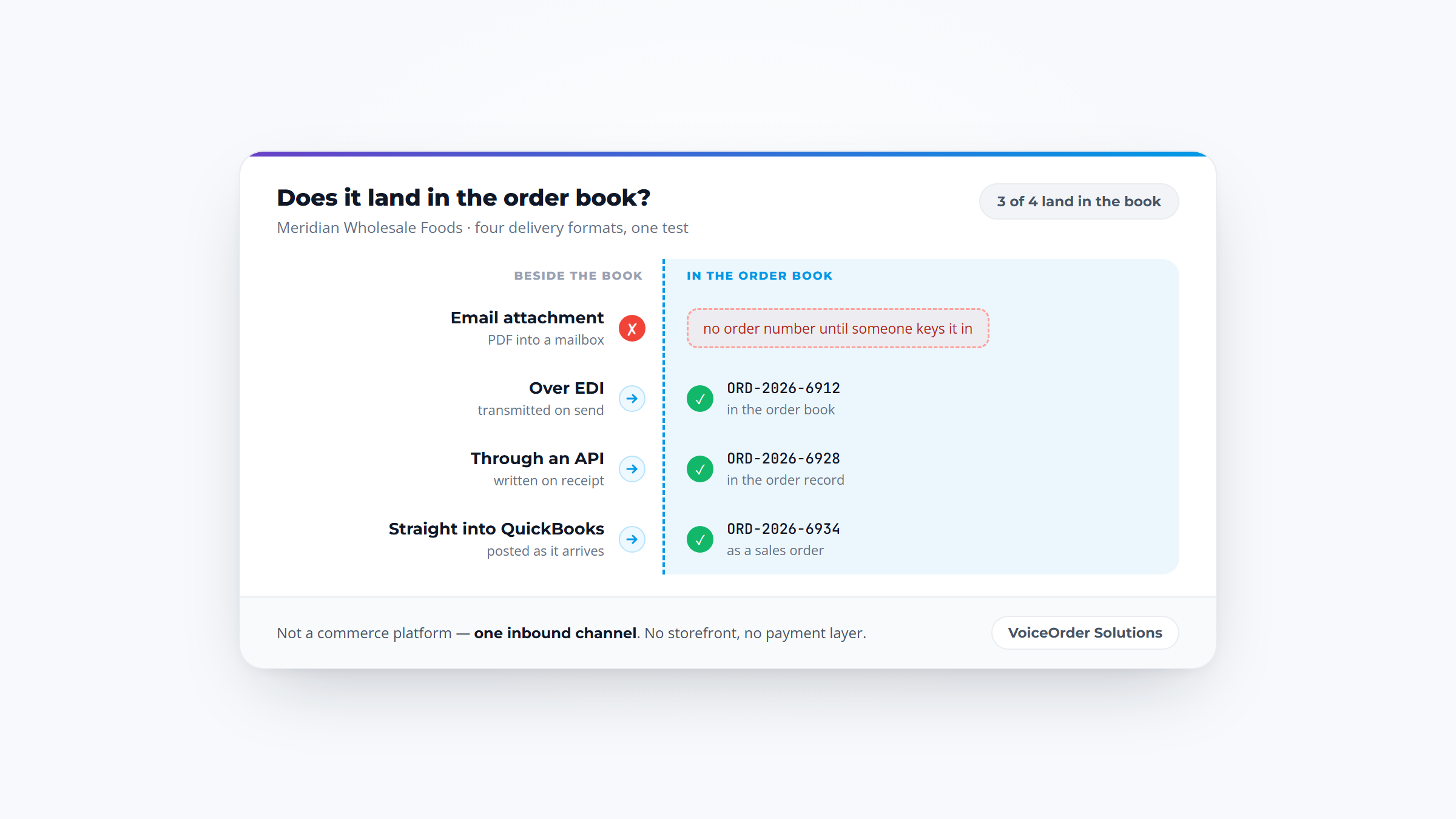
For food distributors managing procurement alongside traceability, a tool like VoiceOrder Solutions can complement traceability platforms by handling the ordering step: capturing voice commands from buyers, creating a timestamped record of what was ordered and when, and transmitting the order directly to the distributor (without touching lot-number tracking or supply chain provenance).
| Tool Name | Best For | What It's Mainly Used For | Key Features | Main Limitations | Ease of Use | Pricing | Our Rating |
|---|---|---|---|---|---|---|---|
| FoodLogiQ | Compliance and traceability | Managing supply chain compliance and recalls | Traceability across supply steps, recall management, compliance tools | Pricing not transparent, setup time | Medium | Custom | ⭐⭐⭐⭐⭐ |
| TraceGains | Ingredient sourcing and compliance | Managing supply insights and packaging specs | AI supply chain intelligence, packaging specs, digital COA handling | Pricing not transparent, complex setup | Medium | Custom | ⭐⭐⭐⭐ |
| SafetyChain | Process control and audits | Tracking food plant processes and compliance | Real-time SPC, automated CAPA, supplier compliance tracking | Setup takes weeks, costly for small ops | Hard | Custom | ⭐⭐⭐⭐⭐ |
| FoodReady | Food safety with consulting | Managing safety, quality, inventory, traceability | HACCP plan builder, batch tracking, supplier docs | May be complex for startups, costly | Medium | Base + monthly | ⭐⭐⭐⭐ |
| FoodDocs | Automated food safety tasks | Automating food safety checks and compliance | Automated task monitoring, sensor integration, recall logging | Setup time, limited offline support | Easy | Monthly fee | ⭐⭐⭐ |
| Wherefour Manufacturing ERP | Manufacturing and inventory | Tracking products and inventory in food production | Full traceability, inventory alerts, MRP forecasting | High cost, steep learning curve | Medium | $1,500+ / month | ⭐⭐⭐⭐ |
| Allera | Digitizing FSQA paperwork | Streamlining food safety and quality paperwork | Digital FSQA forms, document control, supplier management | Pricing unclear, complex for small teams | Medium | Custom | ⭐⭐⭐⭐ |
| FoodChain ID | Certification and testing | Managing compliance, testing, product development | Certification services, testing labs, AI product tools | Pricing unclear, complex setup | Medium | Custom | ⭐⭐⭐⭐⭐ |
| Nulogy | Manufacturing operations | Managing production, quality, supplier relations | Real-time data, supplier collaboration, low-code integrations | Expensive, complex for small teams | Hard | Custom | ⭐⭐⭐⭐ |
| Smart Food Safe | Paperwork and compliance | Managing quality and compliance documents | Modular design, automatic tracking, audit integration | Setup up to 12 weeks, complex for small | Medium | Modular pricing | ⭐⭐⭐⭐ |
| SafetyCulture | Workplace operations | Managing inspections, checklists, and tasks | AI checklists, document and asset management, real-time reporting | May be costly, learning curve | Medium | $30 / user/mo | ⭐⭐⭐⭐ |
Overview
FoodLogiQ is a food supply chain management platform built for the food industry. It covers six core areas: compliance, quality, product details, traceability, recalls, and supplier management.
The platform helps food companies gain visibility across the entire supply chain while meeting regulatory requirements. It is best suited to mid-size and enterprise food businesses that need end-to-end supply chain oversight.
Key Features
Pricing
Contact FoodLogiQ for a quote. Pricing is not publicly listed and depends on business size and the modules selected.
Pros & Cons
Why It's a Good Food Traceability Software
FoodLogiQ covers key areas like product tracking, recalls, and compliance, which are important for food safety traceability. It provides detailed oversight that aligns with food processing and manufacturing needs.
Final Verdict
FoodLogiQ is a comprehensive platform with multiple modules built around tracking and compliance, though smaller teams may find it complex and will need to request pricing individually.
Overview
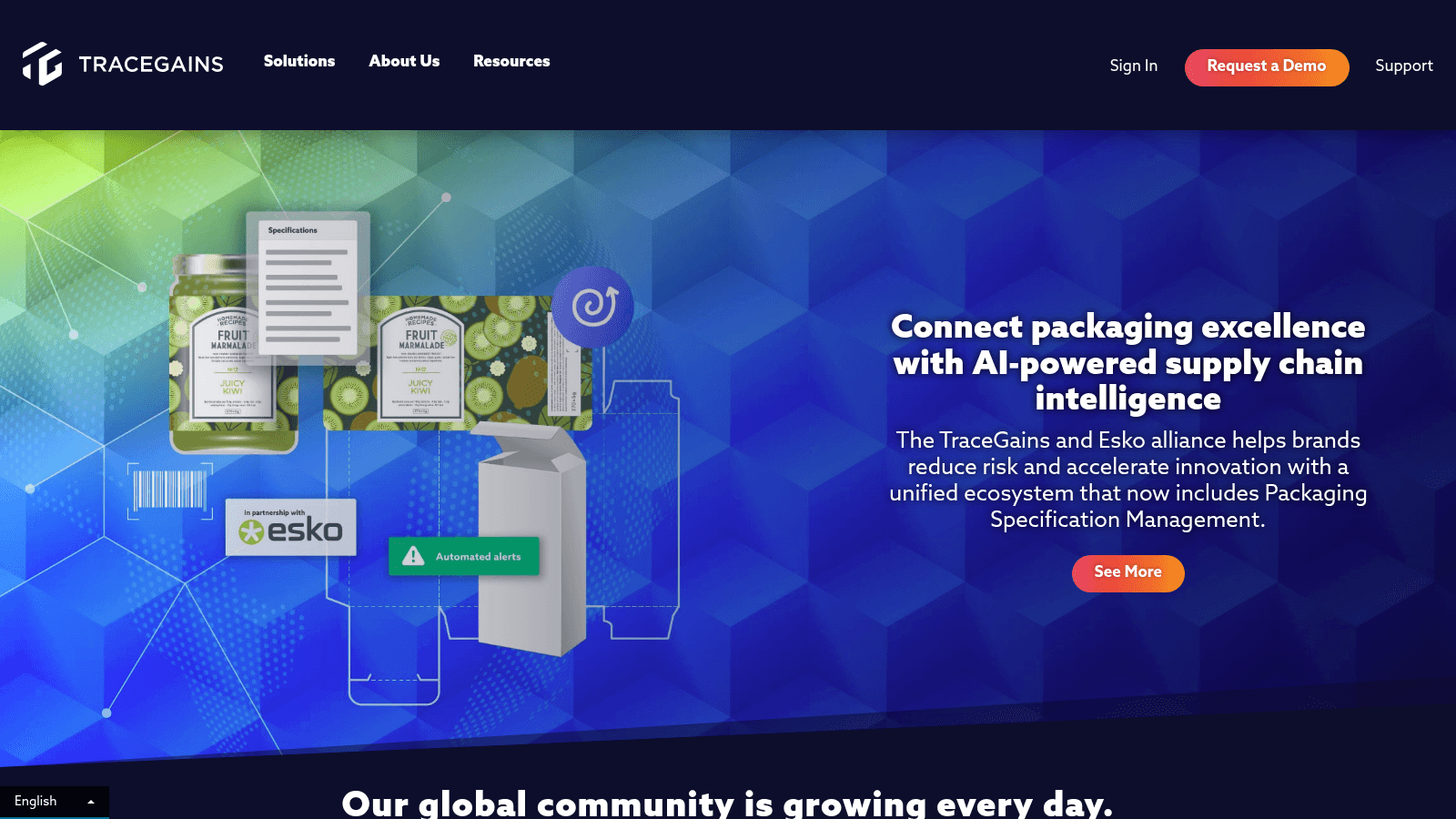
TraceGains connects food and beverage companies through a shared ingredients marketplace. It integrates AI to provide supply chain insights and manages packaging specifications through a dedicated partnership network.
The software supports teams across research, quality control, procurement, production, and compliance. It suits mid-size to large food and beverage manufacturers that need to manage ingredient sourcing and regulatory documentation at scale.
Key Features
Pricing
Contact TraceGains for a quote. Pricing is customized based on company size and the modules required.
Pros & Cons
Why It's a Good Food Traceability Software
TraceGains provides a broad approach to tracking ingredients and compliance across a supply network. It suits companies that need detailed ingredient data and packaging control managed together in one place.
Final Verdict
TraceGains offers a comprehensive view of supply and specification management for food traceability, but may require significant setup investment for smaller organizations.
Overview
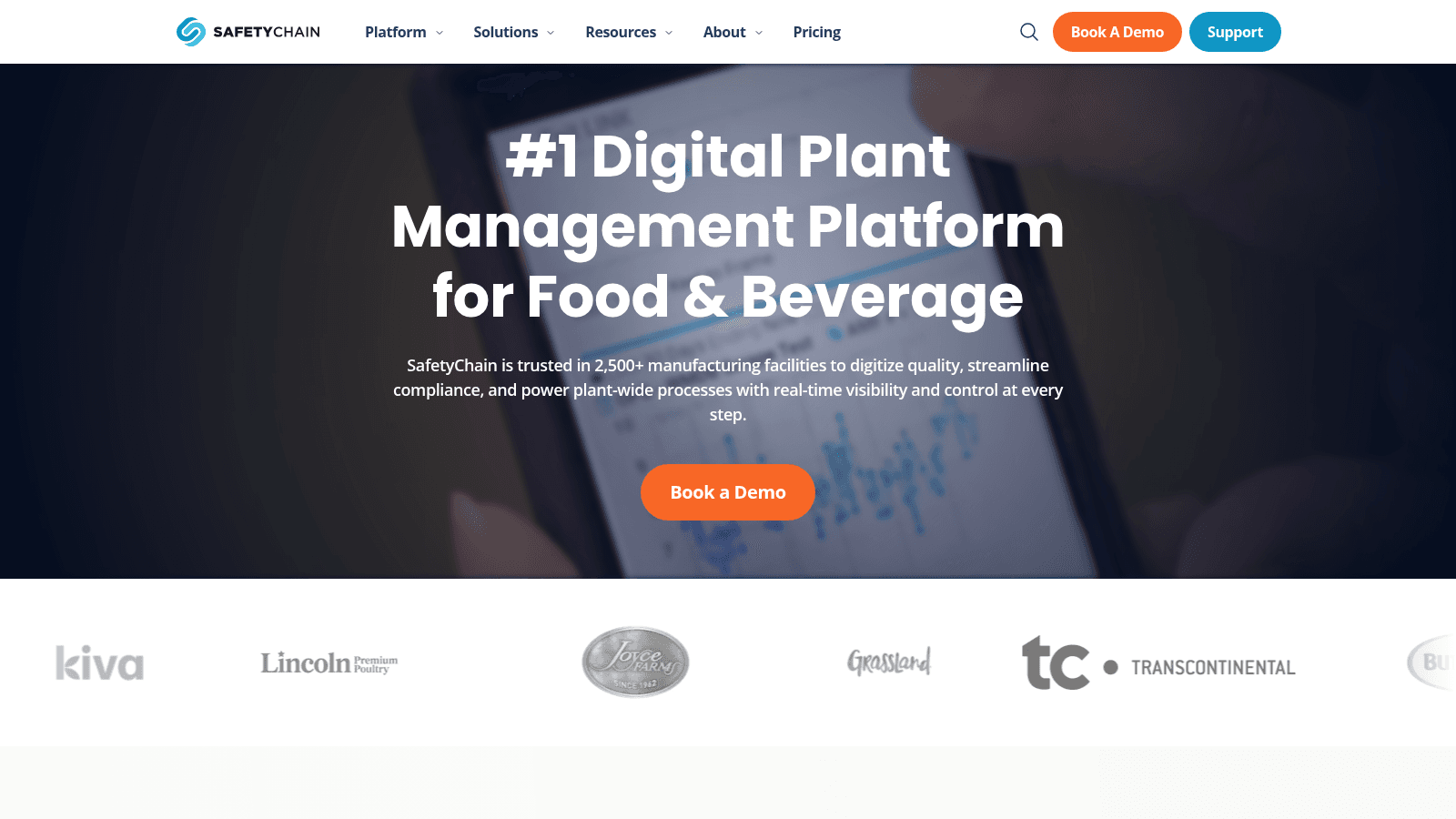
SafetyChain is a digital platform for managing food and beverage plant operations. It helps track processes and compliance in real time using digital forms and automated issue resolution. The system manages supplier compliance and prepares facilities for audits.
It is best suited to mid-size and large food manufacturers that need continuous quality monitoring across production sites.
Key Features
Pricing
Contact SafetyChain for a quote. Pricing is based on facility size, feature selection, and integration requirements.
Pros & Cons
Why It's a Good Food Traceability Software
SafetyChain bundles process control and compliance tools into one platform to improve order accuracy and food safety. Its features focus on tracking food data and reducing manual oversight in manufacturing settings.
Final Verdict
SafetyChain offers a detailed approach to managing food safety and traceability with automation and real-time data, but may require resources that smaller operations find challenging.
Overview
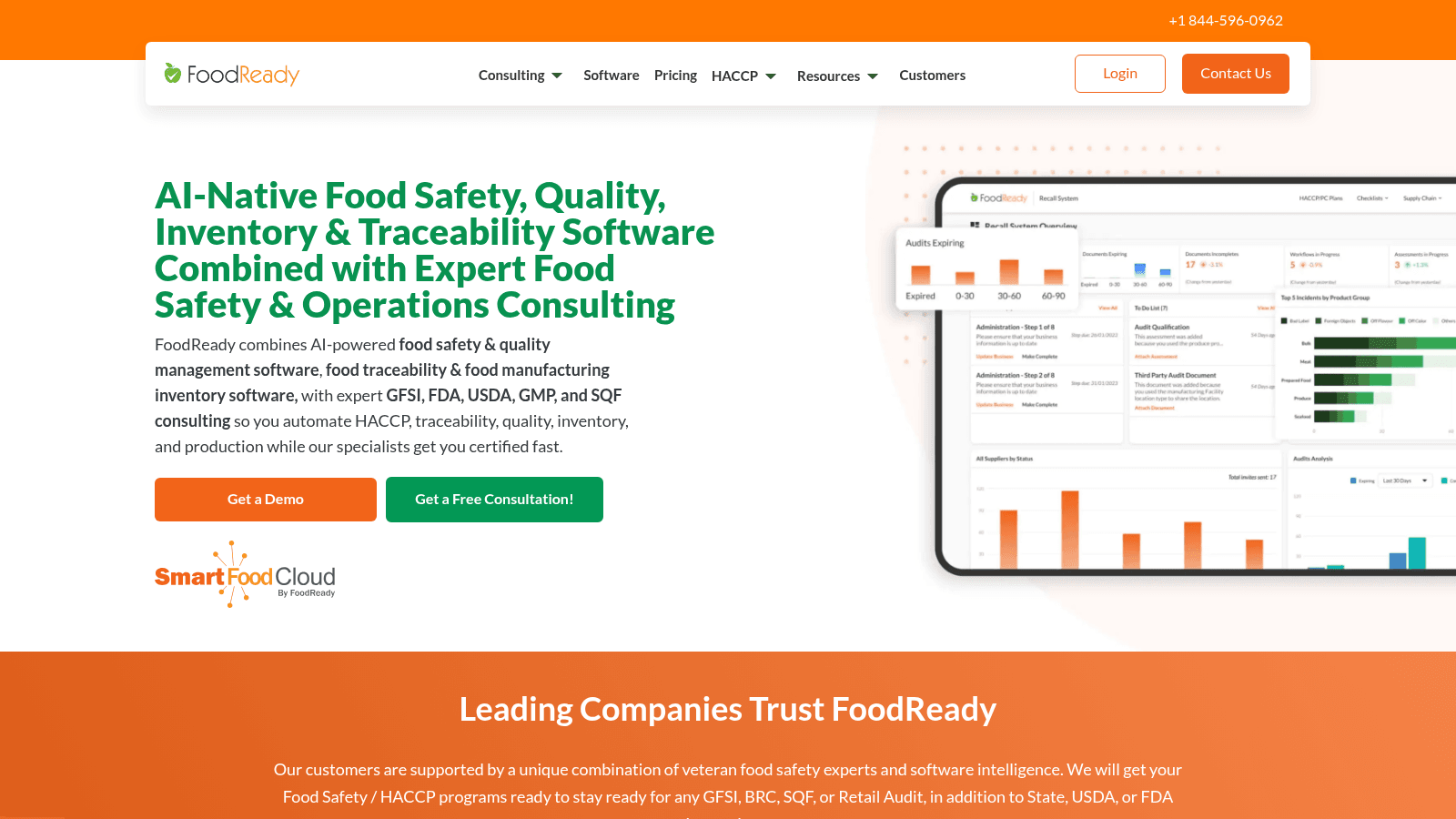
FoodReady is an AI-based food safety, quality, inventory, and traceability management platform paired with expert consulting services. It automates tasks across HACCP planning, traceability, quality checks, inventory, and production management to reduce manual work.
The platform supports compliance with major food safety regulations including FDA, USDA, SQF, and FSMA. It suits food manufacturers and processors that want both software automation and hands-on audit preparation support.
Key Features
Pricing
FoodReady pricing starts at a base fee plus a monthly charge based on the number of users and features selected. Contact FoodReady for a detailed quote.
Pros & Cons
Why It's a Good Food Traceability Software
FoodReady is a good option for businesses that need food traceability software covering safety, quality, and inventory in one system. It integrates regulatory compliance with operational control, backed by consulting support.
Final Verdict
FoodReady provides a detailed food traceability and safety management solution with consulting support, though it may require resources that smaller teams find limiting.
Overview
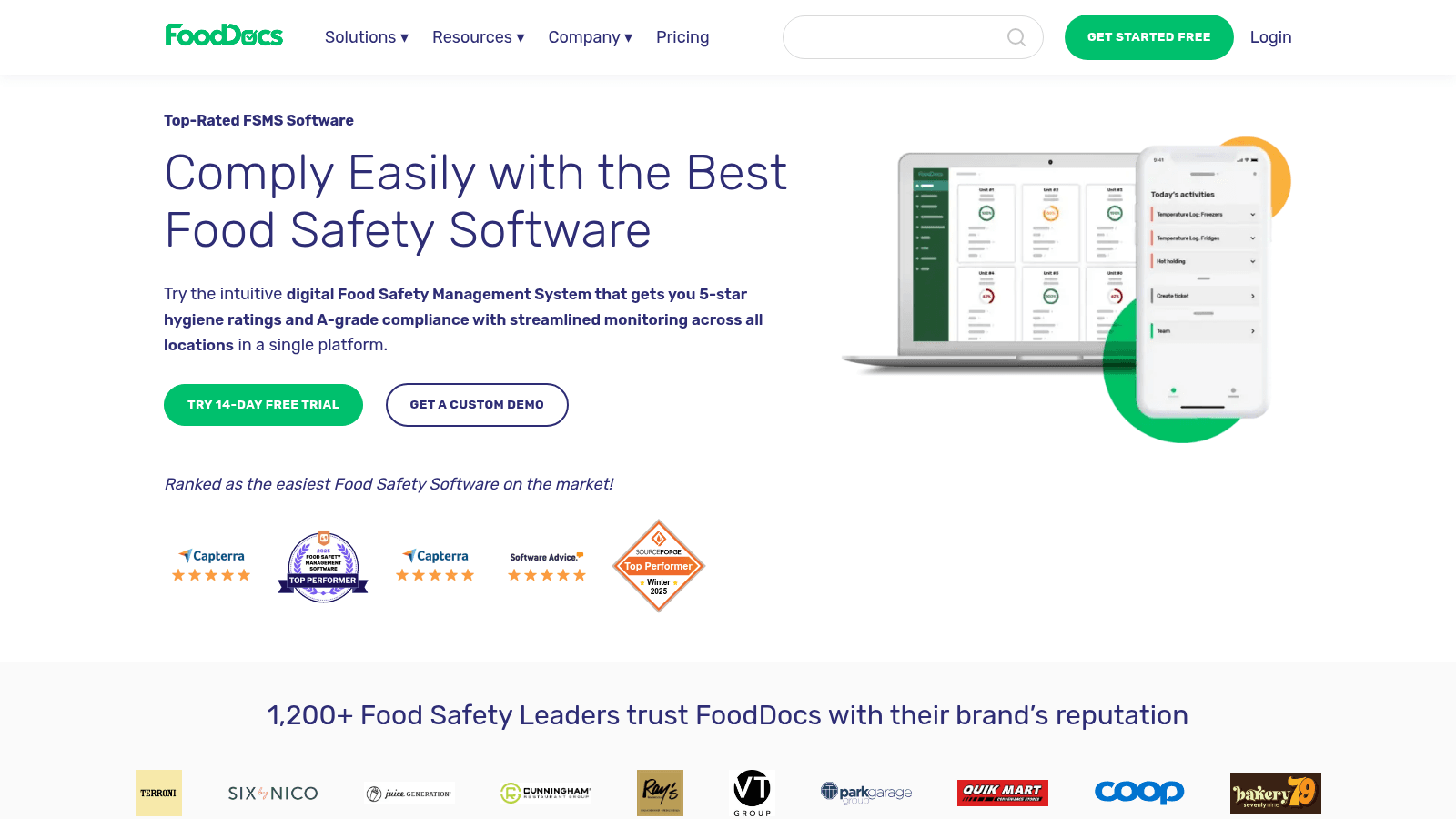
FoodDocs is a digital food safety management system designed for businesses in the UK and North America. It helps companies follow food safety rules quickly, cutting compliance time to around 15 minutes. The system automatically tracks and monitors food safety tasks, saving users roughly 10 hours per week.
It uses real-time dashboards and AI-generated reports to speed up task completion. The software connects with smart sensors for automatic temperature checks and easy recall logging.
Key Features
Pricing
FoodDocs offers a free 14-day trial. Paid plans are available at a monthly fee without long-term contracts. Contact FoodDocs for current pricing details.
Pros & Cons
Why It's a Good Food Traceability Software
FoodDocs centralizes food safety data with real-time updates, making it easier to monitor and report on compliance. Its automation features cut down on routine tasks without requiring full manual oversight.
Final Verdict
FoodDocs provides detailed food safety management with automated features and real-time data, but does require a setup period and a learning curve before teams can use it at full capacity.
Overview
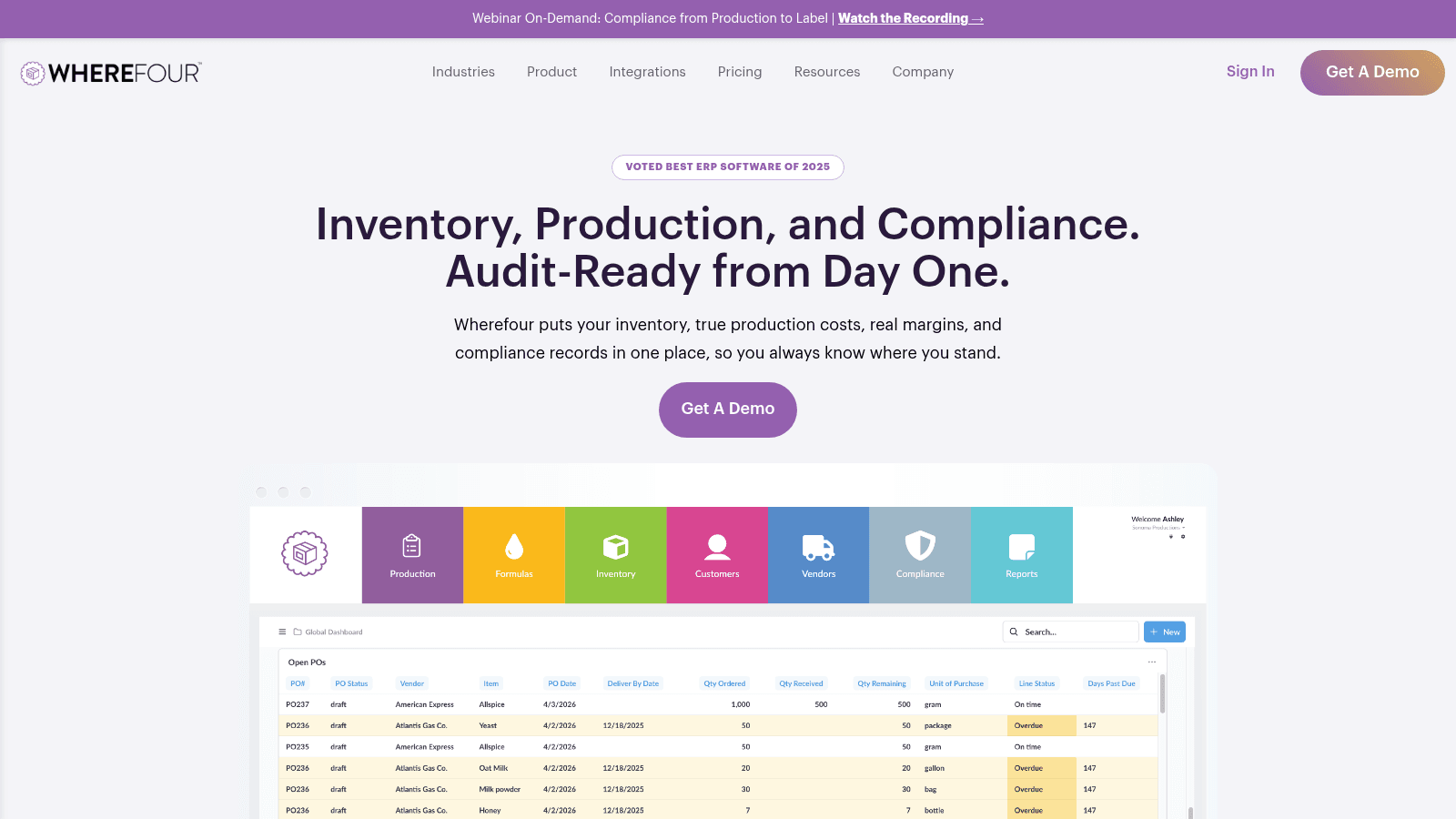
Wherefour is a manufacturing ERP and traceability platform built for food production businesses. It tracks products from raw materials to finished goods, giving teams real-time inventory visibility across multiple locations. The system supports audits, recalls, and material requirements planning (MRP), and automates sales workflows to reduce order entry time. It is best suited to mid-size food manufacturers that need integrated production tracking and procurement management.
Key Features
Pricing
Wherefour pricing starts from approximately $1,500 per month on a tiered model based on user count and features. Additional modules incur extra costs. Contact Wherefour for a detailed quote.
Pros & Cons
Why It's a Good Food Traceability Software
Wherefour combines detailed tracking with inventory control and compliance management, supporting food manufacturers that handle multiple products and sites. Its automation reduces errors in orders and production tracking.
Final Verdict
Wherefour offers a detailed tool for tracking and managing food production with traceability built in, but may be more than needed for small operations with simpler requirements.
Overview
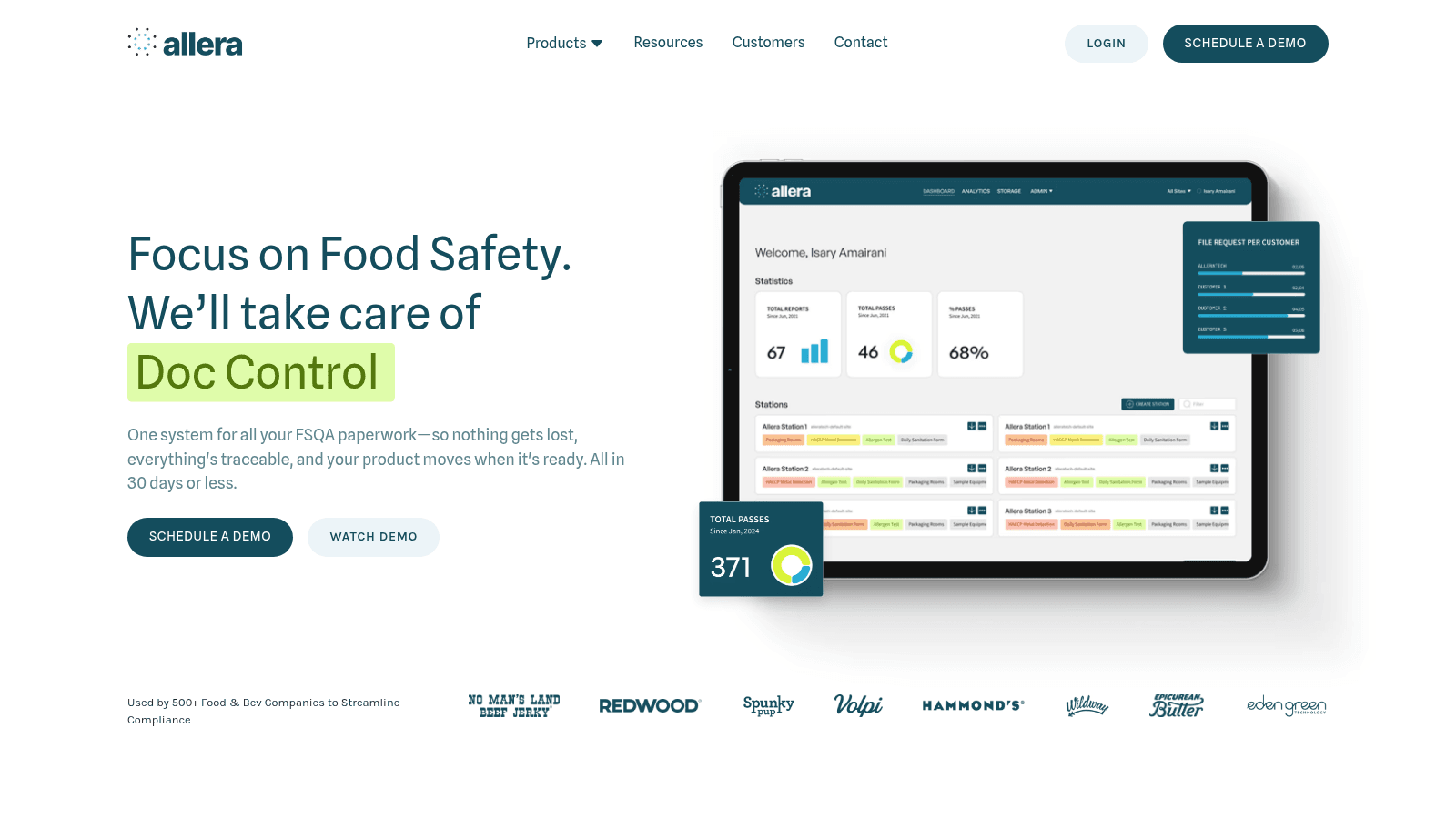
Allera is a platform designed to digitize food safety and quality assurance (FSQA) paperwork for food and beverage companies. It reduces time spent on paperwork by 3–4 hours per person per day and can be deployed in under 30 days.
The platform centralizes documents related to compliance, suppliers, and audits, making batch releases and audit preparation more organized and timely. It is best suited to food manufacturers and processors that deal with high volumes of compliance documentation.
Key Features
Pricing
Contact Allera for a quote. Pricing depends on the number of modules and users selected and is not publicly listed.
Pros & Cons
Why It's a Good Food Traceability Software
Allera organizes FSQA paperwork and supplier documents in one place, which helps with compliance and audit readiness. The AI features help identify missing compliance details faster than manual checks allow.
Final Verdict
Allera focuses on digitizing food safety paperwork and compliance management with AI support, but its complexity and undisclosed pricing may not suit smaller teams.
Overview
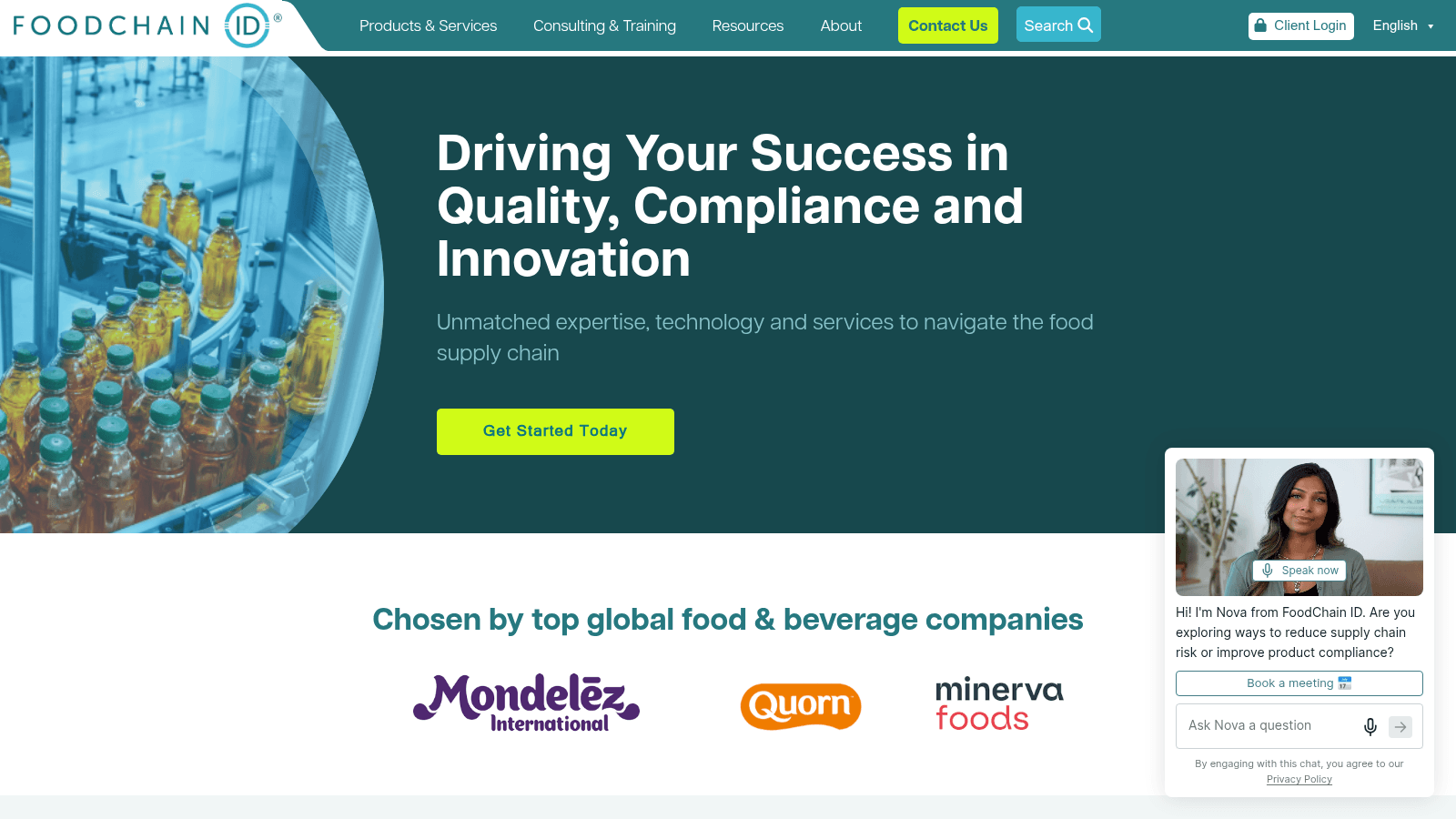
FoodChain ID offers solutions for food, beverage, ingredients, and supplements supply chains. The platform supports regulatory compliance, ingredient safety, and product development through certification services, testing labs, and AI-powered product tools.
It serves food businesses that need to manage certifications (organic, non-GMO, food safety, sustainability), run product safety testing, and navigate global regulatory requirements.
Key Features
Pricing
Contact FoodChain ID for a tailored quote. Pricing depends on the services selected and scales with client needs; detailed figures are not publicly listed.
Pros & Cons
Why It's a Good Food Traceability Software
FoodChain ID combines testing, certification, and compliance data to track food products across supply chains. It integrates well with product development and packaging processes to maintain safety records.
Final Verdict
FoodChain ID addresses a wide range of food supply challenges through multiple services and technology, fitting organizations that need a broad traceability solution covering certification, testing, and regulatory management.
Overview
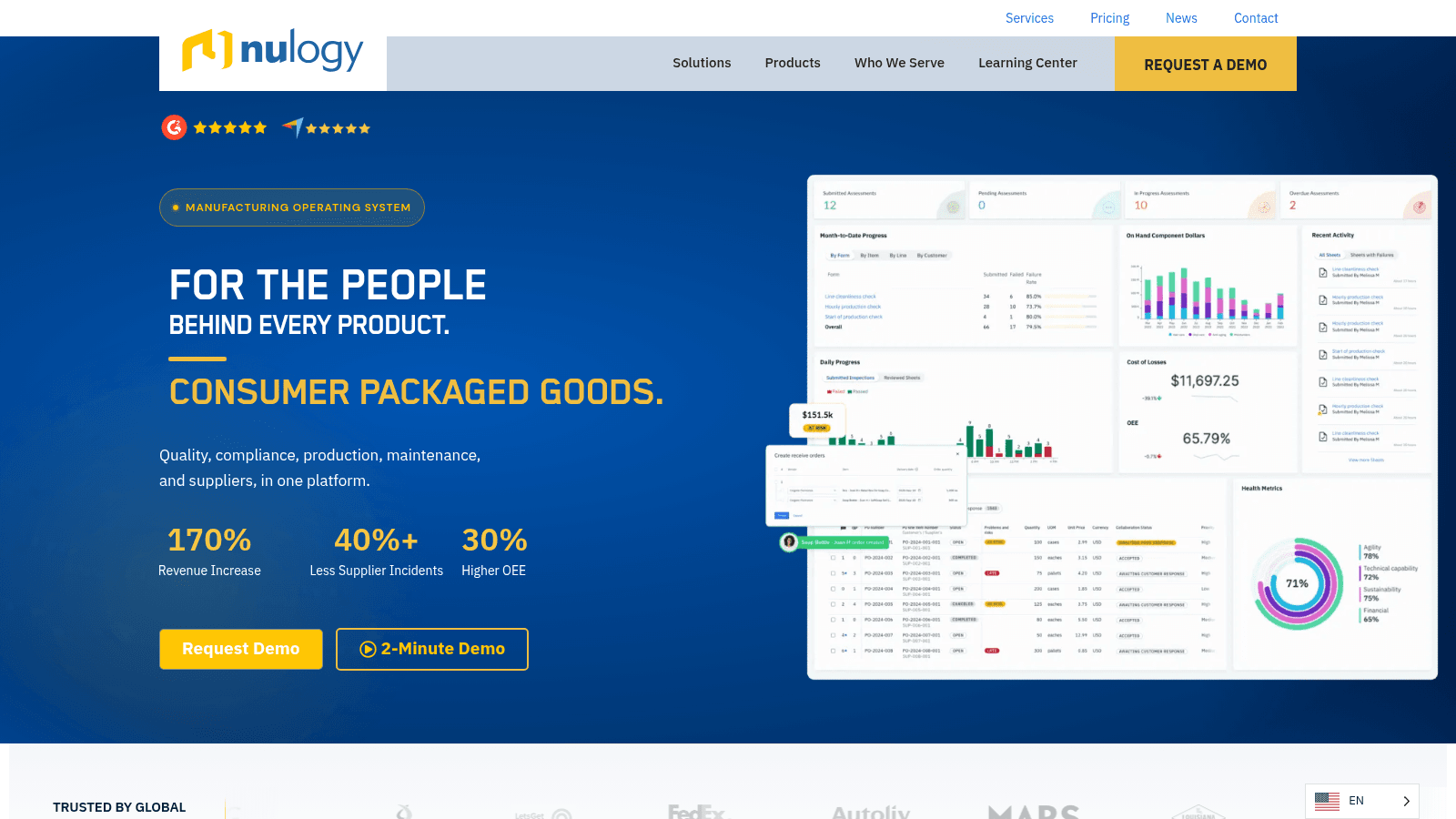
Nulogy is a manufacturing operating system that brings quality, compliance, production, maintenance, and supplier management into one platform. It offers real-time control over operations with live data monitoring and AI-powered risk detection.
The software supports food and beverage manufacturers and co-packers by connecting teams and suppliers on a single system. It is best suited to larger food manufacturers and co-packers that need enterprise-level operational visibility.
Key Features
Pricing
Contact Nulogy for a quote. Pricing is not publicly listed and is customized for enterprise-level implementations.
Pros & Cons
Why It's a Good Food Traceability Software
Nulogy offers detailed real-time tracking and integrates many parts of food manufacturing into a single platform. Its AI features add automated risk detection, supporting food safety traceability in complex production environments.
Final Verdict
Nulogy is a comprehensive system suited for tracking and managing food manufacturing processes, especially in larger operations that need integrated production and supplier oversight.
Overview
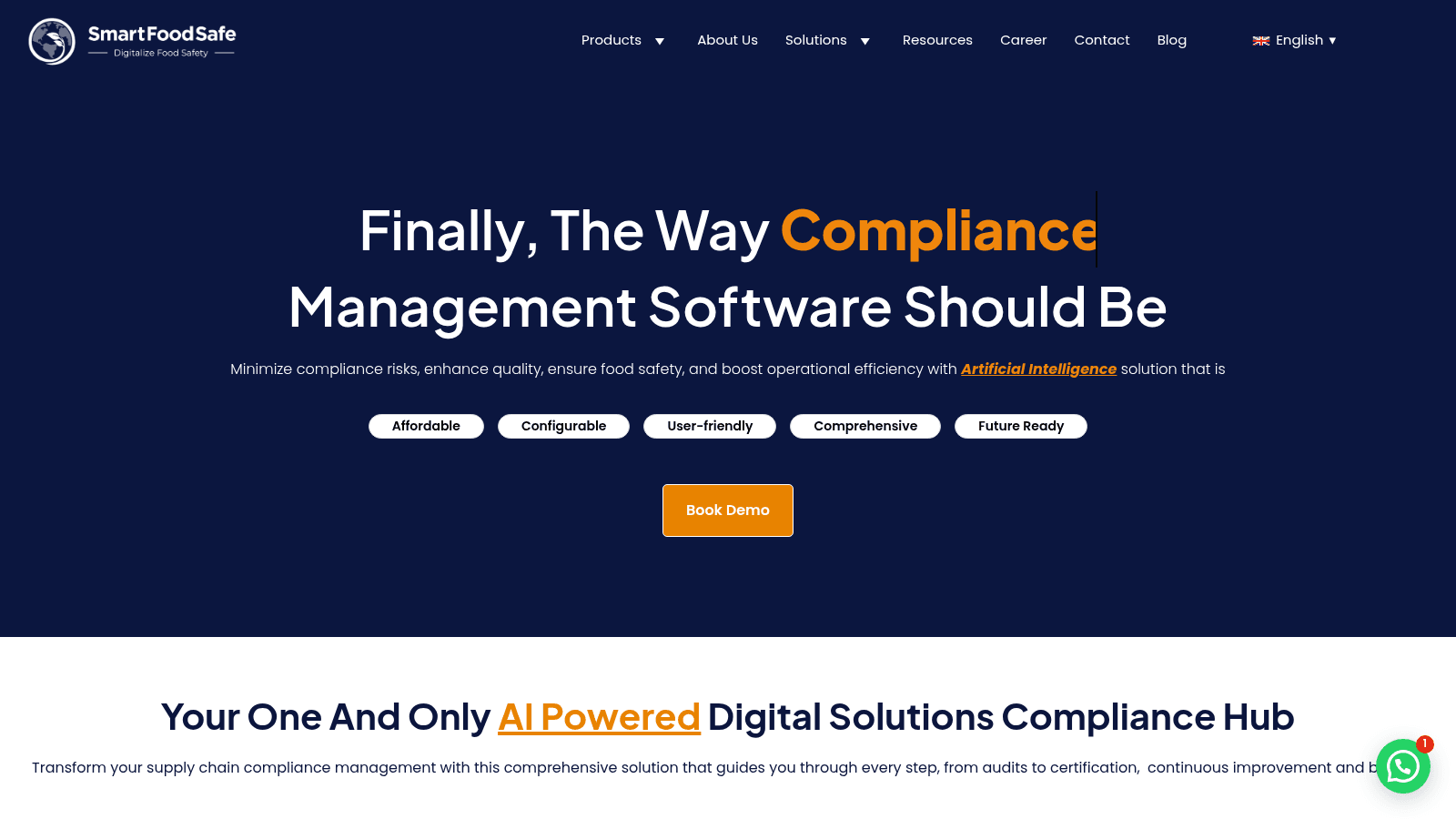
Smart Food Safe is a food safety traceability platform that helps manage compliance and quality in food manufacturing. It reduces paperwork by up to 90% and cuts manual processes by 70%. The software tracks documents throughout their lifecycle and lowers costs related to non-conformance events.
It covers quality, supplier, audit, and compliance management through a modular design, and onboarding typically completes within 12 weeks with expert support.
Key Features
Pricing
Smart Food Safe uses a modular pricing model with no upfront costs, unlimited user access, and a cost cap for predictable expenses. Contact Smart Food Safe for a detailed quote.
Pros & Cons
Why It's a Good Food Traceability Software
Smart Food Safe addresses a range of traceability needs by combining document control and compliance management. The software supports ongoing certification and audit tasks in food processing environments.
Final Verdict
Smart Food Safe provides a structured system for managing food safety and compliance with clear tracking tools and modular options, though the implementation timeline requires planning ahead.
Overview
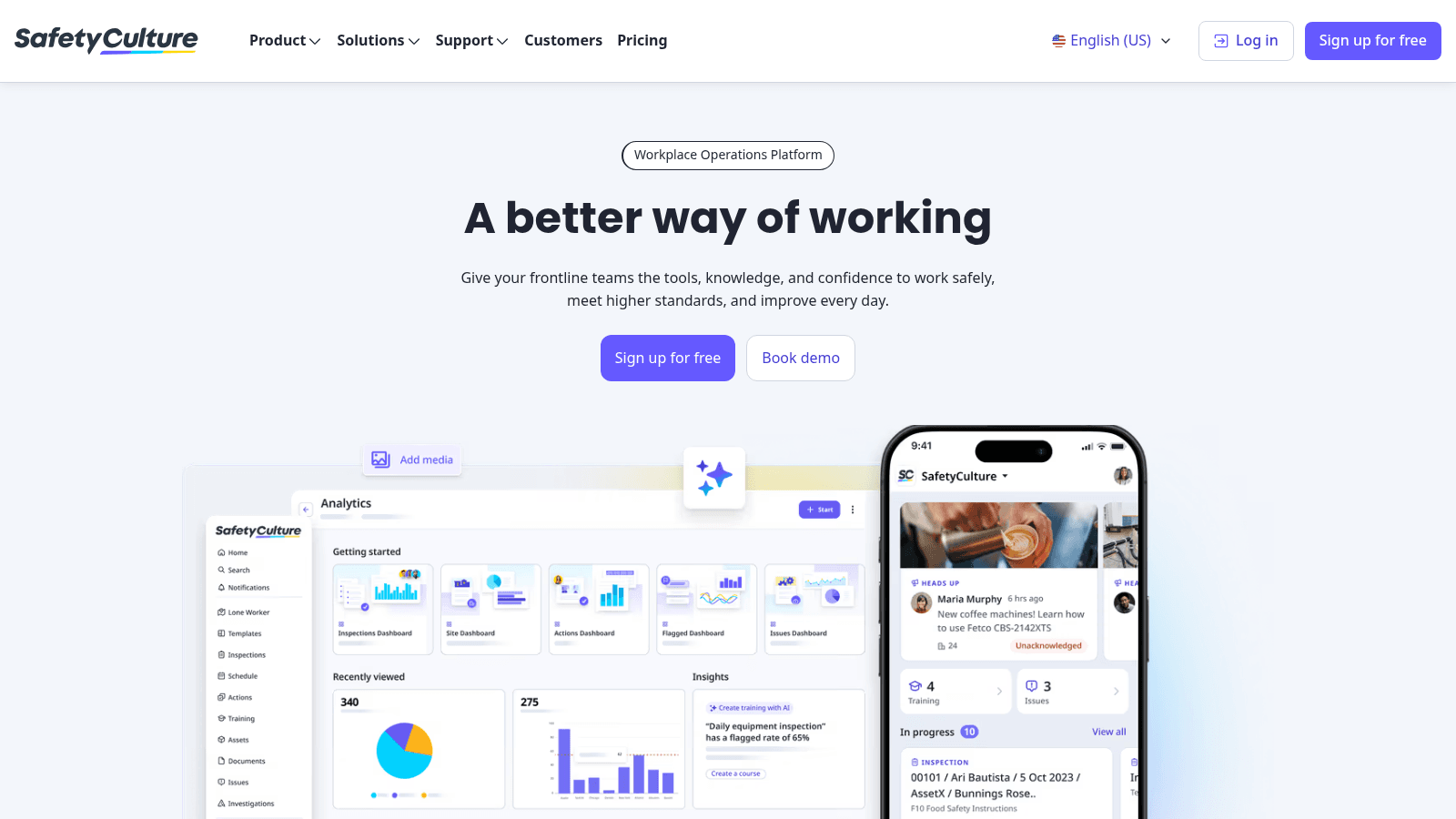
SafetyCulture is a mobile-first platform designed to manage workplace operations across industries including food manufacturing, hospitality, and healthcare. It supports more than 10,000 customizable templates and includes AI tools for checklists, inspections, training, and task management.
The platform connects with many existing tools to automate workflows and provides real-time data tracking. It suits food businesses that need broad operational oversight alongside food safety compliance.
Key Features
Pricing
Pricing starts at $30 per user per month for the base plan. Additional plans with more features are available for larger teams. Contact SafetyCulture for enterprise pricing.
Pros & Cons
Why It's a Good Food Traceability Software
SafetyCulture offers tools that help track food safety and compliance through inspections and real-time reporting. Its real-time updates assist in managing production risks in food manufacturing environments.
Final Verdict
SafetyCulture provides a broad set of operational tools that include traceability functions, fitting companies that need detailed workplace oversight beyond just food tracking.
Selecting the right food traceability software requires looking beyond basic tracking features. The tools included in this list were evaluated on how well they support the full arc of food safety: from ingredient sourcing and lot tracking to recalls, supplier compliance, and audit readiness.
The criteria used to assess each platform:
Each tool in this list focuses on a different part of the traceability challenge. Some specialize in certification and testing (FoodChain ID), others in plant-floor process control (SafetyChain), and others in paperwork digitization (Allera, Smart Food Safe). Choosing the right one depends on where traceability gaps exist in your specific operation.
For food distributors managing the procurement ordering step alongside traceability, VoiceOrder Solutions can complement these platforms by automating the act of placing orders with a supplier, creating a timestamped, confirmed order record without replacing the traceability system itself.
The best food traceability software for your business depends on where in the supply chain you operate and what compliance obligations you face. That said, several features are broadly useful regardless of company size or sector:
For food distributors, one area that traceability platforms do not typically cover is the procurement ordering step itself: the moment a buyer contacts a supplier to place a restocking order. A voice-powered ordering tool like VoiceOrder Solutions can handle that step, saving 20–30 minutes per order and generating a timestamped record of what was ordered and when, which can feed into a wider traceability workflow.
Choosing food traceability software starts with understanding where traceability breaks down in your current operation. The right platform will address your specific gaps rather than trying to solve every problem at once.
Start by mapping your supply chain: where do products enter your system, where do they move, and where does visibility currently drop off? If your main challenge is lot tracking through production, look for a platform with strong batch traceability and MRP features (Wherefour is one example). If compliance documentation is the bottleneck, platforms focused on FSQA paperwork and audit readiness (Allera, Smart Food Safe) may be a better fit. That mapping exercise is also the starting point for supply chain network optimization, where the question shifts from visibility to what each route costs you.
Consider integration early. A traceability system that cannot connect to your existing ERP, inventory platform, or supplier databases will create more work, not less. Most platforms in this list offer API or EDI connectivity, but it is worth confirming before committing.
Team size and implementation capacity matter too. Platforms like SafetyChain and Nulogy are built for large-scale operations and may require dedicated IT support during setup. Smaller teams may find faster results with more focused tools like FoodDocs or FoodReady.
Finally, factor in compliance requirements specific to your market. A food manufacturer selling into the US retail supply chain faces different regulatory demands than a local food producer or a wholesale distributor operating regionally.
For food distributors looking to reduce friction in the ordering step alongside traceability, VoiceOrder Solutions integrates with existing order formats and can place supplier orders in under two minutes by voice (a practical complement to whichever traceability platform you select).
Pricing for food traceability software varies significantly depending on the platform, the number of modules, and the size of the organization. Most enterprise-grade platforms (FoodLogiQ, TraceGains, SafetyChain, Nulogy, Allera, FoodChain ID) do not publish pricing publicly and require a direct quote.
Where pricing is available or estimable:
When evaluating cost, factor in implementation time as well as the subscription fee. Platforms with 12-week onboarding timelines (Smart Food Safe) or complex IT integration requirements have an indirect cost in staff time and delayed deployment. Faster-to-deploy tools may have a higher monthly rate but a lower total cost of ownership in the first year.
Implementation timelines for food traceability software range from a few weeks to several months, depending on the platform and the complexity of the integration.
Faster deployments (2–4 weeks) are typical for platforms built around document management and compliance monitoring, such as FoodDocs and Allera, particularly when the business already has digital workflows in place.
Mid-range deployments (4–8 weeks) are common for platforms like FoodReady and TraceGains, where the software needs to connect with existing supplier systems and the team needs onboarding to use the full feature set.
Longer implementations (8–12 weeks or more) are typical for enterprise platforms like SafetyChain, Nulogy, and Smart Food Safe, which involve deeper system integration, custom configuration, and staff training across multiple departments.
When planning an implementation, account for:
The timeline is not just a technical question. It is an operational one. Choosing a platform with strong onboarding support reduces the risk of delays.
Free or very low-cost food traceability tools exist, and for some businesses they are a reasonable starting point. Whether they are worth using depends on the complexity of your compliance requirements and your supply chain.
For very small food businesses with simple operations (a single production site, a short supplier list, minimal regulatory obligations), free tools may cover basic lot tracking and record-keeping needs. The trade-off is typically limited reporting, no supplier integration, and minimal audit support.
For businesses operating under formal food safety standards (FSMA, SQF, HACCP, BRC), free tools are unlikely to provide the compliance documentation, recall management, and audit trail features required. Using an inadequate system in a regulated environment creates compliance risk that outweighs any cost saving.
Most platforms in this list offer free trials (FoodDocs offers 14 days), which is a lower-risk way to evaluate fit before committing. A trial period also helps identify integration gaps and staff training needs before go-live.
The real question is not whether to pay, but whether the platform's cost reflects the compliance risk it removes. For businesses where a recall or failed audit carries significant financial and reputational consequences, investing in a purpose-built traceability platform is the lower-risk choice.
Food traceability software covers a wide range of needs: from lot tracking and recall management through to supplier compliance, audit readiness, and plant-floor quality control. No single platform is the right fit for every business. The best choice depends on where your traceability gaps are, what compliance standards apply to your market, and how much implementation capacity your team has.
For food manufacturers and distributors evaluating options, the tools in this list cover the main categories of traceability need. Enterprise platforms like SafetyChain and Nulogy suit large operations with complex integration requirements. Mid-market options like FoodReady and Allera suit businesses that need a strong compliance foundation without full-scale ERP integration. Focused tools like FoodDocs and Smart Food Safe suit businesses whose primary challenge is compliance documentation and monitoring.
For food distributors managing procurement alongside traceability, VoiceOrder Solutions offers a free demo and can show how voice-powered ordering fits into an existing supply chain workflow, handling the order placement step that most traceability platforms do not cover.
It helps spot risks early and keeps food safe from farm to table. Using such software reduces errors and speeds up problem-solving. It also helps teams keep records organized, making audits less stressful.
It gives instant updates on product status and inventory. Teams can catch issues fast and manage stock better. This means fewer delays, less waste, and smoother workflows throughout the supply chain.
Yes, many traceability platforms for food manufacturing connect with current tools via API, EDI, or standard file formats. This avoids extra work or retraining and keeps workflows smooth while adding powerful tracking features.
Look for software that fits your team size and compliance obligations, offers a manageable setup timeline, and provides real-time tracking with strong audit support. Also consider vendor support quality and user reviews before committing.
Dashboards display key data simply and clearly. They help teams spot trends, track recalls, and monitor quality quickly. This visual insight speeds up decisions and keeps everyone informed.