Key takeaways:
A brewery's numbers live in three places at once. There's liquid in fermenters and brite tanks, finished beer in kegs and cans spread across your cold room and your accounts, and a federal tax figure that has to agree with both. On spreadsheets, every month-end becomes a reconciliation nobody trusts.
Beverage ERP software keeps that chain in one record. It follows a batch from brew day to packaging, counts bulk liquid and packaged stock separately, tracks kegs out and back, and builds the TTB reports from the same production data. Wineries and distilleries need the same thing in their own units, gallons in tanks and barrels for wine and proof gallons for spirits.
This list is for craft producers: breweries, wineries, distilleries and cideries. Cider makers should ask the beer and wine vendors to show how they handle it. Soft-drink and water bottlers usually need larger systems.
One more job happens before any production system here sees it. Some craft producers run their own delivery routes, which puts a distributor's order desk inside the brewery or winery. VoiceOrder Solutions, the order tool this site's publisher makes for distributors, closes the list and applies only to those producers.
A drinks producer's records break generic inventory apps in predictable places, so start every demo with these.
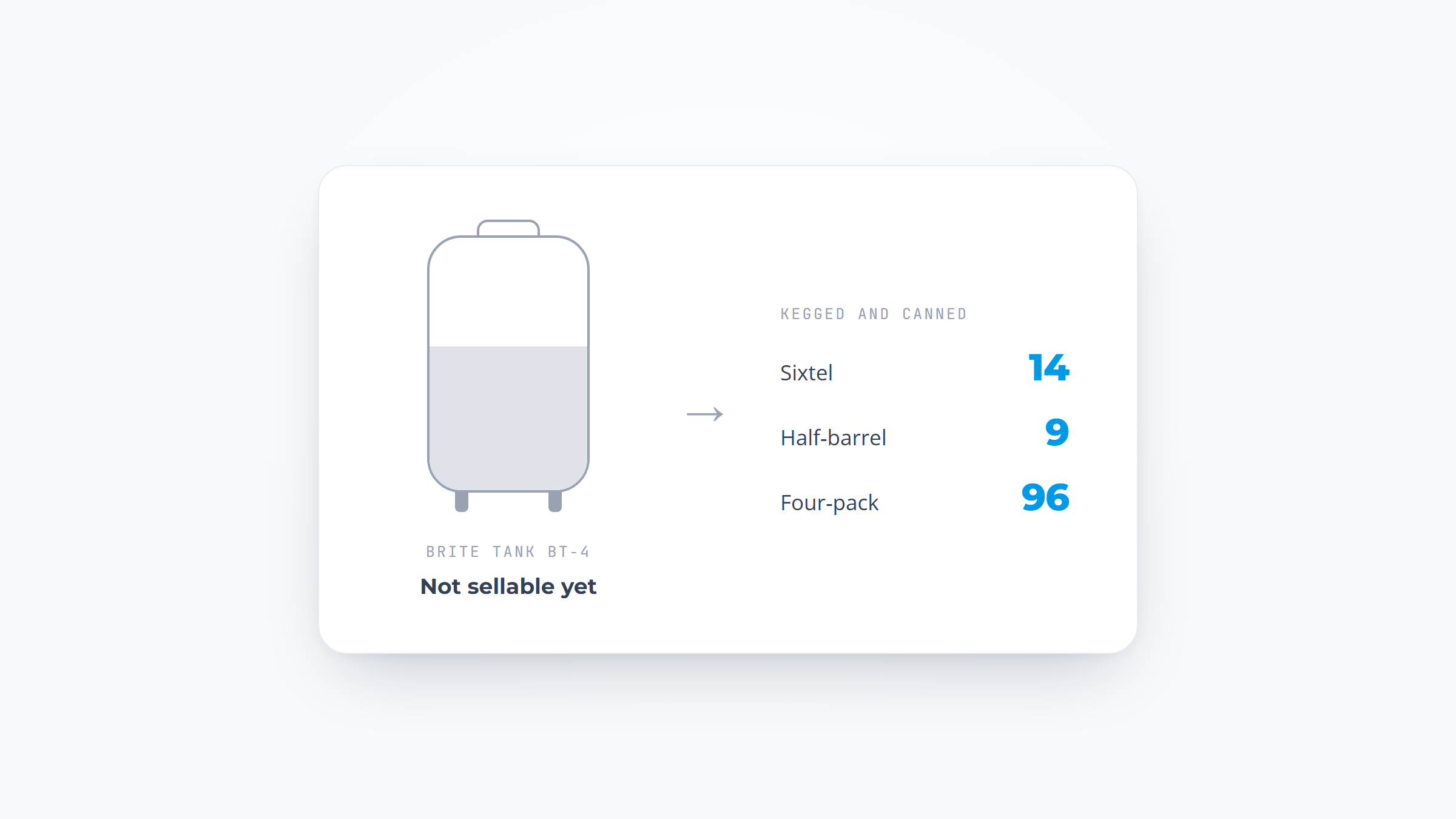
The bulk-versus-packaged split catches most first-time buyers. Beer in a brite tank is inventory you can't sell yet, and the moment it's kegged and canned it becomes several SKUs with different counts and prices. A system that only knows finished goods loses the liquid, and one that only knows tanks can't take an order.
Kegs are the second test. A keg leaves full on an invoice and returns empty weeks later, if it returns at all, so ask each vendor to show one going out to an account and coming back. That's a producer's asset problem, a different job from counting pours behind a bar, which the beverage inventory software roundup covers.
Don't expect a full ledger, though. Ollie names a QuickBooks Online sync, Breww names Xero, QuickBooks Online and Sage, and Beer30 names Xero, QuickBooks Online and NetSuite, so the books stay in your accounting tool.
Several craft beverage brands now sit inside larger software groups, so two names on a shortlist can come from one company. The table shows the two groups that touch this list.
| Owner | Products it owns | Reviewed here |
|---|---|---|
| Next Glass | Ollie, plus Ekos, bought in October 2025 | Ollie |
| FIVE x 5, part of Volaris Group since 2019 | DISTILL x 5, plus Whiskey Systems, retiring June 30, 2027 | DISTILL x 5 |
Next Glass gave existing Ekos customers a two-year price freeze when it bought the company, so a brewery on Ekos has time to compare the two products before that freeze runs out.
FIVE x 5 took its brewery product, BREW x 5, off the market in 2019, which is why the company appears here for distilleries only.
The table follows the entry order: four brewery systems, two winery systems and one distillery system, then VoiceOrder Solutions, which isn't an ERP and handles account orders instead.
| System | Best for | TTB reporting on its pages | Main limitation | Pricing (from) or basis |
|---|---|---|---|---|
| Ollie | Breweries wanting TTB reports built in | TTB reports and excise returns | One-year initial term, fee up front | Quote; no fees for extra users or onboarding |
| Breww | Small breweries paying month to month | Brewer's Report of Operations in-app | Advanced routing and deliveries are paid add-ons | $34.99 a month, up to 200 hL a year |
| Beer30 | Breweries focused on cellar data | TTB reporting named, BROP form not named | Costing and accounting sync sit in the top bundle | As little as $30 a month on Lite |
| BrewPlanner | Planning-first breweries on a budget | TTB reports named, no form named | Keg tracking only on the $125 plan | $49 a month for 3 users |
| InnoVint | Wineries managing bulk wine and blends | TTB Form 5120.17 reports | Bonded inventory sits in a second product | Quote after a demo |
| Vinsight | Small wineries wanting monthly plans | No TTB reporting named on its pages | Extra users priced per seat | $177 a month for 1 user |
| DISTILL x 5 | Craft distilleries filing with TTB | TTB reports and daily production logs | Built for spirits only | Quote by annual proof-gallon tier |
| VoiceOrder Solutions | Producers running their own routes | None: it handles account orders | Not a beverage ERP | On request |
Read the TTB column before the price column. A cheap plan that can't produce your Brewer's Report of Operations leaves the hardest recurring job on a spreadsheet.

Overview: Ollie is brewery software from Next Glass in Charlotte, North Carolina. It covers production, inventory and lot codes, and it counts kegs and cans as packaging inventory next to the beer.
The compliance side is the reason to look. Ollie names TTB report generation and excise returns on its pages, and in September 2026 it added a distillery module, so a brewery that has started distilling can keep both operations on one system.
Key features:
Pricing: Ollie's pricing page shows a Get Pricing button instead of a rate. Its customer agreement sets a one-year initial term that renews yearly, with the term's fee due up front and no refunds, though monthly installments may be possible. It charges no fees for support, onboarding or extra users.
Pros: TTB reports and excise returns on its feature list, no charge for extra users or onboarding, a distillery module for mixed producers.
Cons: No published price, a one-year initial term, QuickBooks Online the only accounting sync named.
Why buyers shortlist it: Ollie puts excise returns next to production instead of in a separate tool, so the filing draws on the same records as the brewing.
Final verdict: A strong pick for a compliance-minded brewery that's comfortable with a yearly contract.

Overview: Breww started in the UK, where its headquarters is in Harpenden, and it runs a US office in Charlotte, North Carolina. Its US site prices plans by annual volume, so a small brewery pays for what it brews.
Breww generates the Brewer's Report of Operations inside the app and scans kegs and casks as they move, two of the hardest records in this category.
Key features:
Pricing: Breww's US plans start at $34.99 a month for breweries making up to 200 hL a year, about 170 US barrels. Plans roll monthly with unlimited users and 30 days free, and two add-ons cost extra: advanced sales visit routing at $19.99 per enabled user a month and advanced deliveries at $39.99 per vehicle a month.
Pros: A low monthly entry price, keg scanning built in, rolling monthly terms.
Cons: Advanced routing and deliveries are paid add-ons, plans tied to annual volume, community support only on the lowest plan.
Where it fits: A small brewery that sends kegs to its own accounts and wants the BROP done in-app.
Final verdict: A low-cost route to BROP output and keg scanning in one system, since every plan includes every feature except the paid routing and delivery add-ons.

Overview: Beer30 is brewery production software built around the brewhouse and cellar. It tracks fermentation curves and tanks, and its Finance bundle adds cost of goods sold per batch and a Xero, QuickBooks Online or NetSuite sync.
Its plans stack in layers, production first, then sales, then finance, with unlimited users on each. Beer30 names TTB reporting and excise tax reports, and its software page lists keg fleet tracking, but no page names the Brewer's Report of Operations itself, so ask to see one.
Key features:
Pricing: Beer30's Essentials starts from $118 a month, Essentials plus Sales from $194 and Essentials plus Sales and Finance from $313, and the vendor says the price depends on production volume and the bundles you pick. A Lite plan sits below Essentials at as little as $30 a month. The pricing page says you can pay month to month or lock in your price with a contract.
Pros: The lowest entry plan on this list, unlimited users, a NetSuite option for larger breweries.
Cons: BROP form not named on its pages, costing and accounting sync only in the top bundle, prices that move with volume.
Its real strength: Cellar visibility, since fermentation curves are what a head brewer works from.
Final verdict: A good fit for a brewery that wants cellar data and costing first, provided the demo shows a finished BROP and which bundle your costing needs.

Overview: BrewPlanner sells two brewery plans, one for production planning and one it calls Brewery ERP, which adds keg tracking. Its homepage claims 500+ breweries and wineries, a figure it supplies itself.
BrewPlanner names TTB report generation on its brewery, winery and distillery pages but names no specific form, so ask to see a BROP and an excise return before buying. Price is the draw, with production planning from $49 a month.
Key features:
Pricing: BrewPlanner's Production Planning is $49 a month for 3 users, and Brewery ERP is $125 a month with unlimited users and keg tracking. Both are shown per month, and the pricing FAQ says annual pricing comes through sales, with most customers saving 15 to 20% against monthly billing.
Pros: Keg tracking at $125 a month, unlimited users on the full plan, a $49 starting point.
Cons: No named TTB form, keg tracking only on the higher plan.
Who it suits: A small brewery that wants production planning from $49 and unlimited users with keg tracking at $125, and will check the compliance output itself.
Final verdict: Worth a trial for low-cost production planning, after a close look at the company behind it.

Overview: InnoVint is winery software, founded in 2013. It manages bulk wine across tanks, barrels and other vessels, runs blending trials on its Plus plan, and generates the TTB Form 5120.17 report from the cellar records.
A separate Supply product handles bonded and tax-paid inventory with excise reporting, which is the wine version of the bulk-versus-packaged split. Of the two winery systems here, it's the one that names TTB work on its pages.
Key features:
Pricing: InnoVint lists no price, and a quote follows the demo. Ask whether Supply is priced apart from the winemaking product.
Pros: Wine-specific bulk tracking, TTB Form 5120.17 built in, bonded and tax-paid stock covered.
Cons: No published price, bonded inventory in a second product, built for wine rather than beer or spirits.
Why it's a good beverage ERP software choice: For a winery, the TTB report and the bonded-versus-tax-paid split are the two records that have to be right, and InnoVint names both.
Final verdict: The first demo to book if you make wine and file your own TTB reports.

Overview: Vinsight comes from St Francis Wine Company Ltd in Auckland, New Zealand. Its Production plans are priced in US dollars on three published tiers plus a quoted Enterprise tier, under a "Cancel anytime" banner, and its terms say a cancellation takes effect at the end of the current subscription period, with no refund.
There's no TTB reporting named on its pages, which matters for a US winery. Treat it as winery production software with a known monthly cost, and plan for federal reports elsewhere unless the demo shows otherwise.
Key features:
Pricing: The Production plans are Essential at $177, Professional at $399 and Ultimate at $649 a month in US dollars, with 1, 3 and 5 users included, and extra users cost $89 a month each. Enterprise is priced on application. Some third-party lists quote Vinsight's cheaper Sales and Inventory plans instead, so make sure you're comparing the production tier.
Pros: Published prices, cancel any time, three tiers to grow through.
Cons: No TTB feature on its pages, extra users at $89 a month each, no refund on cancellation.
What it offers that InnoVint doesn't: A published price, the only one among the winery systems here.
Final verdict: A practical choice for a small winery that wants a fixed monthly bill and can handle TTB reporting elsewhere.

Overview: DISTILL x 5 comes from FIVE x 5, a Denver company that has been part of Volaris Group since 2019. It produces TTB reports and daily production logs, costs each batch, and includes unlimited users.
FIVE x 5 also owns Whiskey Systems, which its migration page says retires on June 30, 2027, after support for a third-party library it runs on ends at the end of 2026. Those customers get a free migration to DISTILL x 5, and the vendor says most of them save about 3 to 5%. Tiers are set by annual proof gallons, with the Craft tier covering up to 1,900.
Key features:
Pricing: DISTILL x 5 sells by quote. Its time-savings calculator pre-fills $325 a month for the Craft tier, but the page doesn't present that as a rate, so have your current and expected proof gallons ready and confirm the figure in your quote.
Pros: Spirits-specific TTB reporting, unlimited users, free migration from Whiskey Systems.
Cons: No published price, built for spirits only, the quote moves as your proof gallons grow.
What stands out: Tiers set by annual proof gallons, the unit a distillery already reports to TTB.
Final verdict: The natural first call for a craft distillery, and the obvious next step for anyone still running Whiskey Systems.

Best for: Producers that run their own delivery routes
Overview: VoiceOrder Solutions isn't beverage ERP software. It doesn't track batches, tanks, kegs or excise, and it replaces none of the seven systems above. It sits on this list for one reason: a brewery or winery that runs its own delivery routes is doing distribution work.
Self-distribution means your team fields weekly orders from on-premise accounts and retailers, often by phone, voicemail or email, and a wrong SKU or count turns into a wasted delivery.
VoiceOrder Solutions puts those accounts on an iOS and Android app, each with an order guide built from the SKUs and pricing you share. Orders come in by voice against that guide, where the account can check each line before sending, and reach your office by email in PDF, Excel or Word, over EDI or an API, or in QuickBooks.
Key features:
Pricing: VoiceOrder Solutions keeps no rate card for distributors. Pricing is available on request, the company offers a 20-minute demo, and it says setup takes 24 to 48 hours for most distributors.
Pros: Order guides tied to your SKUs and prices, a line check the account can run, 20 to 30 minutes saved per order by the company's own figure, orders captured around the clock, delivery by email, EDI, API or QuickBooks.
Cons: Nothing for production, keg tracking or TTB, useful only when your own team takes account orders.
How to start using it:
Where it fits beside a beverage ERP: Between your accounts and the ERP's sales order, so in-app orders reach your office in the format you chose.
Final verdict: Skip it if a wholesaler takes all your orders, and book a demo if your own team takes keg and case orders from accounts every week.
Book a VoiceOrder Solutions demo
Each system's own pages had to show production records built for beer, wine or spirits, and the TTB column shows which of them name federal reporting. Every price and feature here comes from the vendor's own website in November 2026. Ekos, which shares Ollie's owner, and Whiskey Systems, which is retiring, sit in the ownership table rather than the lineup.
The eighth entry, VoiceOrder Solutions, is the publisher's own product. Other wholesaler-side tools, such as three-tier sales apps, stayed off, since the beverage sales software roundup reviews the distributor's sales layer separately.
Soft-drink and water bottlers are a different buyer. High-speed lines, retail chain orders and co-packing runs usually call for a broader ERP for food and beverage industry production, and the food ERP software roundup reviews those suites. When you test one, ask to see a lot traced by line and date, retailer EDI orders, and costing that treats bottles, caps and labels as carefully as ingredients.
Brewery software is being bought in a shrinking market. The Brewers Association's 2025 craft brewing figures say it plainly: "The number of operating U.S. craft breweries fell to 9,578, a 2.9% net decline from 2024."
Volume fell with the count. In the figures BA revised on May 29, 2026, "Total craft production (22,034,000 bbls) fell 4% in 2025." For a buyer, that argues for short commitments. Breww rolls monthly, Beer30 offers month to month, and Vinsight lets you cancel any time, while a quote-based system should tell you its contract length before the demo ends.
The paperwork is shifting too. TTB's Industry Circular 2025-1 covers the two federal filings a brewery's system has to feed: the Excise Tax Return, TTB Form 5000.24, and the Brewer's Report of Operations, Forms 5130.9 and 5130.26. How often you file the return depends on what you owe.
Brewers who expect to owe not more than $1,000 this year, and owed no more last year, file annually. The same two-year test at $50,000 sets quarterly filing, and everyone else files semimonthly. The circular also describes TTB's tax simplification pilot, in which Forms 5130.Pilot-A and 5130.Pilot-B, filed through Pay.gov, replace both the excise return and the BROP. TTB's pilot page still lists it as ongoing.
Ask each brewery vendor which forms its reports produce today, and whether it can output the pilot forms if you join. Wineries and distilleries file their own TTB reports, so test those on InnoVint and DISTILL x 5 the same way.
Ollie, InnoVint and DISTILL x 5 quote instead of publishing. The table lists the main published plans with the billing basis each vendor states.
| System and plan | Published price | Billing basis |
|---|---|---|
| Beer30 Lite | As little as $30 a month, per the vendor | Not stated |
| Beer30 Essentials | From $118 a month | Month to month, or a contract that locks the price |
| Beer30 Essentials plus Sales and Finance | From $313 a month | Month to month, or a contract that locks the price |
| Breww | From $34.99 a month, up to 200 hL a year | Rolling monthly, unlimited users |
| BrewPlanner Production Planning | $49 a month, 3 users | Monthly, annual pricing by quote |
| BrewPlanner Brewery ERP | $125 a month, unlimited users | Monthly, annual pricing by quote |
| Vinsight Production | $177, $399 or $649 a month by tier | Monthly; extra users $89 a month each |
VoiceOrder Solutions sits outside the table too, with no rate card for distributors. As you compare, check the basis before the number: Breww prices by annual volume, DISTILL x 5 by proof gallons and Vinsight adds a fee per extra user, while Ollie's customer agreement sets a one-year term with the fee due up front.
The subscription isn't the only cost. If your office retypes keg and case orders from calls and emails, that time belongs in the comparison, and the automated order processing guide shows how to measure it.
What you make decides the shortlist before any feature comparison does. The table pairs each kind of producer with the entries worth a first demo.
| Your operation | Start with | Why |
|---|---|---|
| Small brewery testing software month to month | Breww, Beer30 | Lowest entry plans; Breww rolls monthly, Beer30 offers month to month |
| Brewery that wants excise returns in the system | Ollie | Names TTB reports and excise returns |
| Brewery tracking kegs on a budget | Breww, BrewPlanner | Keg scanning on every Breww plan, or keg tracking on BrewPlanner's $125 plan |
| Winery filing its own TTB reports | InnoVint | Form 5120.17 and bonded inventory |
| Small winery wanting a fixed monthly bill | Vinsight | Published monthly tiers |
| Craft distillery, or a brewery adding spirits | DISTILL x 5, Ollie | Spirits TTB reports, or a new distillery module |
| Producer running its own delivery routes | VoiceOrder Solutions, beside your ERP | Handles account orders, not production |
The pairings above are an editorial match built from how the vendors pitch themselves, so confirm yours with a reference customer that makes your kind of drink.
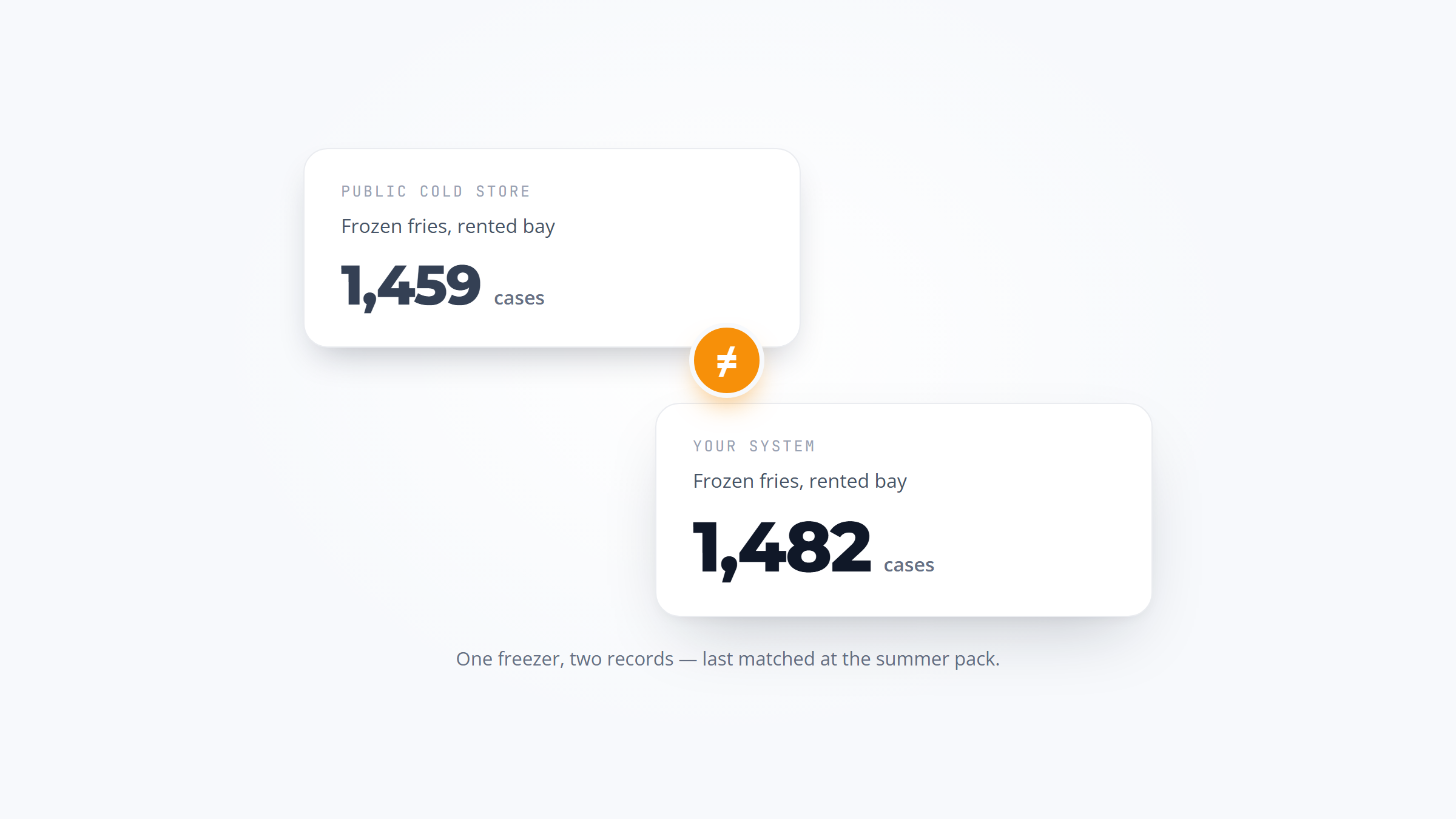
Whichever row you land in, keg and case counts that drift between the cold room and the books are a process problem as much as a software one. Basic inventory control, like logging every keg return against its invoice, closes much of that gap.
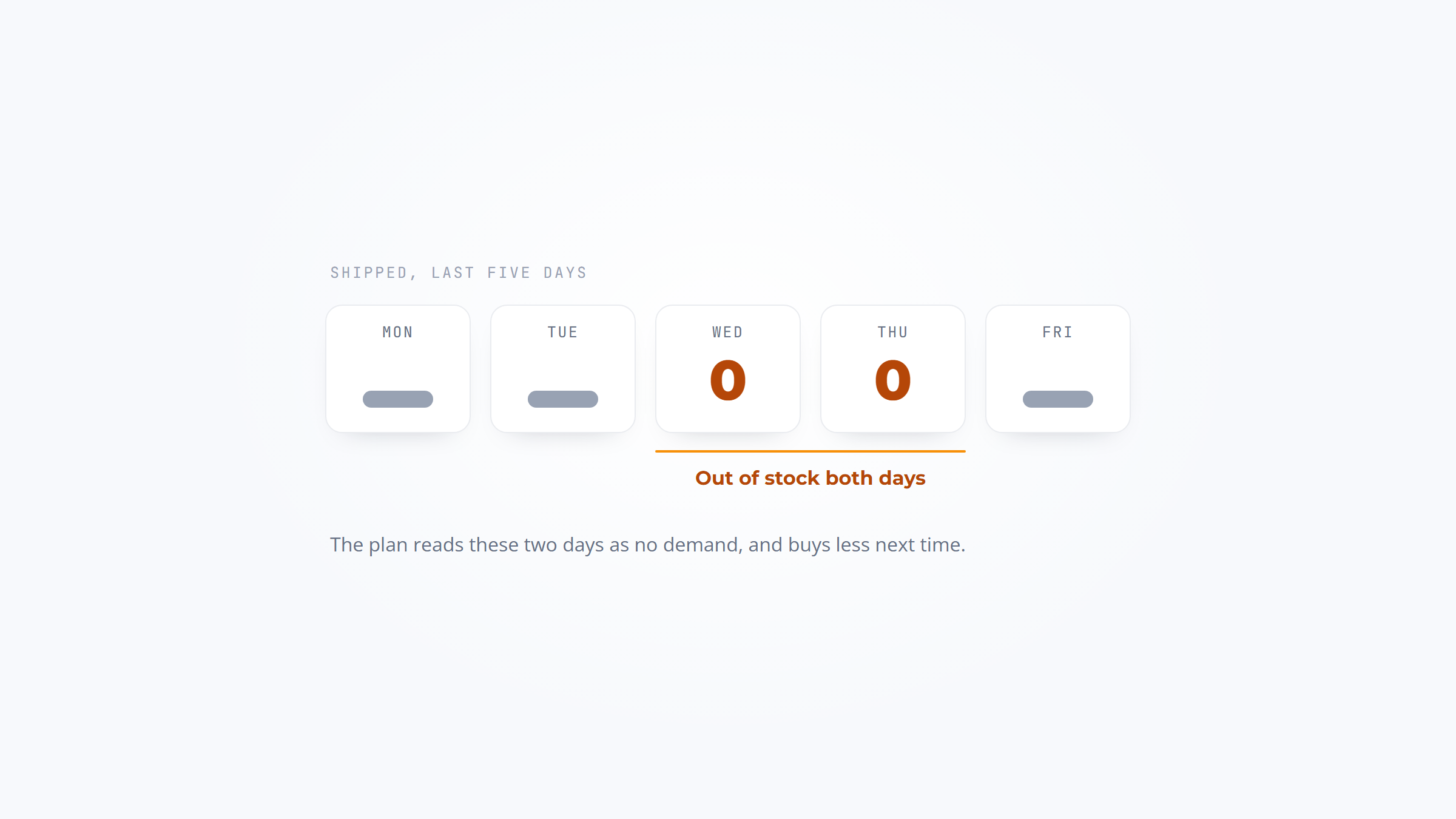
Once you deliver straight to restaurants and stores, the ERP holds each sales order, but only after someone keys in the called-in or emailed order before the van is loaded. A misread "two sixtels" keyed as two half-barrels costs a trip and a credit.
VoiceOrder Solutions covers that keying step for distributors, including producers running their own routes, so the order reaches your office numbered and timestamped against the guide each account orders from. Wholesale bakers that run their own routes are in the same position, as the bakery ERP systems comparison explains.
Once the matching table has given you a shortlist, bring a real month to every production demo: one batch from brew day or crush to packaging, one keg sent to an account and returned, and your latest TTB report. A system that can't show all three on your own data isn't ready for your cellar.
The best beverage ERP software for a craft producer is usually the smallest one that builds your federal reports correctly. Whichever you pick, it will only be as accurate as your counts, so set up a weekly stock control routine for kegs and packaged goods before you cut over.
It's a production and business system for drinks makers. It tracks batches to packaging, keeps bulk and packaged stock apart, follows kegs, costs each batch and builds federal reports, usually syncing with QuickBooks Online or Xero for the books.
On this list, Ollie names TTB reports and excise returns, Breww generates the Brewer's Report of Operations, InnoVint generates TTB Form 5120.17 for wineries, and DISTILL x 5 produces TTB reports for distilleries. Beer30 and BrewPlanner name TTB reporting without naming a form, and Vinsight is the only one of the seven ERPs that names no TTB reporting, so ask it directly.
The cheapest published plan is Beer30 Lite, from as little as $30 a month, per the vendor, followed by Breww at $34.99 a month for up to 200 hL a year. Ollie, InnoVint and DISTILL x 5 give prices on request.
Next Glass, which owns Ollie, bought Ekos in October 2025 and gave existing customers a two-year price freeze. FIVE x 5 is retiring Whiskey Systems on June 30, 2027, and offers its customers free migration to DISTILL x 5, which it says leaves most paying about 3 to 5% less.
Look past this list. Soft-drink and water bottlers run high-speed lines and sell into retail chains, which usually calls for a larger food and beverage ERP than these craft tools, so start with this site's best food ERP software roundup.
Bottler or brewer, running your own routes takes a production system and an order desk, which are different jobs. If your team still keys account orders by hand, a 20-minute demo will show whether voice-based order taking software fits your routes.