.webp)
Key takeaways:
Managing wholesale orders can be tricky and time-consuming. That's why using order management software designed for wholesalers makes a big difference. It helps keep things organized, speeds up order processing, and reduces mistakes.
With the right system, orders move smoothly from one step to the next. This means faster deliveries and happier customers.
Whether it's tracking inventory, managing invoices, or handling customer details, this kind of software makes tasks easier and more efficient.
In the fast-paced world of wholesale, having a reliable order system is a smart way to work smarter, not harder.
Wholesale order management software is a tool that helps businesses handle bulk orders quickly and smoothly. It organizes everything from order placement to delivery in one place. This makes managing large quantities easier and reduces mistakes.
This type of software tracks orders in real time. It keeps an eye on stock levels, so businesses know what's available right away. It also simplifies communication between suppliers, warehouse teams, and customers, keeping everyone on the same page.
Here's what wholesale order management software usually does:
By using this software, companies can save time, reduce errors, and improve customer satisfaction. It's especially helpful when handling many orders at once, so the process doesn't slow down. A smooth order system also means fewer delays and happier buyers.
In short, wholesale order management software is like a smart assistant for businesses selling in bulk. It keeps orders organized, speeds up work, and helps run things without confusion or extra hassle.
Much of wholesale ordering is repeat business: the same core items, on the same delivery days, week after week. That repeat business is where order management software for distributors saves the most time, because an order you can predict shouldn't have to be typed, phoned in or rebuilt from memory.
Four features cover most of it:
The alert is easy to overlook, and it's the one that protects revenue. A restaurant that normally orders by 11 a.m. on Monday and still hasn't by 1 p.m. is either buying elsewhere or about to run short, and a rep should know before the truck is loaded.
When you compare order management tools, ask the vendor to show a standing order moving from draft to confirmed without anyone on your team touching it.
The tools below cover a range of wholesale order management needs, from inventory tracking and multi-channel order processing to B2B e-commerce and ERP-level operations. For food distributors looking to speed up order intake specifically, a voice-powered ordering tool like VoiceOrder Solutions can complement these platforms by automating the step of placing orders with a supplier, saving 20–30 minutes per order without replacing the wider order management system.
Look for tools that track inventory, automate invoices, and simplify shipping. These help reduce errors, save time, and keep everything organized for faster, smoother orders every time.
| # | Tool Name | Best For | What It's Mainly Used For | Key Features | Main Limitations | Ease of Use | Pricing Starts At | Our Rating |
|---|---|---|---|---|---|---|---|---|
| 1 | Cin7 | Multi-channel sales, inventory | Wholesale orders and inventory | Real-time inventory, multi-channel integration, AI forecasting | Higher start cost, complex for small teams | Medium | $349/month | ⭐⭐⭐⭐ |
| 2 | Brightpearl | Retail and wholesale, forecasting | Order fulfillment and inventory | Automated fulfillment, sales forecasting, app integrations | Higher cost, setup complex | Medium | $350/month | ⭐⭐⭐⭐ |
| 3 | Unleashed | Large inventory, AI tracking | Inventory and stock control | Multi-warehouse, automated reorder, batch and serial tracking | Expensive, steep learning curve | Hard | $495/month | ⭐⭐⭐⭐ |
| 4 | inFlow | Small to mid-size businesses | Inventory and order management | Barcode and label support, sales and purchase monitoring, product assembly | Max 50 users, cluttered dashboard | Easy | $79/month | ⭐⭐⭐⭐ |
| 5 | Zoho Inventory | Multi-channel sellers | Orders, shipping, warehousing | Multi-channel selling, shipping tools, automation workflows | Limited free plan, can be complex | Medium | $0 (free plan) | ⭐⭐⭐⭐ |
| 6 | Odoo | Customizable ERP | Order, sales, inventory management | AI workflows, wide app selection, open-source flexibility | Complex setup, subscription for Enterprise | Hard | $24.90/month | ⭐⭐⭐⭐ |
| 7 | Fishbowl | Inventory and manufacturing | Orders, inventory, manufacturing | AI automation, multi-warehouse tracking, 50+ app integrations | High cost, long setup | Hard | $4,395 (one-time) | ⭐⭐⭐⭐ |
| 8 | OrderCircle | Multi-channel order tracking | Order and inventory management | Multi-channel orders, inventory forecasting, shipment tracking | Steep setup, costly custom features | Medium | $100/month | ⭐⭐⭐⭐ |
| 9 | Orderspace | B2B online ordering | Customer-specific ordering | 24/7 online orders, custom pricing, invoicing and shipping integrations | Complex for smaller teams, limited offline | Medium | $99/month | ⭐⭐⭐⭐ |
| 10 | B2B Wave | B2B ecommerce | Wholesale online storefronts | Real-time inventory sync, custom pricing, QuickBooks and Stripe integration | Setup can be slow, limited mobile app | Medium | $39/month | ⭐⭐⭐⭐ |
| 11 | Orders in Seconds | Distributor mobile ordering | Mobile order and delivery | Mobile orders, real-time inventory, route planning | Business hours support, training needed | Medium | Custom | ⭐⭐⭐⭐ |
| 12 | NetSuite ERP | Large global operations | Order, inventory, finance | Automated workflows, RF warehouse tools, financial consolidation | Expensive, complex setup | Hard | Custom | ⭐⭐⭐⭐ |
Overview
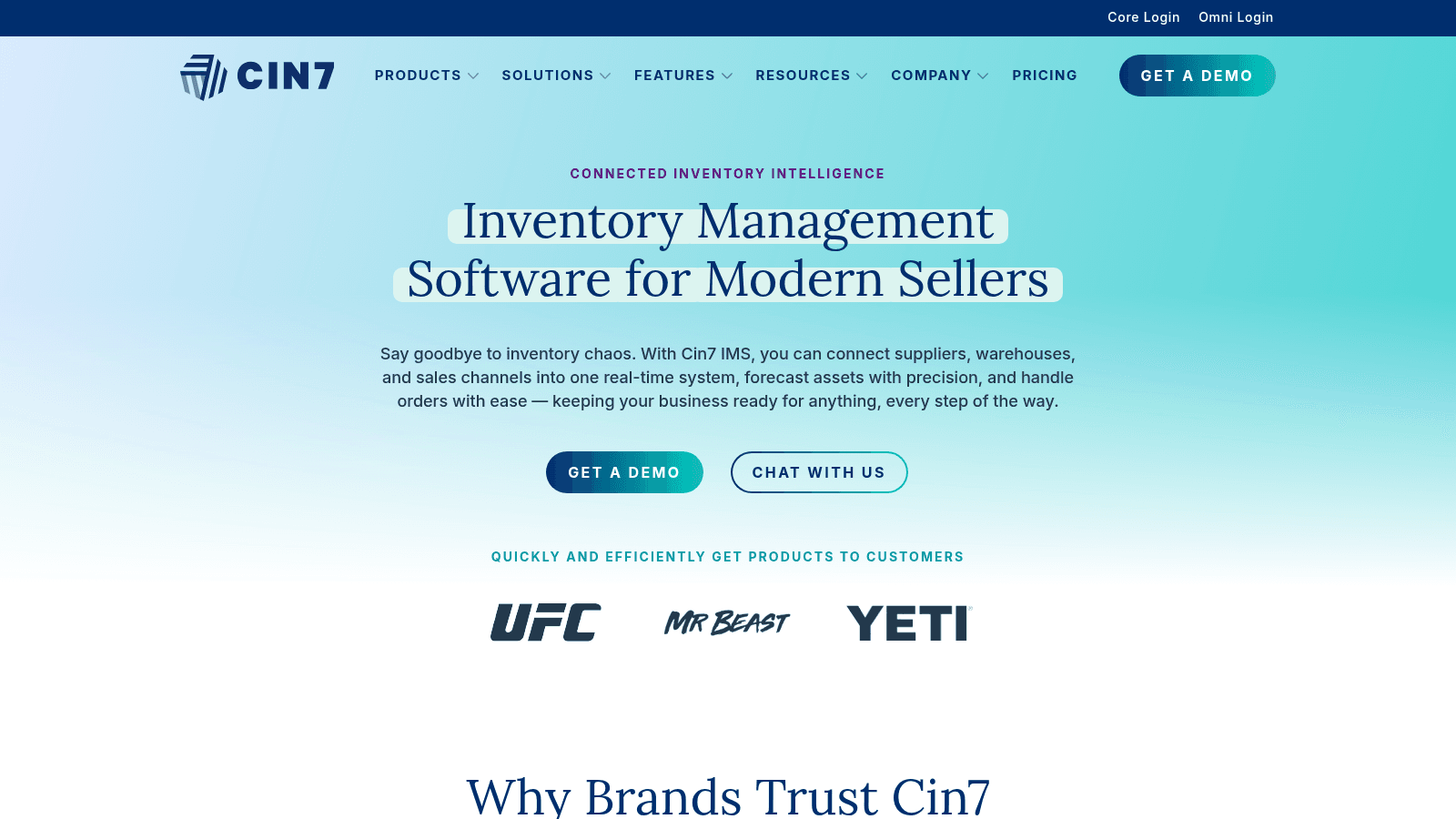
Cin7 is a cloud-based wholesale order management platform that connects suppliers, warehouses, and sales channels in real time. It handles purchasing, warehouse management, and order processing in one system, and also supports B2B portals, e-commerce sales, POS, and accounting. The platform includes AI features such as ForesightAI for demand forecasting and Intelligent Document Recognition to speed up paperwork. It connects with over 700 apps including QuickBooks, Shopify, and Amazon.
Key Features
Pricing
From $349/month, with plans scaling to support multiple sales channels and warehouses.
Pros & Cons
Why It's a Good Wholesale Order Management Software
Cin7 manages order and stock flow across multiple locations with detailed reporting, and its AI-driven tools automate forecasting and documents to reduce manual work.
Final Verdict
Cin7 provides a comprehensive system for managing wholesale orders and inventory, with features geared toward businesses needing multi-channel and multi-warehouse support.
Overview
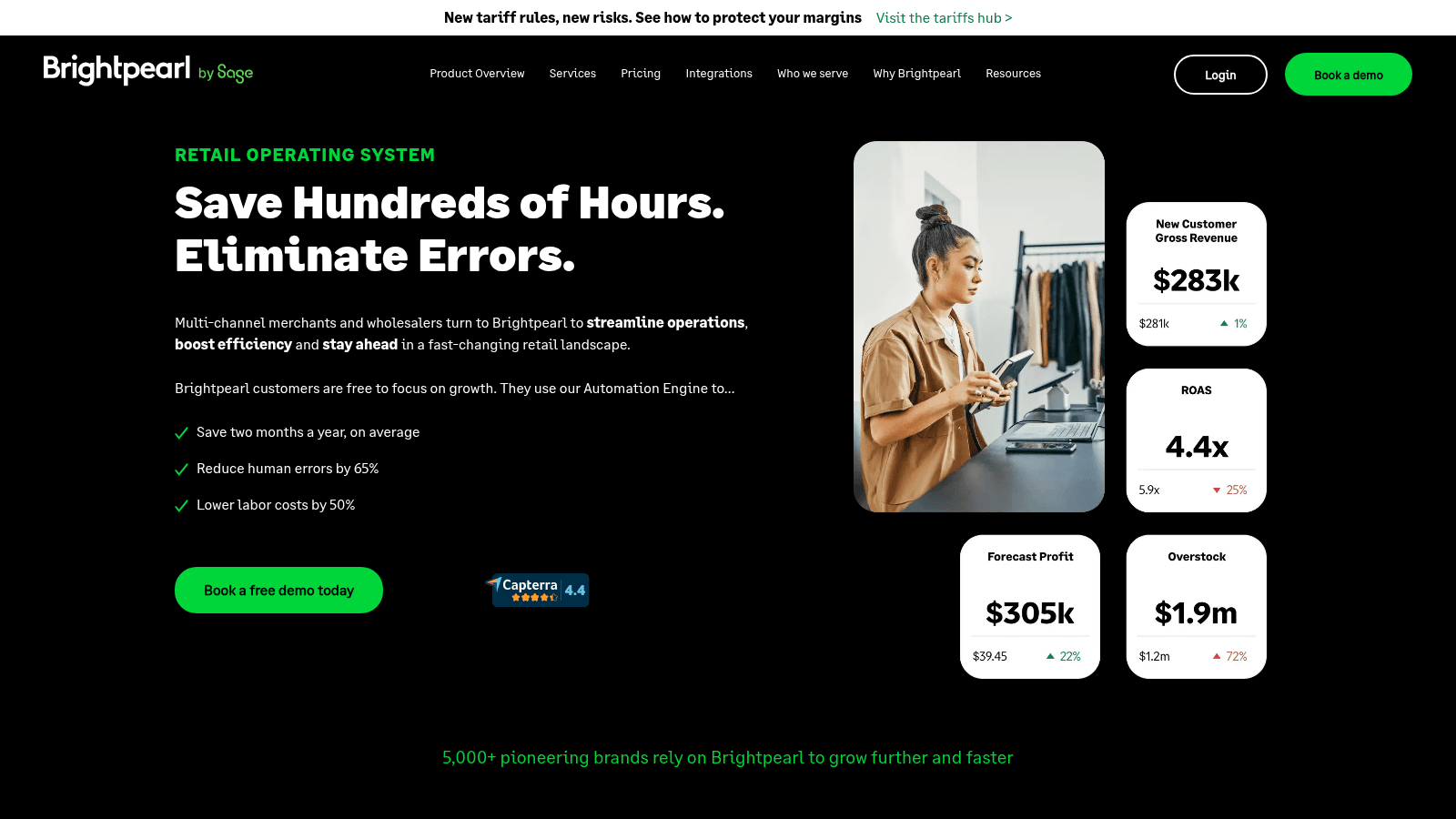
Brightpearl is a retail operations system built to manage wholesale and multi-channel sales. It automates order fulfillment, inventory tracking, shipping, and accounting to reduce manual work and errors.
The platform includes sales forecasting and inventory planning tools to handle supply chain disruptions. It connects with more than 20 apps including Shopify, Amazon, QuickBooks, and ShipStation.
Key Features
Pricing
From $350/month. No free version; a demo can be booked online.
Pros & Cons
Why It's a Good Wholesale Order Management Software
Brightpearl combines order and inventory management with automation and forecasting, helping wholesale and retail businesses maintain smoother operations across multiple channels.
Final Verdict
Brightpearl covers many retail and wholesale functions, which can be helpful but might be more than smaller sellers need for basic order management.
Overvie
w
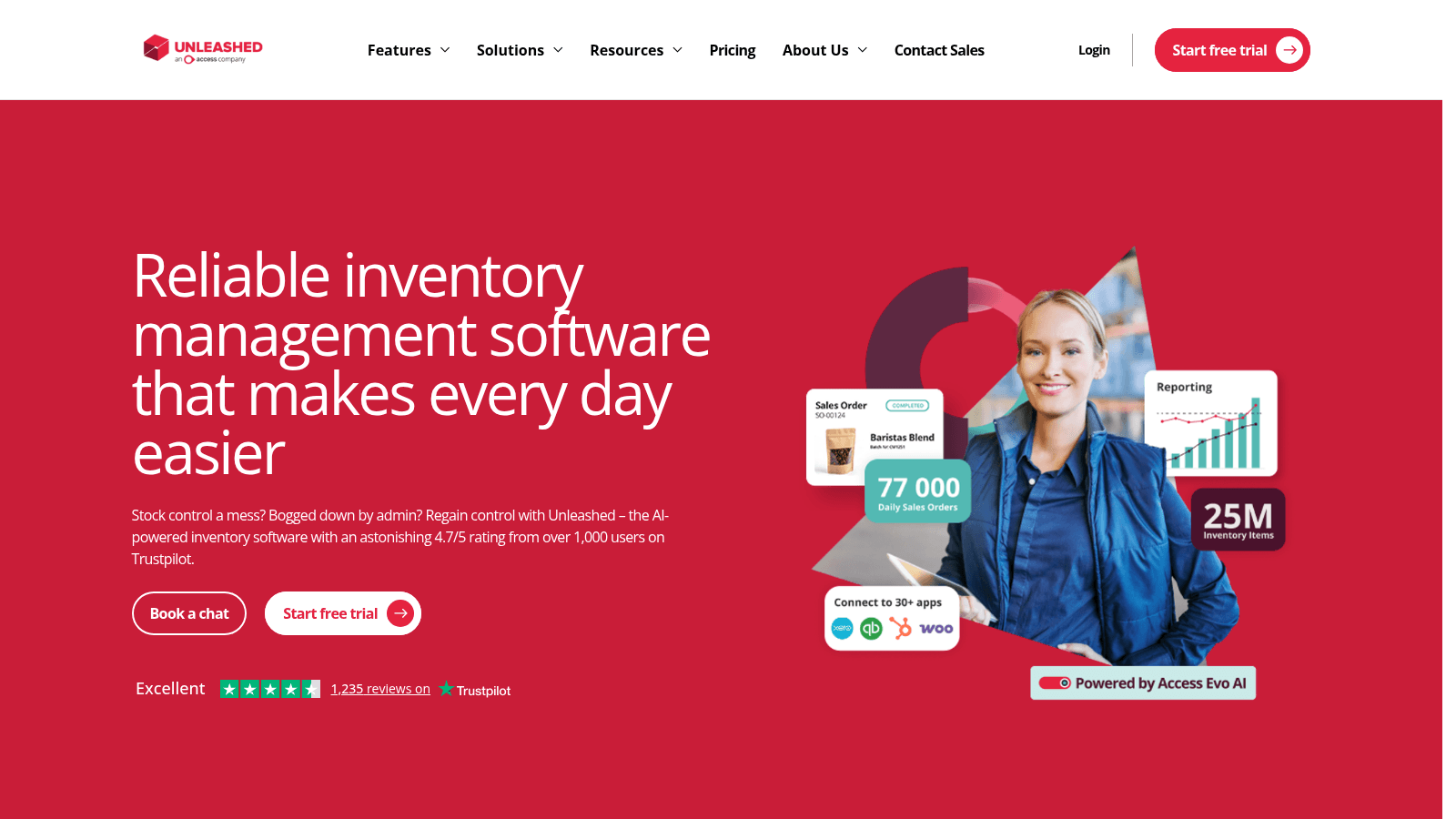
Unleashed is inventory management software that uses AI to handle large-scale stock and sales data across multiple warehouses. It tracks product batches and serial numbers, connects with platforms including Shopify and Amazon, and integrates with accounting tools like Xero and QuickBooks.
The software can forecast demand and automate reorder points to help keep stock levels in check. It offers a 14-day free trial and scales for teams from 5 to 500 employees.
Key Features
Pricing
From $495/month for up to 100 active stock items and 1 user. Plans scale based on users and stock items, with custom quotes for larger operations.
Pros & Cons
Why It's a Good Wholesale Order Management Software
Unleashed handles large inventories and multiple sales channels in one system, suiting businesses that need detailed tracking and automation for better stock control.
Final Verdict
Unleashed is a detailed inventory tool suited to businesses with complex stock demands, but its price and complexity may challenge smaller teams.
Overview
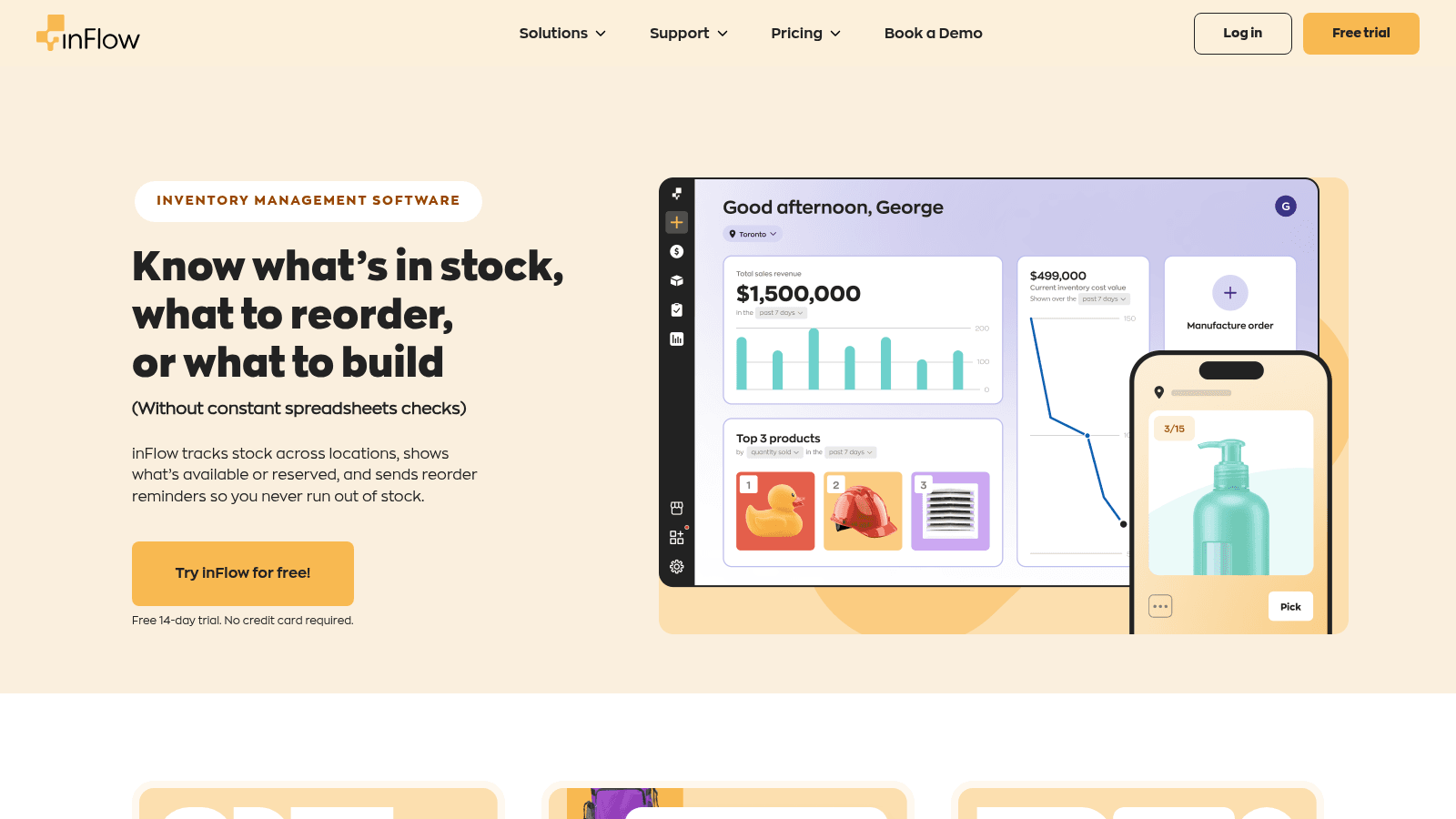
inFlow is wholesale order management software designed for small to mid-size businesses with 1 to 50 users. It combines inventory, sales, shipping, and barcode management into one system, supporting scanners and label printers for smoother warehouse operations.
The software tracks stock levels, monitors sales and purchases, and includes an assembly feature for product kits through inFlow Manufacturing.
Key Features
Pricing
From $79/month for up to 2 users. Additional users cost extra, with pricing increasing as teams grow.
Pros & Cons
Why It's a Good Wholesale Order Management Software
inFlow covers inventory, sales, and order management in one package, helping small to mid-size businesses track stock and orders with hardware support.
Final Verdict
inFlow provides a multi-featured system for managing wholesale orders and inventory, though its user limit and pricing may affect very small businesses.
Overview
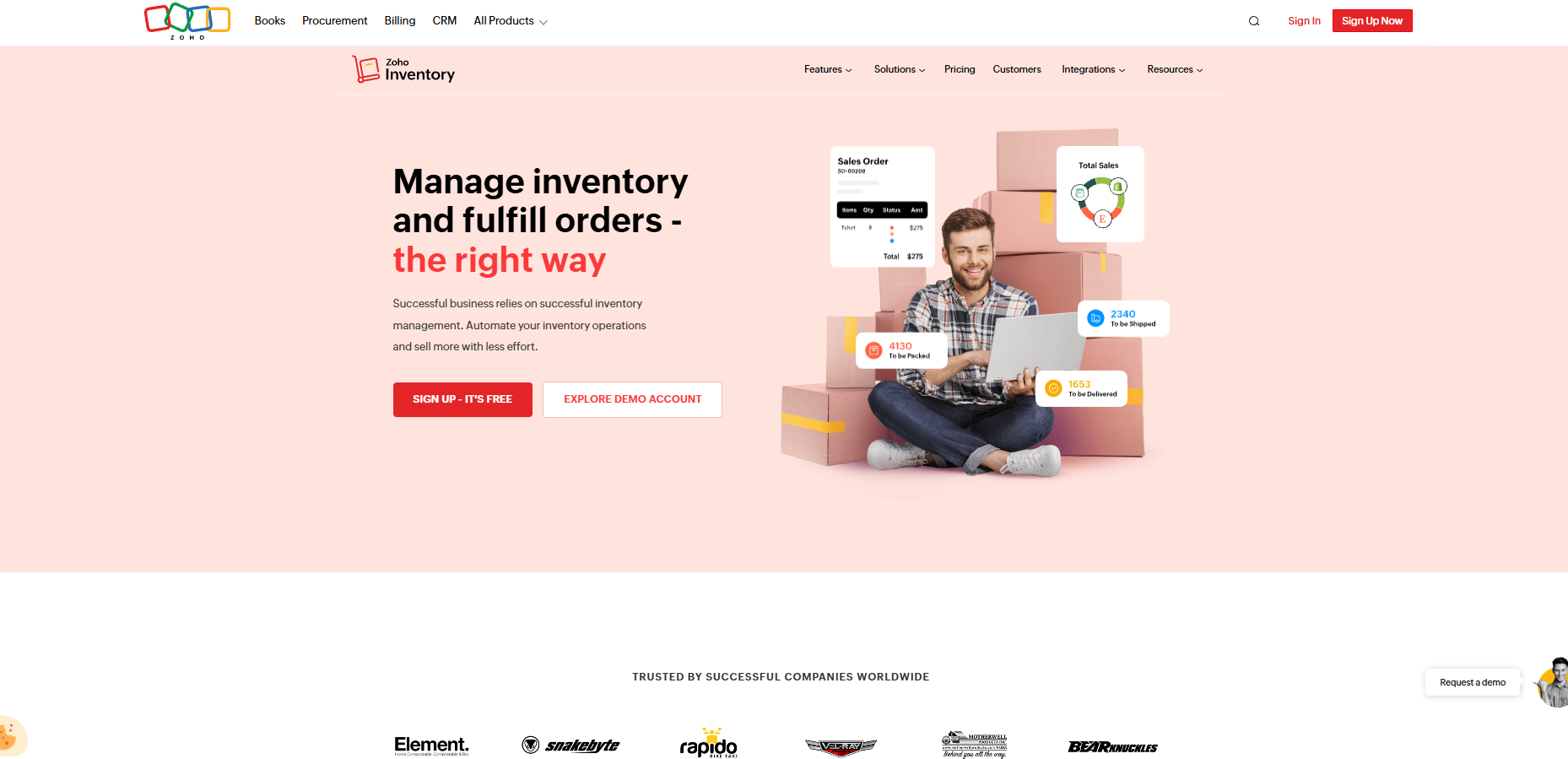
Zoho Inventory is wholesale order management software for handling orders, warehouses, and shipping across multiple channels in one place. It supports purchase orders, vendor payments, and selling on platforms including Amazon, eBay, and Shopify. The software includes automation tools like workflows and email triggers to keep orders moving, along with mobile apps for managing sales remotely.
Key Features
Pricing
Free plan for up to 50 orders/month for 1 user. Paid plans up to $249/month for up to 15,000 orders, 7 users, and 10 locations.
Pros & Cons
Why It's a Good Wholesale Order Management Software
Zoho Inventory covers order processing, inventory control, and shipping across multiple channels, suiting growing businesses selling on several platforms.
Final Verdict
Zoho Inventory provides a broad set of tools for wholesale order management but may require more setup time for smaller teams.
Overview
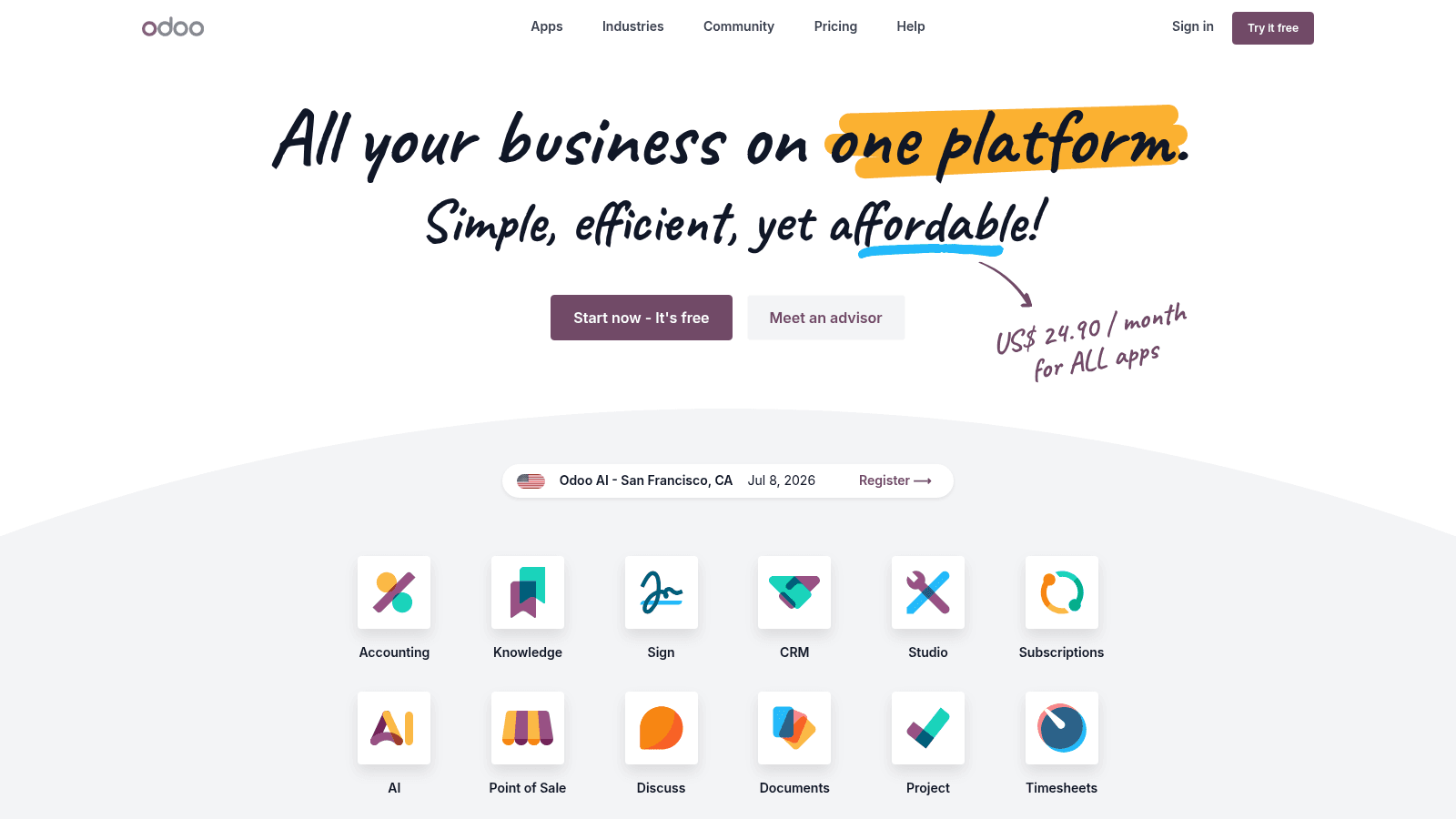
Odoo is an open-source ERP platform with a wide range of apps covering finance, sales, supply chain, inventory, marketing, and HR. It uses embedded AI to process tasks quickly and supports both a free Community edition and a paid Enterprise edition with extended functionality.
The system runs on a PostgreSQL database, giving businesses full control over their data without vendor lock-in.
Key Features
Pricing
$24.90/month for all apps. Free Community edition with limited features also available.
Pros & Cons
Why It's a Good Wholesale Order Management Software
Odoo combines order management with sales, inventory, and finance in one platform, with open-source flexibility for businesses that want to customize their wholesale order system.
Final Verdict
Odoo provides a broad, integrated approach to managing wholesale orders but may be more than small teams need for simple order tasks.
Overview
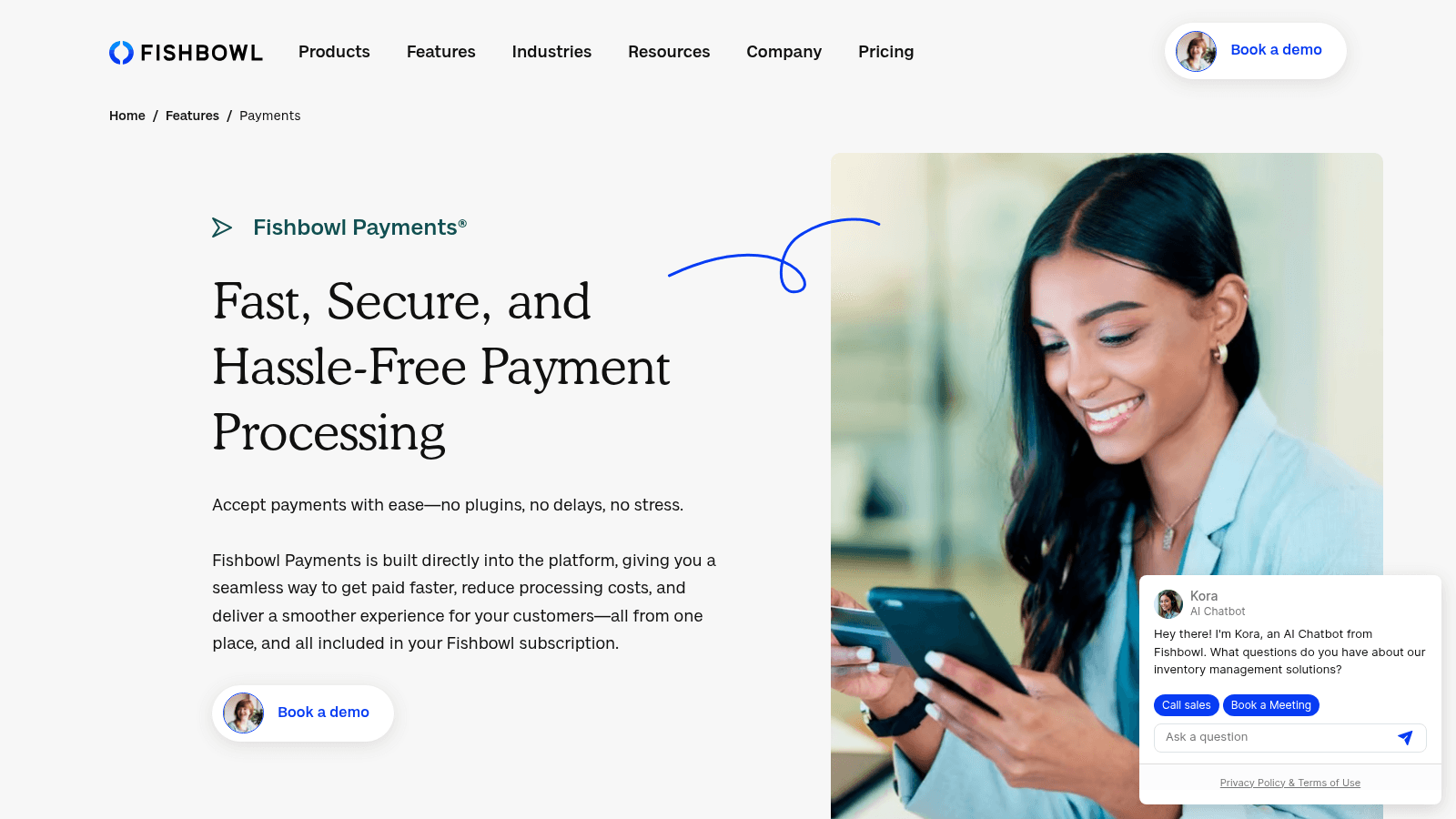
Fishbowl is an inventory and manufacturing platform designed to work with QuickBooks and Xero. It uses AI to automate purchase orders, manufacturing orders, work orders, and scheduling, and tracks inventory across multiple warehouses in real time.
The system supports barcode scanning and landed cost accounting, and connects with over 50 platforms including Salesforce and major e-commerce and shipping tools. Implementation typically takes 2 to 6 weeks.
Key Features
Pricing
From $4,395 (one-time perpetual license) plus $995 for the first year of maintenance. Subscription options available based on business size and needs.
Pros & Cons
Why It's a Good Wholesale Order Management Software
Fishbowl streamlines order and inventory management through automation and real-time tracking, with strong integration across accounting and sales systems to maintain data consistency.
Final Verdict
Fishbowl offers a comprehensive platform with AI features and broad integrations, though its cost and implementation time may be challenging for smaller teams.
Overview
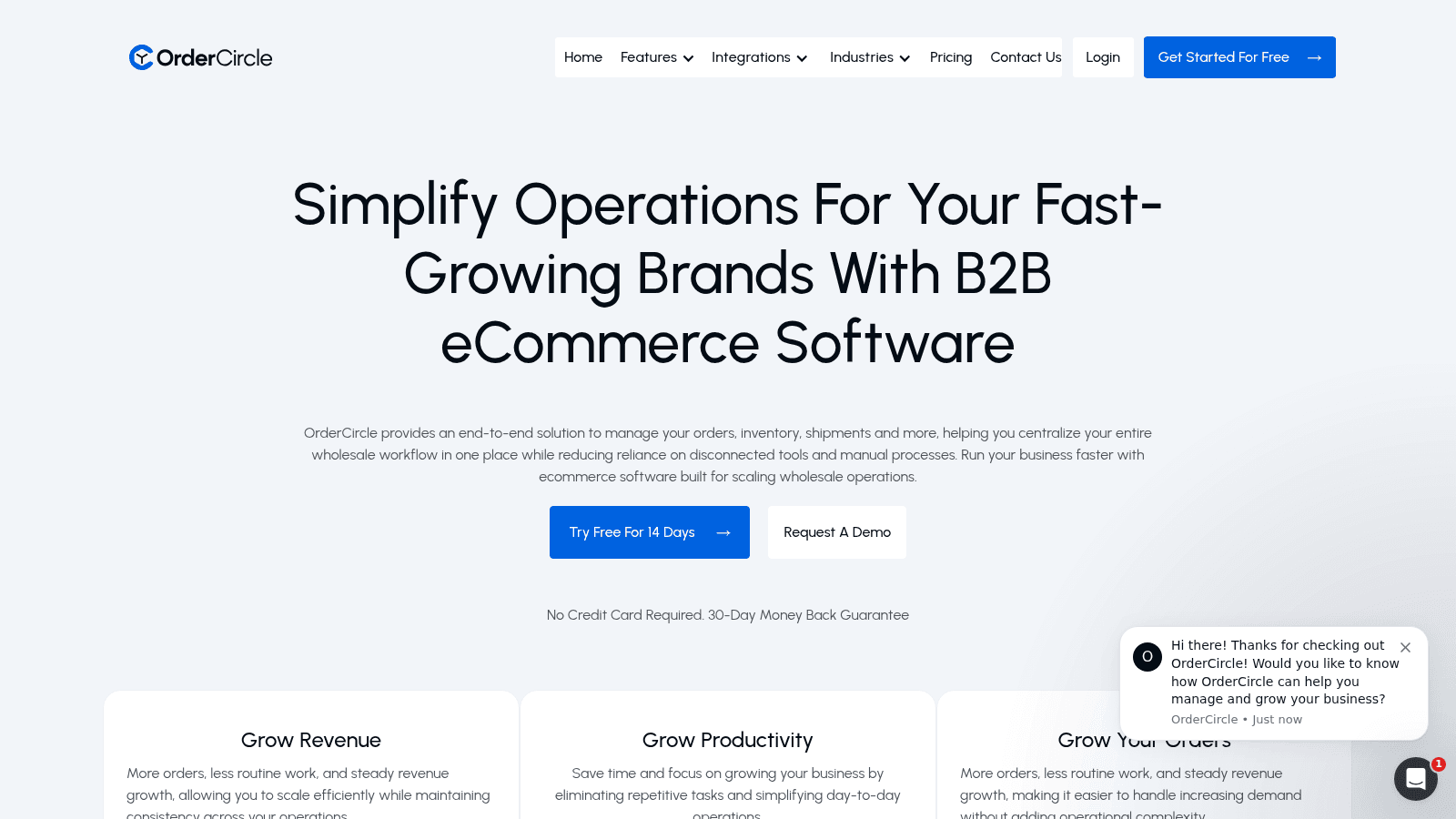
OrderCircle is wholesale order management software for B2B businesses that combines orders, inventory, shipping, and customer information in one place. It tracks orders from multiple channels, keeps customer data organized, and includes tools for forecasting inventory needs and monitoring shipments in real time.
The platform connects with accounting, shipping, and e-commerce apps including QuickBooks.
Key Features
Pricing
From $100/month for basic users. Enterprise solutions with custom features require contacting the provider for a quote.
Pros & Cons
Why It's a Good Wholesale Order Management Software
OrderCircle provides a centralized way to manage orders, inventory, and shipping across wholesale operations, supporting clearer order workflows and better stock management.
Final Verdict
OrderCircle brings together ordering, inventory, and shipping tasks in one platform but may require time to set up and learn.
Overview
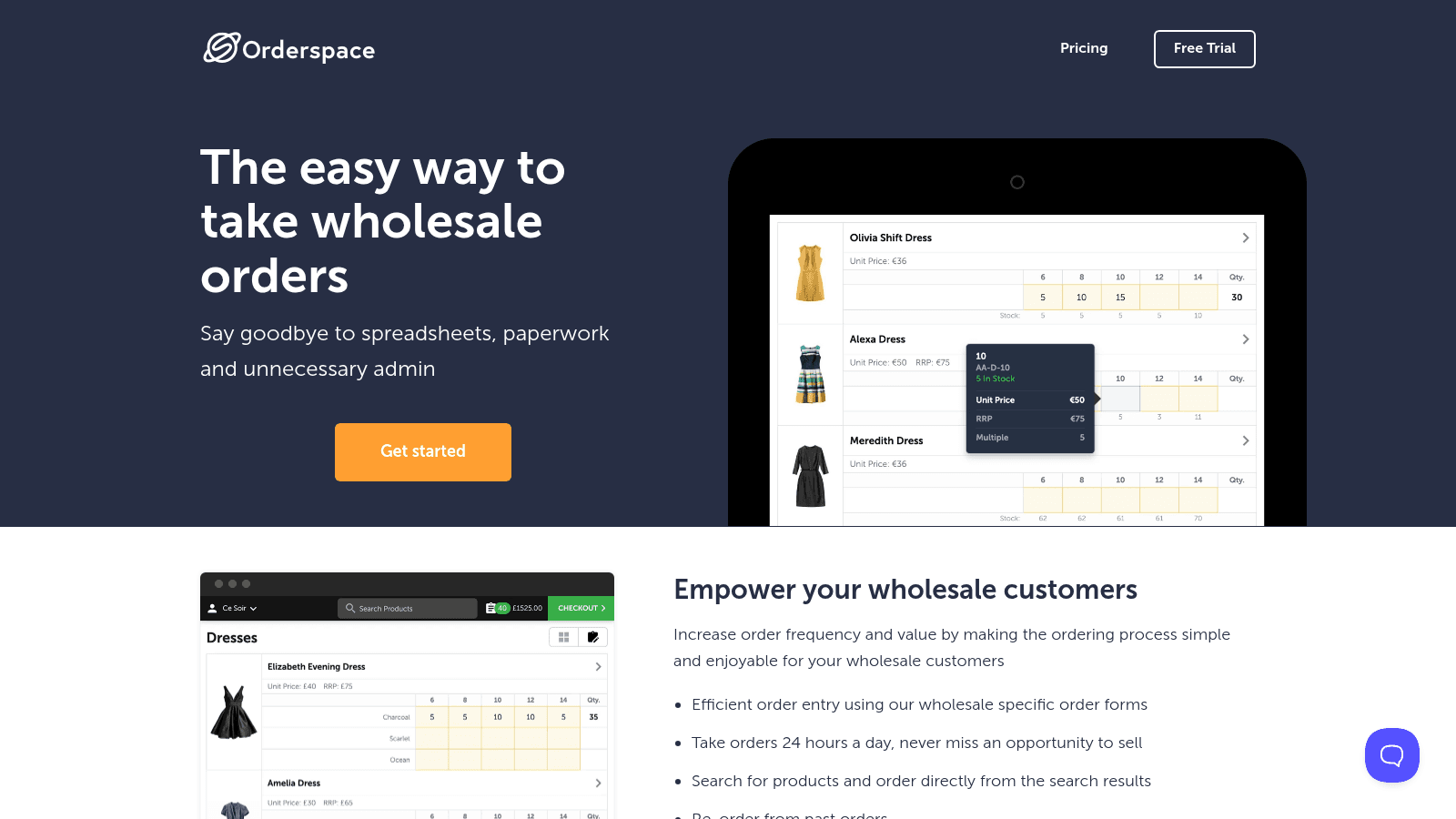
Orderspace is a wholesale order management platform built to replace spreadsheets and paperwork in B2B sales. It provides a private, branded ordering site where customers log in and place orders at any time, with support for customer-specific pricing, real-time stock levels, and wholesale rules like minimum orders and tiered discounts.
Sales reps can manage customers and orders remotely, and the platform connects with tools including Xero, QuickBooks, Shopify, Stripe, and PayPal.
Key Features
Pricing
From $99/month for up to 200 orders. Higher plans available for more volume. 30-day free trial with no payment details required.
Pros & Cons
Why It's a Good Wholesale Order Management Software
Orderspace centralizes orders and customer-specific rules in one branded platform, reducing errors and speeding up the ordering process for B2B wholesale operations.
Final Verdict
Orderspace provides a structured wholesale platform with useful order controls and integrations, though it may require setup effort for smaller users.
Overview
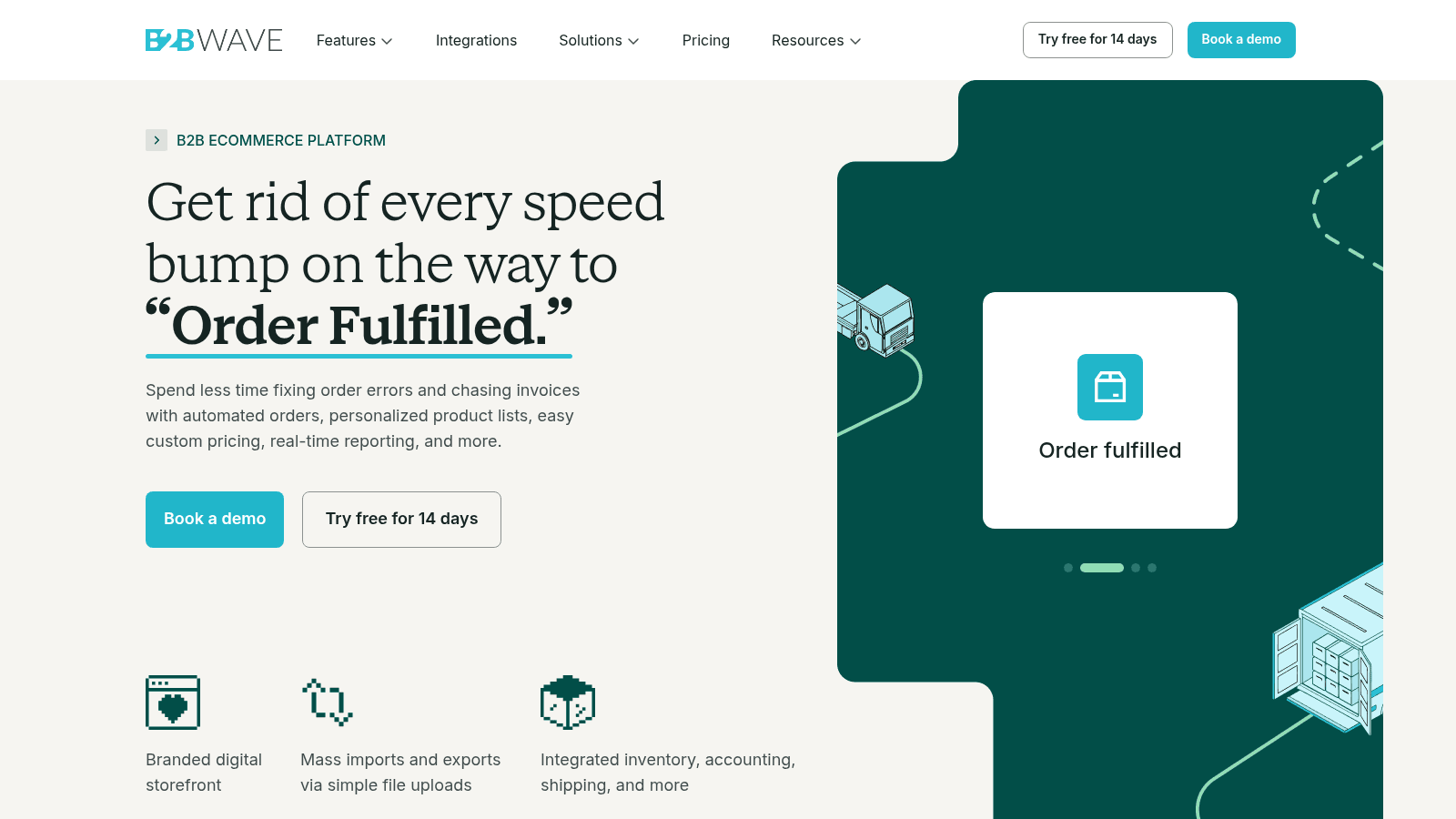
B2B Wave is a B2B e-commerce platform built for managing wholesale orders through branded online storefronts. It syncs inventory in real time, supports customer-specific pricing and personalized product lists, and connects with accounting and shipping tools to simplify workflows. Setup takes less than a month, with optional onboarding support available.
Key Features
Pricing
From $39/month, including unlimited users and orders. Optional onboarding support available for faster setup.
Pros & Cons
Why It's a Good Wholesale Order Management Software
B2B Wave offers centralized wholesale order management with real-time inventory and flexible pricing options, integrating with key business tools to keep orders moving smoothly.
Final Verdict
B2B Wave combines order management with e-commerce features, suited to businesses needing detailed pricing control and real-time inventory across wholesale channels.
Overview
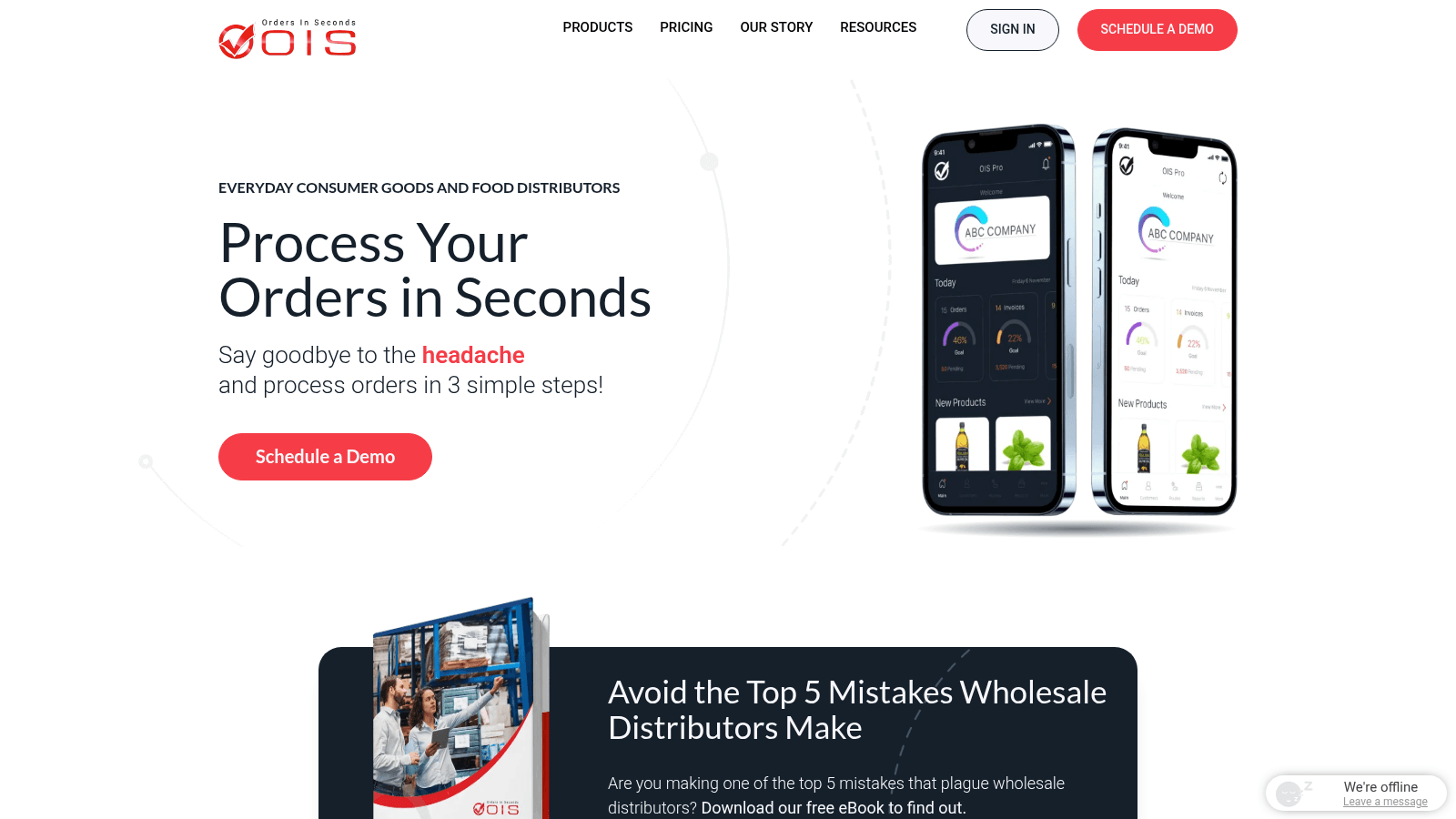
Orders in Seconds is wholesale order management software designed for distributors and manufacturers, simplifying the ordering process into three clear steps via a mobile app. It shows real-time inventory and uses barcode scanning to help warehouses fulfill orders accurately, and plans delivery routes automatically to speed up shipping and reduce costs.
The system connects with accounting and ERP systems including QuickBooks and SAP, with phone support and free sales resources included.
Key Features
Pricing
Tiered pricing based on the number of users and features needed. Contact the sales team for specific rates.
Pros & Cons
Why It's a Good Wholesale Order Management Software
Orders in Seconds automates key parts of the order and delivery process, helping teams handle larger volumes with fewer errors through mobile access and real-time inventory.
Final Verdict
Orders in Seconds organizes wholesale orders digitally and connects with existing business systems and delivery logistics, suited to distributor and manufacturer operations.
Overview
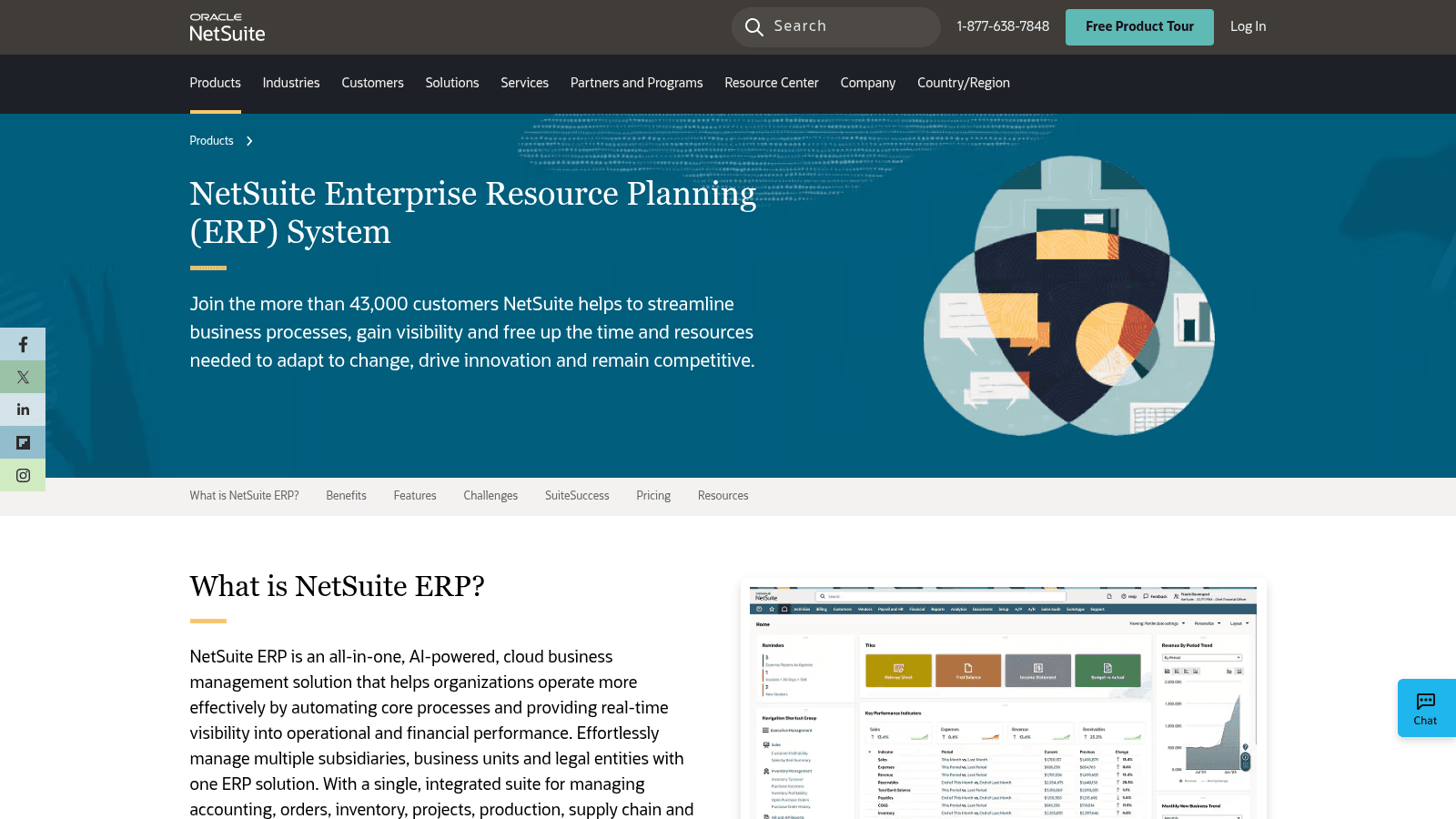
NetSuite ERP is a cloud-based system that uses AI to give real-time visibility into business operations and finances. It automates accounting, order processing, inventory control, supply chain management, warehouse operations, and procurement in one platform.
The system supports global operations through financial consolidation and enterprise performance management. It also includes SuiteSuccess, an industry-focused setup process designed to help businesses get started faster.
Key Features
Pricing
Annual subscription based on core platform, modules, and number of users, plus a one-time implementation fee. Contact NetSuite for a quote.
Pros & Cons
Why It's a Good Wholesale Order Management Software
NetSuite ERP organizes order and inventory processes to improve data accuracy and supply-demand balance, with warehouse and supply chain tools to handle high order volumes at scale.
Final Verdict
NetSuite ERP offers a comprehensive system for managing business operations at scale, but may be too complex and costly for small teams needing simple wholesale order management.
Finding tools worthy of this list meant focusing on a few practical questions: Does the software reduce the time it takes to process an order? Does it update inventory in real time? Can it connect with tools the business already uses, without requiring a full system replacement? And how quickly can a team get it running?
Tools were selected across a range of sizes and price points, because the right wholesale order management system depends on order volume, team size, and what the existing workflow looks like. Mapping that shape first is worth the hour, since your existing order management workflow decides which of these tools is actually a fit.
When evaluating wholesale order management software, focus on the features that directly affect speed and accuracy.
Real-time inventory visibility prevents overselling and helps teams confirm orders confidently, without guessing at stock levels.
Order automation reduces the number of manual steps between an order being placed and it being fulfilled, cutting processing time and the chance of entry errors. Look for warehouse order fulfillment software that keeps one queue from capture through to the pick, so nothing is re-entered on the way.
Multi-channel support matters if orders come from more than one platform. Software that consolidates orders from e-commerce sites, B2B portals, and other channels into one view saves significant time.
Integration with existing systems is often the deciding factor. Software that connects via API, EDI, or common file formats fits into the current workflow without forcing a full system change.
Mobile access lets sales reps and warehouse teams manage and place orders from the field, not just from a desk.
For food distributors, adding a voice-powered ordering tool alongside wholesale order software can also reduce order intake time significantly. VoiceOrder Solutions captures supplier orders by voice, digitizes them automatically, and transmits them directly to the distributor, removing phone calls and manual entry from the ordering process.
Two different purchases hide behind similar searches. Customizable ordering software for distributors is an off-the-shelf product you configure, while custom ordering software is written for you from scratch by a developer. For most distributors, the first is enough.
Configuration covers more than most buyers expect. Before you commission a build, check whether a configurable tool already lets you set these per customer:
Take an account with a $250 minimum, a 3 p.m. cutoff for next-day delivery and a hold once invoices run 45 days past due. In a configurable tool, those are three fields on the customer record. In a build, they are three features someone has to write, test and keep working.
A build earns its cost only when your workflow is genuinely unusual or you need an integration no vendor offers. Budget for what comes after launch as well. Someone has to maintain a custom system, fix it when your ERP updates, and extend it every time a customer asks for something new.
Choosing the right wholesale order management software starts with matching the tool to the operation's actual size and complexity.
For food distributors who also need to reduce the time spent placing orders with suppliers, VoiceOrder Solutions can work alongside any of these platforms, capturing orders by voice and transmitting them automatically without replacing the wider system.
Pricing across wholesale order management software varies considerably:
The range reflects the difference between focused B2B ordering tools and full enterprise platforms with ERP capabilities. Budget-conscious operations often find that lower-cost tools like B2B Wave and Zoho Inventory cover the basics effectively. More complex operations with multi-warehouse inventory, manufacturing, or global requirements typically justify the higher-tier platforms.
Implementation timelines vary considerably depending on the platform and the operation's size:
Timeline also depends on how many existing systems need integrating, how much data migration is required, and whether dedicated implementation support is included. Platforms with expert-led onboarding typically get teams to productivity faster than self-serve tools.
Free wholesale order management software can be a reasonable starting point for very small operations with low order volumes and simple workflows. Zoho Inventory's free plan, for example, supports up to 50 orders per month for one user with real features, not just a limited trial.
The trade-off is ceiling. Free plans typically restrict users, order volume, integrations, or reporting depth. As soon as an operation outgrows those limits, the time spent on manual workarounds usually costs more than a paid plan would.
Before choosing a free option, check what it specifically restricts: users, monthly order count, warehouse locations, or third-party integrations. A free plan that covers current needs but blocks a key integration may force a disruptive platform switch later.
Most tools above offer free trials even when they don't offer free plans (Unleashed, Orderspace, B2B Wave, inFlow). Testing before committing is worth the time.
Wholesale order management software changes the sales rep's job more than anyone else's. Once customers place routine orders themselves, the rep stops being the order desk and starts working the accounts, and that shift goes better when you plan it.
Start with how customers will order. Some will use a portal. Others won't log in to anything, and for those accounts a voice app such as VoiceOrder Solutions, which gives each account its own order guide and sends the order to the distributor digitized and timestamped, keeps it off the rep's phone.
Then give reps the tools for the new job:
Measure the change by what reps do with the time. If order-taking hours fall and calls to new accounts rise, the order management software for distributors has done its job. If the hours disappear into admin, the process needs another look.
Wholesale order management software spans a wide range, from simple B2B ordering portals to full enterprise platforms handling multi-warehouse inventory, global operations, and ERP-level integration. The right choice comes down to order volume, sales channel complexity, integration needs, and budget.
For most operations, the shortlist begins with those four questions: What's the order volume? What sales channels need connecting? How many systems need integrating? And how quickly does it need to be up and running?
For food distributors specifically, a voice-powered ordering tool like VoiceOrder Solutions can sit alongside any of the platforms above to automate the supplier ordering step. It captures orders by voice, digitizes them, and transmits them directly to the distributor, removing phone calls and manual entry from the process.
Contact VoiceOrder Solutions to see how it fits with your current wholesale order setup.
It helps keep orders organized and speeds up the whole process. With clear tracking and fewer mistakes, your team works better and customers get what they want faster.
Yes, many systems let you track returns easily. This keeps inventory accurate and makes refunds or replacements quicker and less confusing for everyone.
It tracks sizes, colors, and styles in real time. This way, you avoid overselling popular items or missing restocks, keeping your customers happy and sales steady.
Most connect smoothly with tools like accounting, shipping, and ecommerce platforms. This lets your systems talk to each other and cuts double work.
Usually yes, but many offer simple guides or support to help you get started. Learning helps your team use all features and avoid errors early on.