.webp)
Key takeaways:
Ordering from your distributors is the least glamorous job in a restaurant and one of the easiest to get wrong. A missed voicemail on the restaurant phone system, a misheard case count, or a rep typing "16-20 count" as "10-20" turns into a short delivery on a Friday night, and nobody finds out until the truck arrives.
Restaurant procurement software is supposed to close that gap. In practice the category is split: some tools are built to control spend, some to manage supplier catalogs, and only a few actually own the moment an order leaves your kitchen and reaches your distributor.
This guide ranks 12 options by what they genuinely do, with real pricing where it exists and honest limitations where it doesn't. The James Beard Foundation and Deloitte found that operators who invested in operations-focused technology, especially around inventory and supply, outperformed those who put their money into marketing tools, which makes this an unglamorous category worth getting right.
Restaurant procurement software is the system that handles buying: building an order from what you're short on, sending it to the right distributor, tracking what actually arrived, and reconciling the invoice against what you agreed to pay. It sits between your inventory counts and your accounting, and overlaps with the broader order management systems distributors run on their side.
The category name hides three separate buying motions. Order-capture tools focus on getting an accurate order to a distributor quickly. Spend-control tools focus on price variance, invoice matching, and food cost. Catalog and marketplace tools focus on consolidating many suppliers into one storefront, often through customizable ordering software the distributor provides.
Knowing which of the three you actually need matters more than any feature list. A restaurant losing money to price creep needs a different product from one losing money to short deliveries, and the tools below are grouped so you can tell them apart.
The supply side is changing at the same time. The IFDA found AI use among foodservice distributors roughly tripled between 2023 and 2025, with ecommerce and ordering the single most common application at 56% of adopters. Worth noting alongside that: nearly a third of those adopters said the technology underperformed what they expected.
The table below compares all 12 by their core job, published pricing, and main constraint. Read the "best for" column first, since a tool that is excellent at spend control may not touch the ordering step at all.
| Tool | Best for | Core job | Main limitation | Pricing (from) | Rating |
|---|---|---|---|---|---|
| VoiceOrder Solutions | Hands-free distributor reordering | Voice order capture | Voice-only intake, food distribution focus | Quote-based | ★★★★★ |
| MarketMan | Multi-unit food cost and COGS | Purchasing + inventory | Vendor and AI ordering cost extra | $199/month | ★★★★☆ |
| MarginEdge | Hands-off invoice processing | Invoice + cost control | Flat fee is steep for one small site | $350/location/month | ★★★★☆ |
| Craftable | Restaurant and bar margin control | Back-office + AP automation | No public pricing | Quote-based | ★★★★☆ |
| Supy | Multi-branch inventory and buying | Procurement + variance | Strongest outside North America | Quote-based | ★★★★☆ |
| ChefMod | Independents wanting managed buying | Managed procurement service | Service model, not self-serve software | Quote-based | ★★★★☆ |
| Cut+Dry | Distributor-run ordering storefronts | Ecommerce catalog | Your distributor must adopt it | Quote-based | ★★★★☆ |
| Pepper | Distributor-side order digitization | Inbound order automation | Sold to distributors, not restaurants | Quote-based | ★★★★☆ |
| Choco | Multi-channel order digitization | Inbound order automation | Sold to distributors, not restaurants | Quote-based | ★★★★☆ |
| Apicbase | Scaling multi-outlet groups | Recipe + procurement | Priced by outlet count | Quote-based | ★★★★☆ |
| Restaurant365 | Accounting-led operators | Accounting + purchasing | Heavy, long rollout | Quote-based | ★★★★☆ |
| Unleashed | Food businesses holding real stock | Inventory + purchasing | Built for wholesale, not kitchens | $99/month | ★★★★☆ |
Shortlist two or three that match your actual bottleneck, then book demos, because most of this list will not quote you a price without one.
Best for: hands-free reordering from distributors
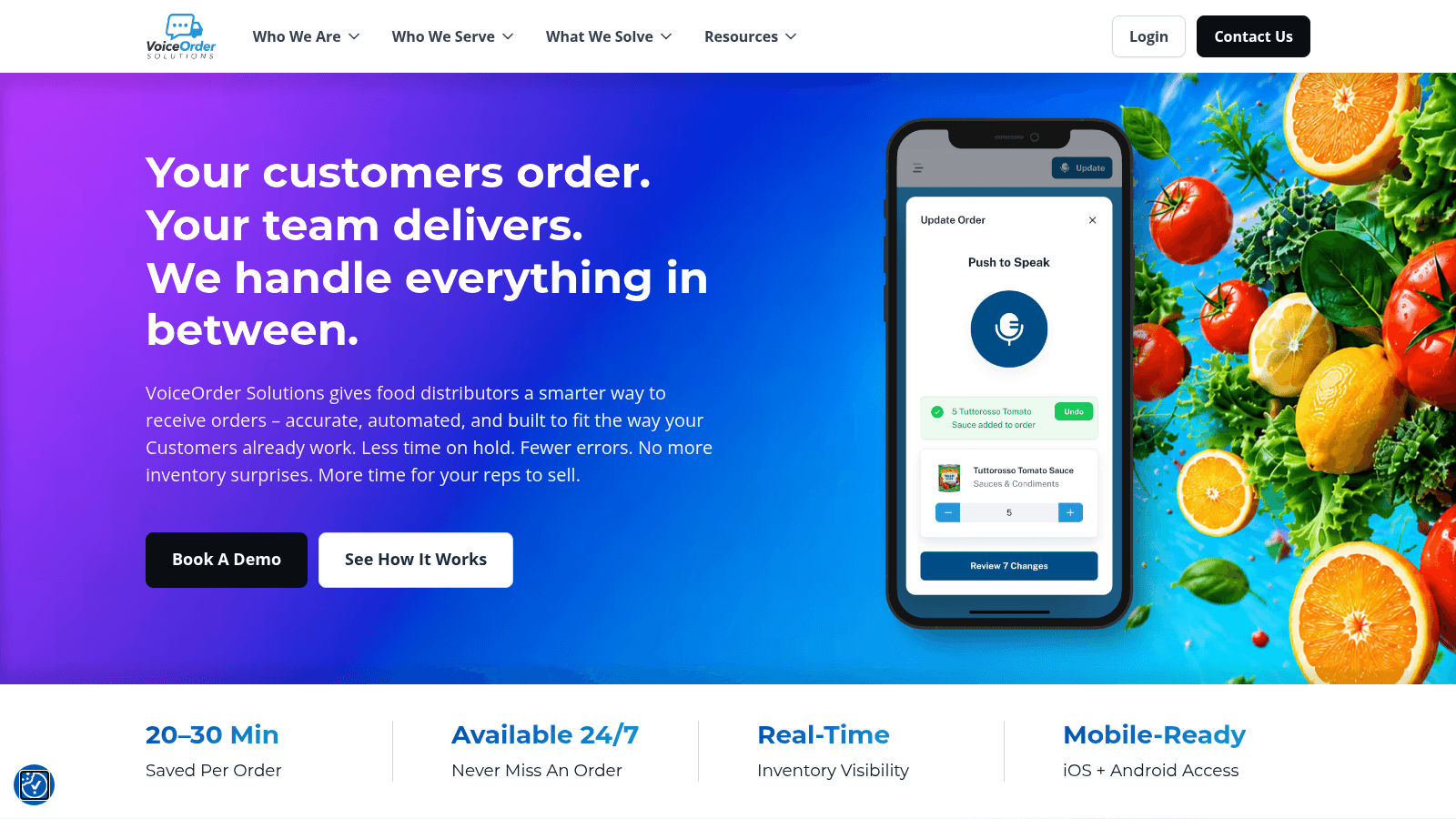
Overview: VoiceOrder Solutions takes a narrower view of procurement than most of this list. Instead of managing your stock levels or your accounting, it owns the moment an order leaves your kitchen: staff open the iOS or Android app and speak the order out loud while walking the walk-in.
The order is digitized, confirmed, timestamped, and transmitted to the distributor automatically, which removes the phone call and the re-typing that follow most purchase orders.
That focus is the point. Tools further down this list can generate a purchase order from par levels, but someone still has to get that order to the supplier and confirm it landed. VoiceOrder Solutions handles that step, including after hours, when orders are captured and queued rather than lost to voicemail.
It's built for food distribution specifically, and it layers alongside an existing POS, inventory system, or ERP rather than replacing any of them.
Key features:
Pricing: Quote-based, with no public tiers. Pricing is available on request, and setup for independent distributors runs 24 to 48 hours.
Pros: removes transcription errors before transmission, saves 20 to 30 minutes per order, works hands-free during a stock walk, captures orders outside business hours, layers on existing systems without a migration. Cons: voice-only intake won't suit teams that prefer typing an order, and it's specific to food and beverage distribution rather than general purchasing.
How to start using it:
Why it's a good restaurant procurement software: it fixes the specific failure that costs restaurants money, an order that was spoken correctly but recorded wrong. Final verdict: the strongest pick if your procurement problem is order accuracy and the time your managers lose placing orders, rather than food-cost reporting. Contact VoiceOrder Solutions for a demo.
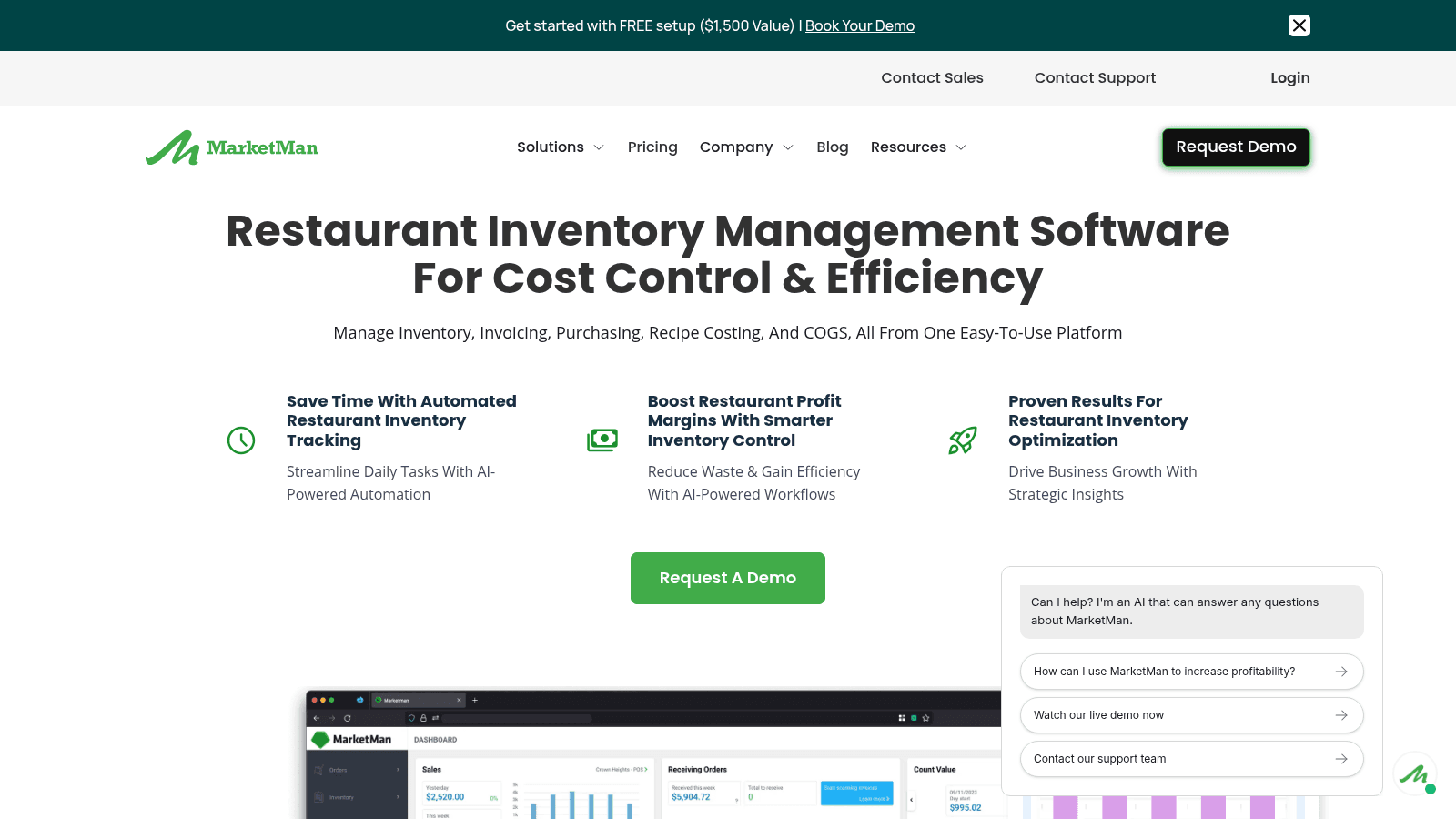
Overview: MarketMan is a cloud purchasing and inventory platform aimed at operators who want tight control of cost of goods. It builds purchase orders with suggested quantities, scans invoices, and flags supplier price changes.
Key features:
Pricing: Starter is $199 per month and Growth is $249 per month, billed monthly, with Enterprise on a custom quote. Vendor integrations and AI ordering are paid add-ons, and Starter caps invoice scans at 50 a month.
Pros: transparent pricing, strong price-variance alerting, well-established with multi-unit operators. Cons: the ordering integrations that matter most are add-ons, invoice scanning is capped on the entry tier, and there is no free trial.
Why it's a good restaurant procurement software: it connects what you buy to what it costs you, which is the core of spend control. Final verdict: the pick when your procurement problem is food cost drifting rather than orders going astray.
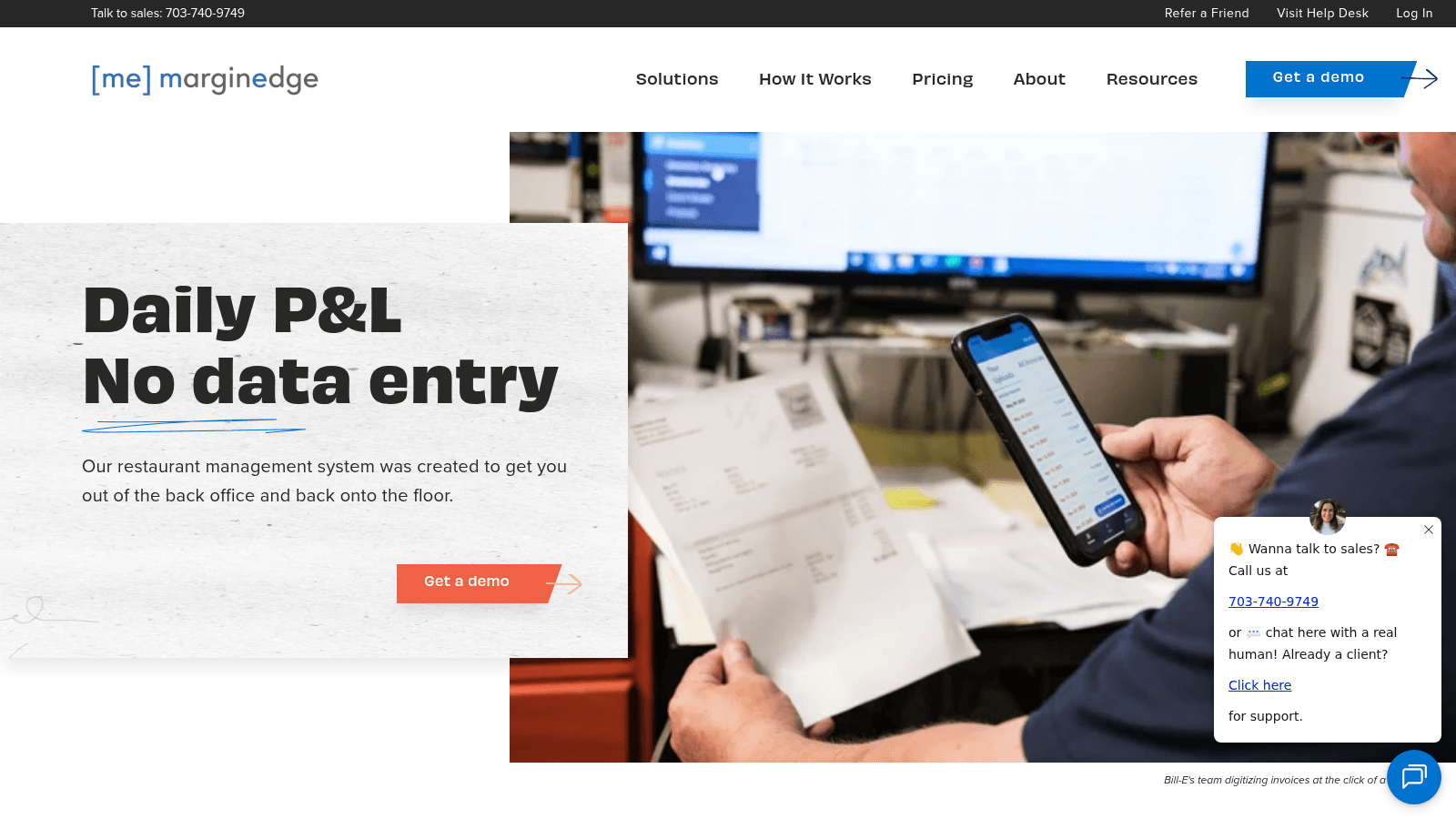
Overview: MarginEdge takes the invoice off your desk. You photograph a delivery invoice, and it comes back as itemized lines with updated prices flowing into food cost and recipe costing, with no per-module pricing to decode.
Key features:
Pricing: $350 per location per month, flat and all-inclusive, with no contracts and 10% off annual. Multi-unit operators with five or more locations get tiered pricing. A Toast API integration adds a $50 monthly Toast fee, and the Freepour bar add-on is $150 per location.
Pros: genuinely all-inclusive pricing, very little manual data entry, over 60 POS integrations. Cons: $350 is a lot for a single small site, the value depends on invoice volume, and it assumes you want the accounting side too.
Why it's a good restaurant procurement software: it removes the manual re-entry between a delivery and your books. Final verdict: best for operators who want invoices and food cost handled without hiring for it.
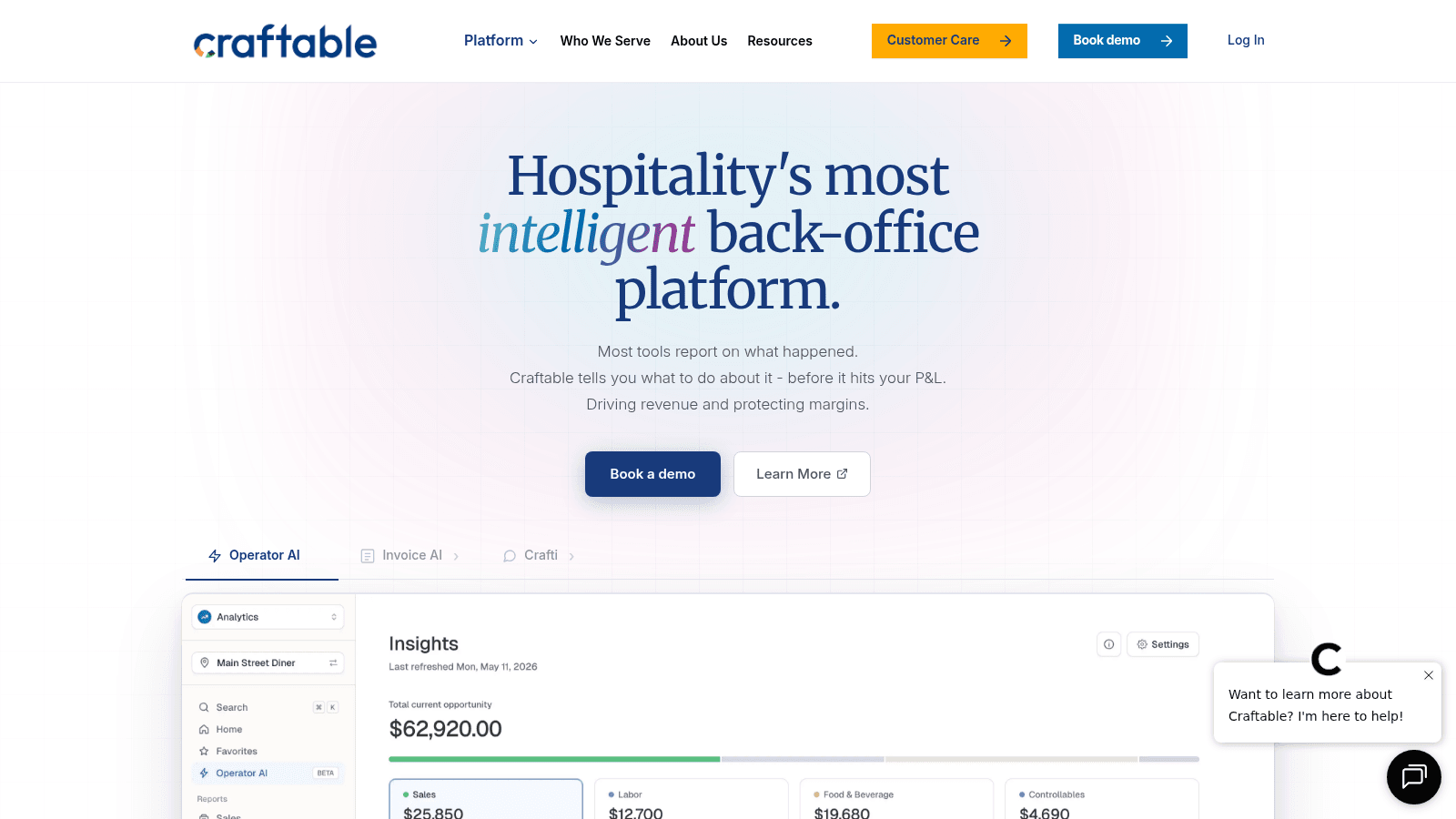
Overview: Craftable is a hospitality back-office platform built around margin, with unusually strong beverage coverage. It pairs ordering with three-way invoice matching and recipe costing that updates on live vendor pricing.
Key features:
Pricing: Custom only. There is no public pricing and the pricing page does not resolve, so you go through a demo.
Pros: handles food and bar programs equally well, strong invoice matching, useful margin analytics. Cons: no published pricing at all, a heavier setup than a pure ordering tool, and more product than a single small independent needs.
Why it's a good restaurant procurement software: three-way matching catches the billing errors that spot-checking misses. Final verdict: a strong fit for restaurant groups with a serious bar program and real margin pressure.
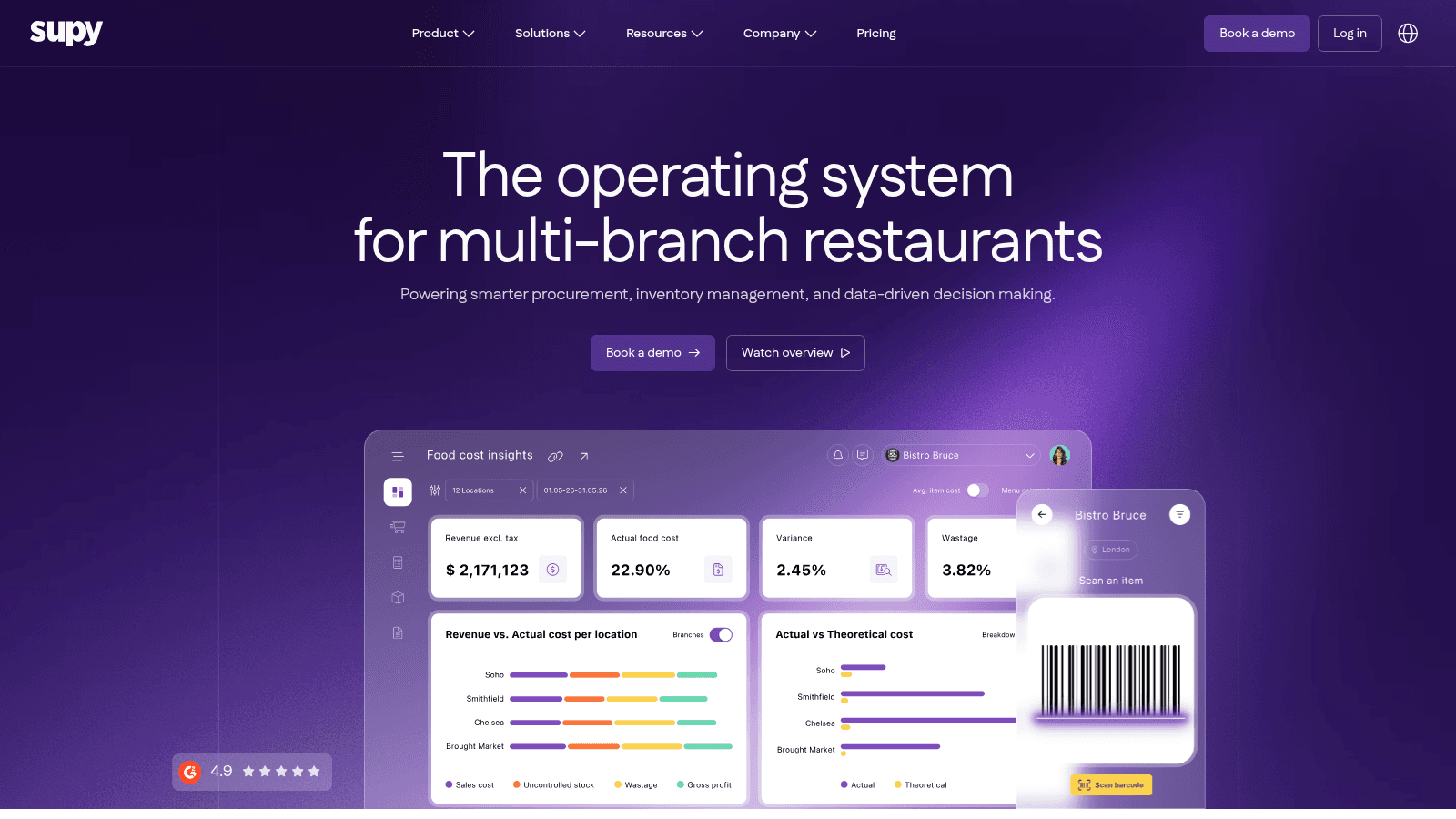
Overview: Supy is an inventory and procurement platform aimed at multi-branch operators, with supplier catalogs, purchasing approvals, and variance reporting in one place. Its strongest presence is in the Gulf and UK markets rather than North America.
Key features:
Pricing: Quote-based, with no published figures and a demo-gated funnel.
Pros: built for multi-branch structures from the start, good approval controls, clear variance reporting. Cons: no public pricing, a smaller North American footprint than the rest of this list, and distributor coverage depends heavily on your region.
Why it's a good restaurant procurement software: branch-level approvals and budgets are genuinely hard to retrofit, and Supy has them natively. Final verdict: worth a demo for multi-branch groups, particularly outside the United States.
Overview: ChefMod is closer to a managed service than pure software. Independent restaurants and groups get a purchasing platform plus account management, so a person helps run the buying rather than handing you a dashboard.
Key features:
Pricing: Quote-based, with no published figures. The commercial model is tied to the managed service rather than a per-seat license.
Pros: real human support rather than self-serve software, buying leverage a single independent cannot get alone, low internal admin burden. Cons: you are buying a service relationship, less direct control than software you run yourself, and no transparent pricing to compare.
Why it's a good restaurant procurement software: it suits operators who would rather delegate purchasing than administer another system. Final verdict: the option to look at if you want procurement handled for you, not by you.
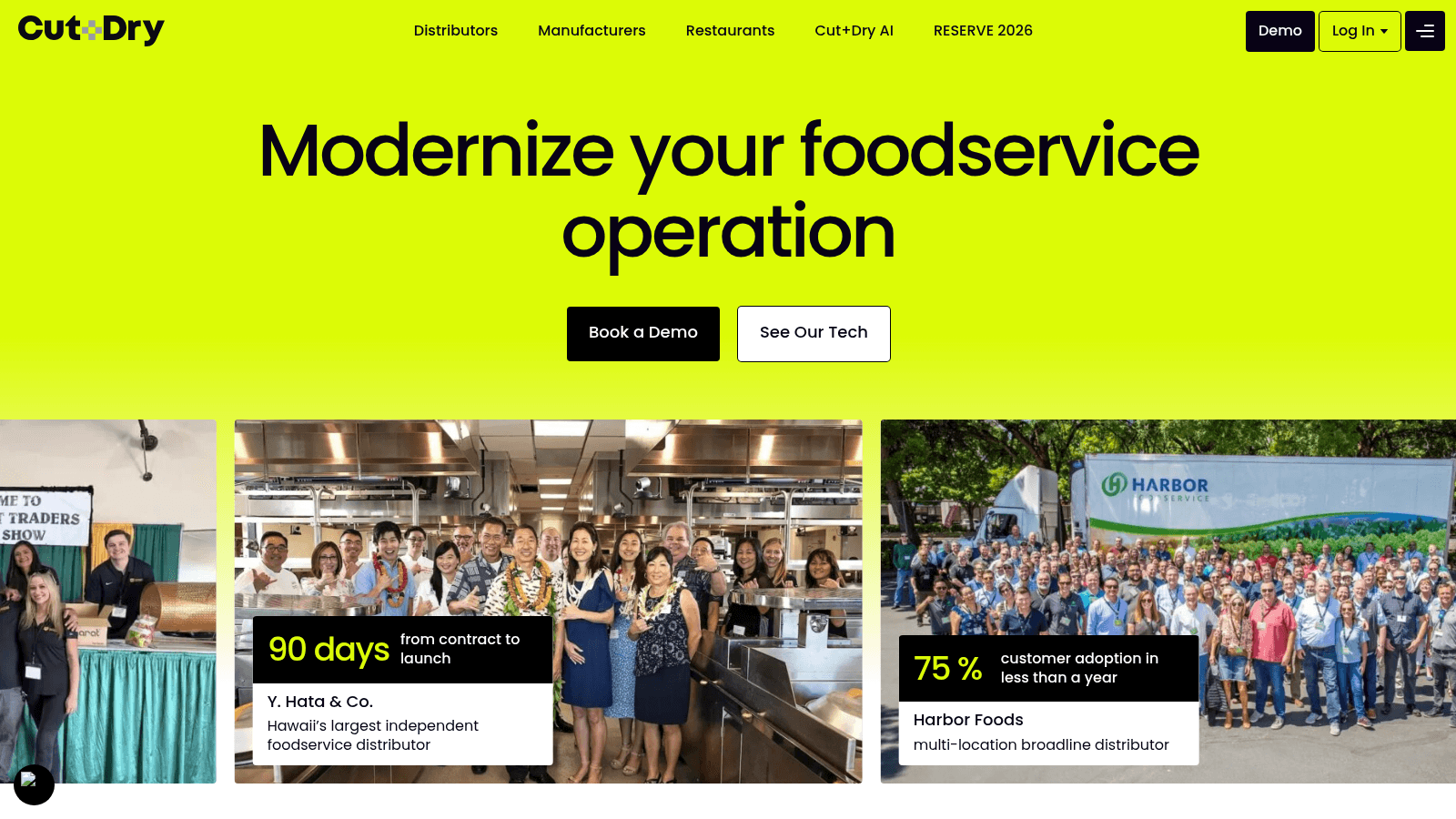
Overview: Cut+Dry is an ecommerce and sales-enablement platform for foodservice distributors. Restaurants encounter it as the online storefront their distributor provides, with structured catalog data instead of a messy PDF price list.
Key features:
Pricing: Quote-based. Pricing is not published anywhere on the site.
Pros: clean ordering experience when your distributor uses it, structured catalog data, straightforward reordering. Cons: you cannot adopt it unilaterally since your distributor must be on it, coverage varies by supplier, and it does not help with suppliers who aren't.
Why it's a good restaurant procurement software: it turns a distributor's catalog into something you can actually search and reorder from. Final verdict: useful if your main distributor already runs it, and irrelevant if they don't.
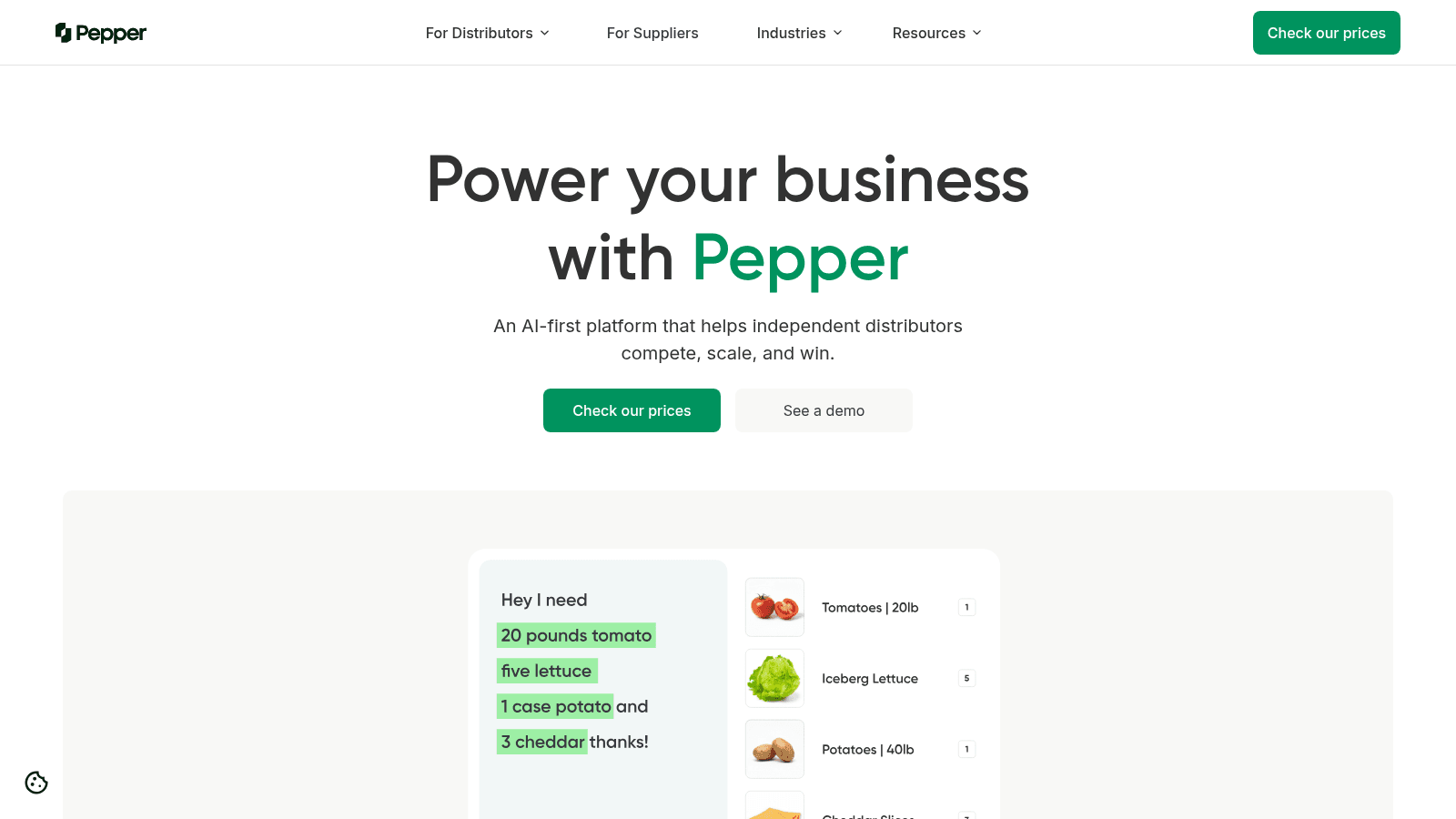
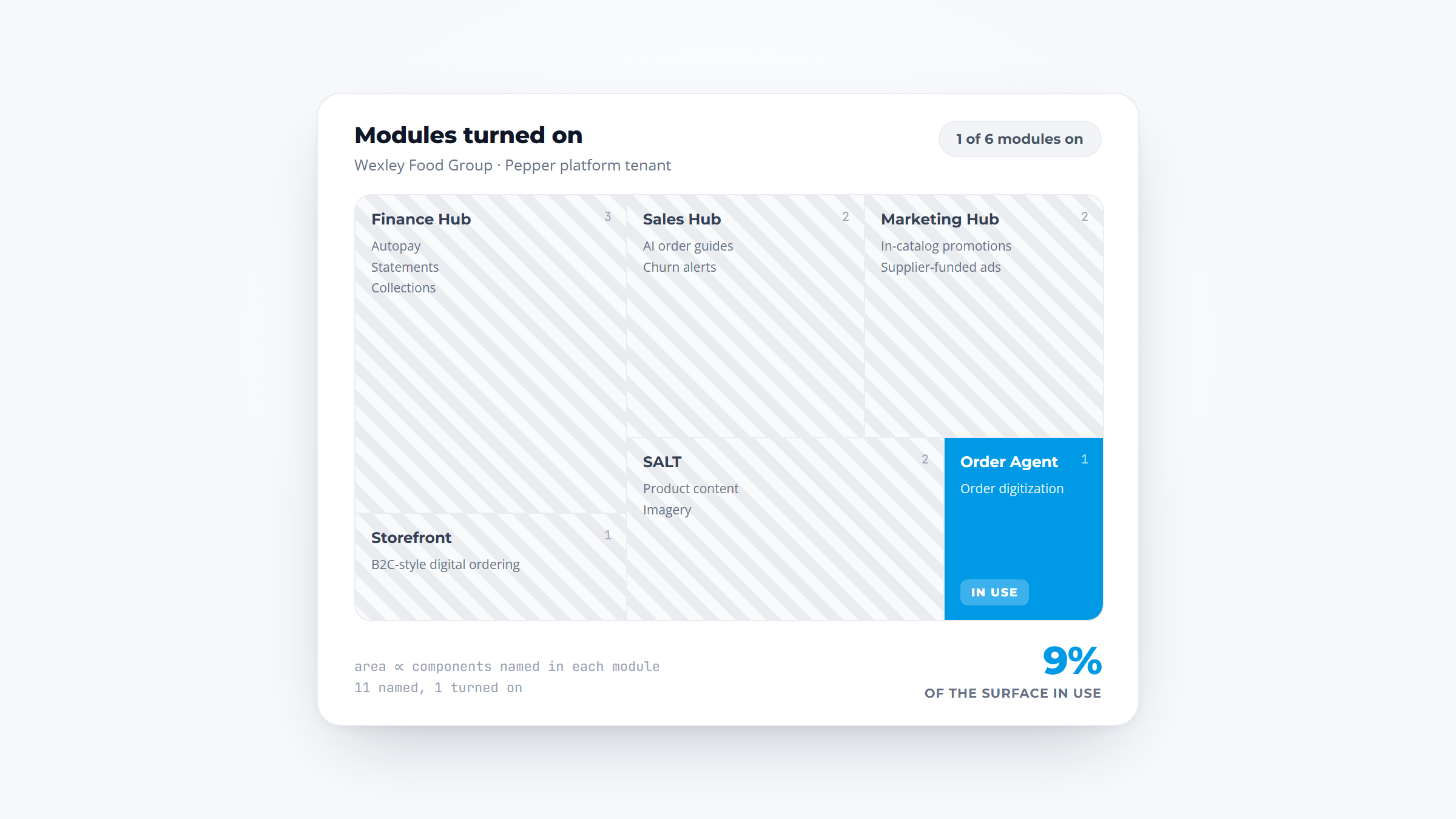
Overview: Pepper is an AI platform sold to independent food distributors rather than to restaurants. Its Order Agent ingests orders that arrive by voice, text, email, PDF, image, or handwriting and turns them into structured orders in the distributor's system.
Key features:
Pricing: Quote-based. The pricing page routes to a demo request rather than showing figures.
Pros: handles messy real-world order formats, removes distributor-side re-entry, broad module coverage. Cons: restaurants cannot buy it directly, the benefit depends entirely on your distributor adopting it, and there is no public pricing.
Why it's a good restaurant procurement software: if your distributor runs it, your existing ordering habits stop producing transcription errors on their end. Final verdict: relevant to restaurants only through the distributors that use it.
Overview: Choco follows the same distributor-side model as Pepper. Its OrderAgent digitizes orders arriving by voicemail, WhatsApp, email, text, or photo, and it adds an ecommerce storefront and a foodservice CRM around that.
Key features:
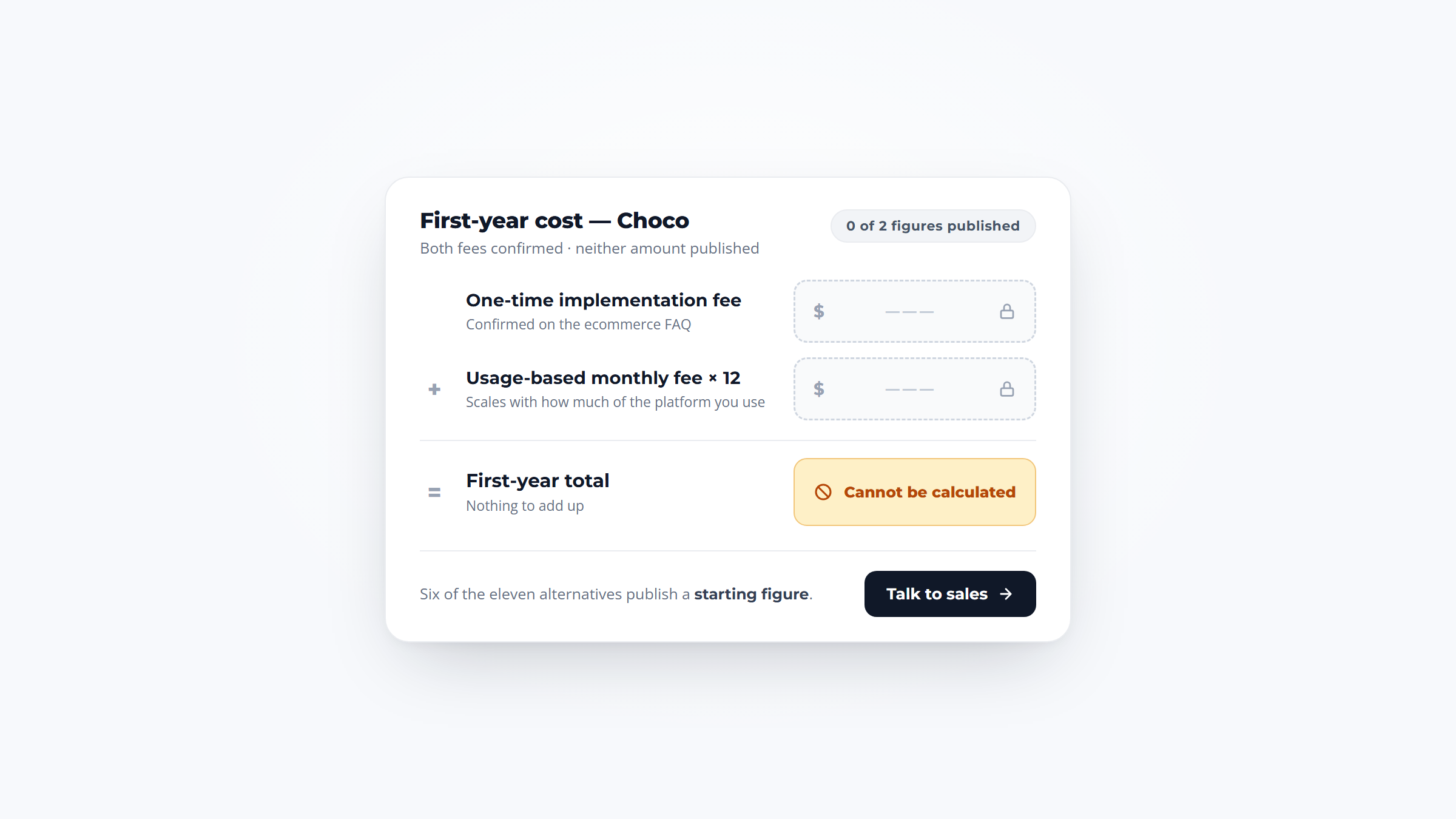
Pricing: Quote-based, described as a monthly fee that depends on usage, with sales contact required.
Pros: wide channel coverage including WhatsApp and voicemail, named ERP integrations including NetSuite and QuickBooks, established distributor footprint. Cons: sold to distributors rather than restaurants, no public pricing, and no benefit unless your supplier adopts it.
Why it's a good restaurant procurement software: it removes the manual transcription step on the supplier's side of your order. Final verdict: another distributor-side option you'll meet through your vendor rather than choose yourself.
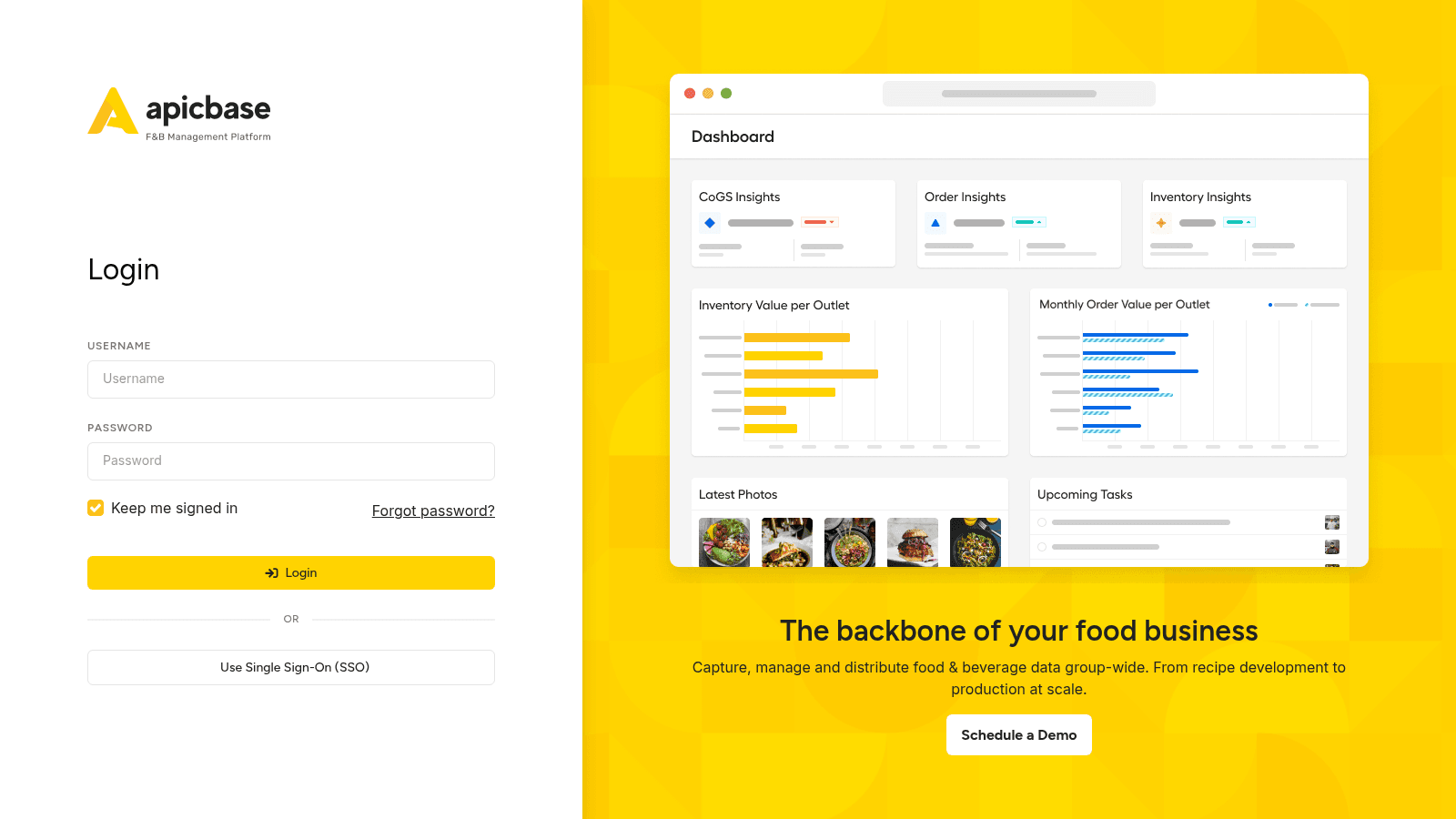
Overview: Apicbase is an F&B management platform for multi-outlet operators, strongest where recipes, procurement, and production planning meet. Purchasing runs off par levels and recipe demand rather than manual guesses.
Key features:
Pricing: Custom, scaled by outlet count, with Growth starting from five outlets. HACCP, internal ordering, production planning, traceability, and API access are add-ons.
Pros: tight link between recipes and purchasing, genuine multi-outlet design, strong compliance features. Cons: priced by outlets so small operators fit poorly, many capabilities sit behind add-ons, and demo-only pricing.
Why it's a good restaurant procurement software: buying driven by actual recipe demand beats buying driven by memory. Final verdict: best for scaling groups with standardized menus across several outlets.
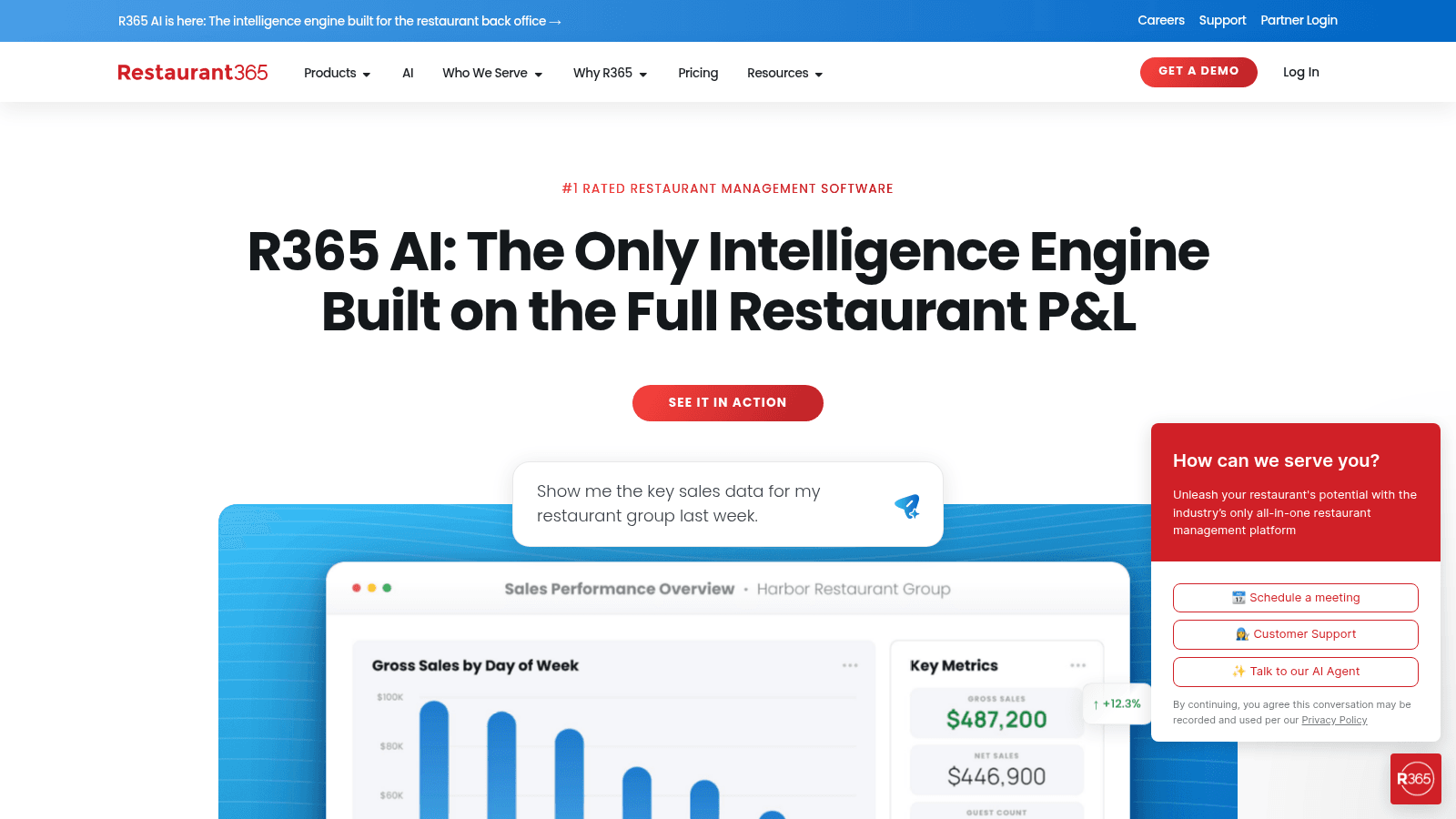
Overview: Restaurant365 is an all-in-one platform where purchasing is one module inside accounting, inventory, and workforce management. Vendor integrations feed automated accounts payable, so ordering and paying live in the same ledger.
Key features:
Pricing: Custom and modular, quoted after a demo. Note that some third-party write-ups still quote an old $399 monthly plan; the live pricing page shows only a custom quote, so treat that figure as stale.
Pros: procurement and accounting genuinely share one system, strong multi-location reporting, mature vendor integrations. Cons: the heaviest implementation here, more platform than a single site needs, and no public pricing.
Why it's a good restaurant procurement software: it closes the loop from purchase order to general ledger without exporting anything. Final verdict: the choice for accounting-led multi-unit operators, and overkill for everyone else.
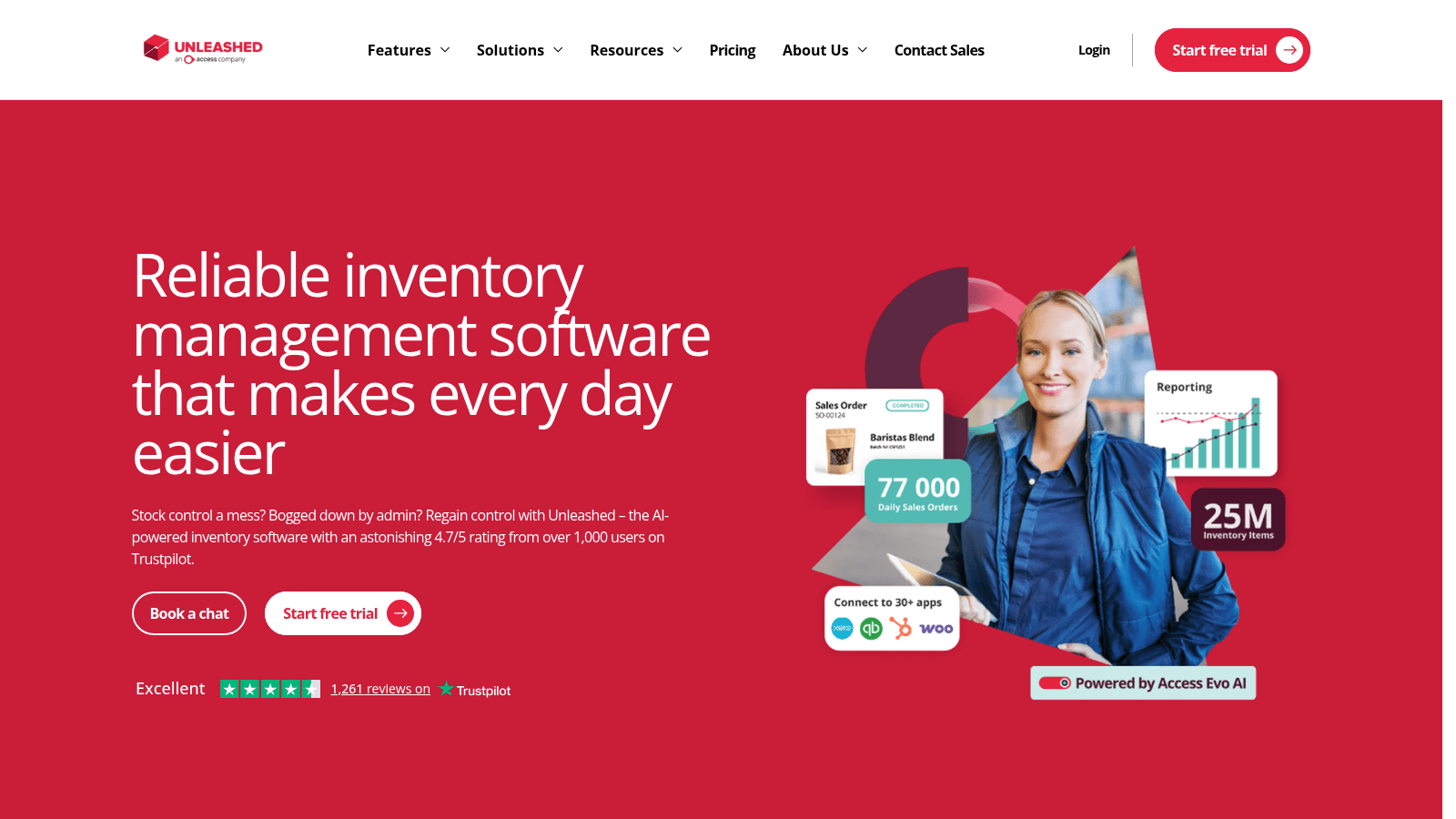
Overview: Unleashed is inventory and purchasing software built for wholesalers, distributors, and manufacturers rather than kitchens. Food businesses that hold real stock, such as commissaries, bakeries, and ghost-kitchen operators, use it for automated reordering and traceability.
Key features:
Pricing: Lite is $99 per month for three users and 100 sales orders, Core is $399, and Pro is $729. Extra users run $69 to $89, with a 14-day free trial.
Pros: published pricing, genuine traceability, strong supplier and reorder automation. Cons: built for wholesale rather than restaurant service, no recipe or menu costing, and order caps on the entry tier.
Why it's a good restaurant procurement software: it handles production-scale buying that restaurant-specific tools are not designed for. Final verdict: the right pick for food businesses that manufacture or hold inventory, not for a single dining room.
Every tool here had to be a real, currently operating product with a page we could reach and verify in August 2026. Anything whose site failed to load or whose category claim didn't match what the product actually does was cut.
We prioritized tools that touch procurement directly, rather than general inventory apps with a purchase-order field bolted on. Where a vendor published pricing, we quote the live figure; where it doesn't, we say so plainly instead of estimating a range.
We also separated restaurant-facing tools from distributor-facing ones. Pepper, Choco, and Cut+Dry are excellent at what they do, but you meet them through your supplier, and a buying guide that hides that distinction wastes your time. What those tools solve on the supplier side is a different discipline again, closer to distribution management than to procurement.
Finally, we treated vendor statistics as claims, not facts. Where a number below comes from a vendor's own marketing, it is attributed that way.
The feature lists in this category blur together, so it helps to test a shortlist against the things that actually break. Ordering fails at predictable points: the catalog, the confirmation, and the invoice. Catalog management software covers the first of those, keeping pack sizes and prices current so the order is right before anyone sends it.
Before you sit through a demo, get clear answers on these:
Ask for those answers in writing during the sales process. Every item on that list is something operators discover after signing, and each one is cheaper to check now than to work around later.
Start from the failure that costs you the most money, because the three groups in this list solve genuinely different problems.
If orders arrive wrong or late, the problem is capture and confirmation, and a tool like VoiceOrder Solutions or a distributor storefront addresses it. If your food cost is drifting without an obvious cause, the problem is price variance and invoice matching, which is MarketMan, MarginEdge, or Craftable territory. If you're managing many outlets with standardized menus, the problem is coordination, and Apicbase or Restaurant365 fit better.
Size matters as much as category. A single independent will find Restaurant365 heavy and MarginEdge's flat fee hard to justify, while a 20-unit group will find a lightweight ordering app insufficient on its own.
Most operators end up with two tools rather than one, typically an inventory or accounting platform plus something that owns the ordering step. That's a reasonable outcome, not a failure of shopping.
Pricing in this category is unusually opaque. Nine of the 12 tools here will not show you a number without a sales conversation, which makes budgeting difficult and comparison shopping slow.
Here is what is actually published as of August 2026:
| Tool | Published price | What it covers |
|---|---|---|
| Unleashed | $99/month (Lite) | 3 users, 100 sales orders, 3 integrations |
| MarketMan | $199/month (Starter) | Purchasing and inventory, 50 invoice scans |
| MarketMan | $249/month (Growth) | Higher limits and added features |
| MarginEdge | $350/location/month | All-inclusive, invoices and food cost |
| Unleashed | $399/month (Core) | 3 users, 500 orders, 5 integrations |
| Unleashed | $729/month (Pro) | 5 users, higher limits |
| All others | Quote only | Demo required before any figure |
Two things distort those numbers. Add-ons are common, so MarketMan's vendor integrations and AI ordering cost extra, and Apicbase gates traceability and internal ordering the same way. Per-location pricing also scales differently from per-account pricing, so MarginEdge's $350 is competitive for one busy site and expensive across twelve quiet ones.
Treat any figure you find in a third-party listicle with suspicion, including old Restaurant365 numbers still circulating. Prices in this category change, and vendors move to quote-only models more often than they move back.
Implementation time tracks how much of your operation the tool touches. A focused ordering layer can be live in days, because the only real setup work is loading your order guide and confirming your distributors.
Broader platforms take longer. Inventory and accounting tools need your item list, recipes, par levels, vendor catalogs, and POS connection mapped before the numbers mean anything, which realistically runs several weeks. Restaurant365 and Apicbase sit at the long end, and multi-outlet rollouts stretch further still.
The honest constraint is rarely the software. It's whether someone on your team owns the data cleanup, since an order guide with the wrong pack sizes produces wrong orders faster than before.
Budget for that person's time explicitly. Rollouts that stall almost always stall on catalog and recipe data, not on the vendor's implementation team.
There is effectively no free tier in this category, which tells you something. Unleashed offers a 14-day trial and MarketMan runs demos, but nothing here has a permanent free plan comparable to the free tiers you'll find in scheduling or POS software.
Spreadsheets remain the real free option, and plenty of operators still use them well. On Reddit, one operator asking how to handle ordering and paying multiple distributors got a straightforward answer from a bakery running weekly inventory and vendor-specific order forms, with one designated day each week for paying bills. That's anecdotal, but it reflects how many small operations genuinely work.
The spreadsheet approach breaks at predictable points: more than a handful of vendors, more than one location, or staff turnover that takes the tribal knowledge with it. If you can name the person who would notice a wrong delivery, a spreadsheet may still be fine.
When you can't, the cost of a missed or wrong order starts to exceed the software. That's the moment to buy, and not really before it.
The useful question is not which tool on this list is best, but which failure is costing you most right now. Procurement software only pays for itself when it removes a specific loss you can name.
If that loss is wrong or late orders, look at the order-capture end of this list and check distributor coverage first. If it's margin leaking through price changes and unmatched invoices, look at MarketMan, MarginEdge, or Craftable. If you're coordinating several outlets, Apicbase and Restaurant365 earn their weight.
Do the arithmetic before the demo. Count the hours your managers spend placing orders each week, add the cost of the last three delivery errors, and compare that against a $199 or $350 monthly line. If it doesn't clear easily, stay on spreadsheets a little longer.
For restaurants where the ordering step itself is the bottleneck, VoiceOrder Solutions is worth a conversation, particularly if your team is already walking the storeroom with a phone in hand. Operators can see how the workflow fits a food service operation before committing to anything.
Inventory software tracks what you have on hand and what it's worth. Procurement software handles what you buy: building the order, sending it to a supplier, and reconciling what arrives. Many platforms do both, but the ordering step is often the weaker half. If a tool generates a purchase order and then expects you to phone it through, it's an inventory tool with a procurement feature, not a procurement system.
Sometimes, but not automatically. A single site with three or four vendors and a manager who knows the order by heart can run well on spreadsheets and order forms. The economics change when you add locations, add vendors, or lose the person who held it all in their head. Count the hours spent ordering and the cost of recent delivery errors, and buy when that total clearly exceeds the subscription.
Most of this category sells through demos because pricing depends on your location count, outlet size, invoice volume, and which modules you take. Nine of the 12 tools here are quote-only. It's not necessarily a red flag, but it does mean you should get quotes from two or three vendors before committing, since there is no list price to anchor against.
This is the question worth asking first, and the answer varies enormously. Distributor coverage is specific rather than universal, so a tool that integrates with major broadline distributors may not reach the local produce supplier you use twice a week. Ask for confirmation by supplier name during the sales process rather than accepting a general claim about integrations.
Buying for the wrong bottleneck. Operators frequently purchase a full inventory or accounting platform hoping it will fix orders arriving wrong, then discover the ordering step still runs through a phone call. Diagnose whether your problem is capture, cost control, or coordination before you shortlist, because those three problems have genuinely different solutions on this list.