.webp)
Key takeaways:
Keeping track of stock and orders can slow down any wholesale business. Using smart inventory software designed for wholesalers speeds things up. It helps organize products, track shipments, and manage stock levels easily.
This system saves time and cuts errors so orders move faster. The right wholesale inventory software lets teams work better together and keeps customers happy.
Here's a look at how these tools make ordering quicker and simpler, helping businesses grow smoothly in 2026.
Wholesale inventory management software is a handy tool that helps businesses keep track of their products. It makes managing stock easier and faster. Instead of doing everything by hand or using spreadsheets, this software organizes all the inventory in one place.
This kind of software usually does a few key things:
Using this software means fewer mistakes. When stock levels are clear, orders move quickly without delays. It also saves time by automating tasks that usually take a lot of effort.
Another big plus is better planning. It shows trends and helps predict what products will sell fast. This way, businesses avoid overbuying or running out of popular items.
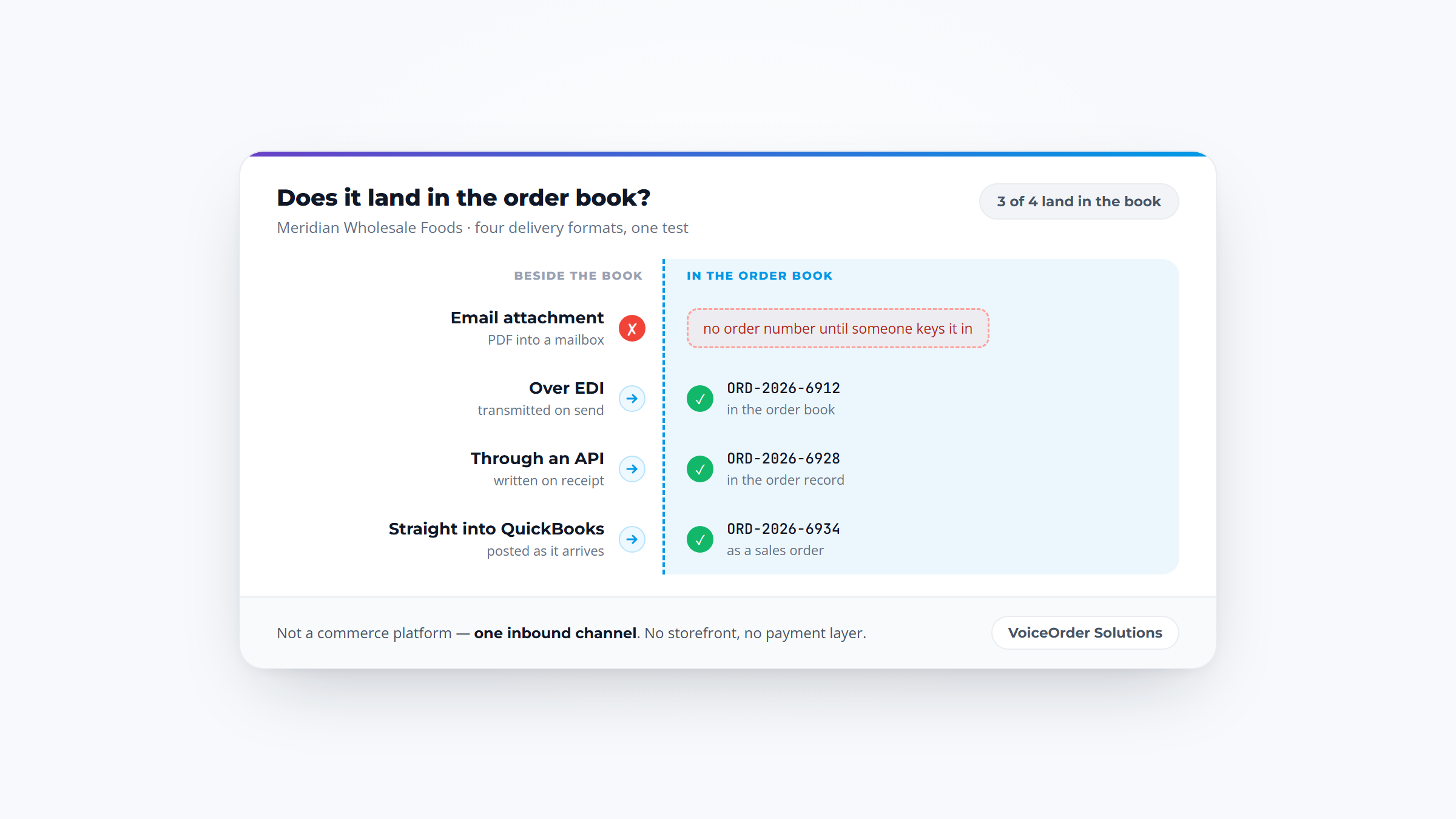
Wholesale inventory management software works well for any size of business. Whether it's a small wholesaler or a large distributor, it streamlines daily work and improves how orders are handled. Food distributors that receive restocking orders by phone can also pair their inventory system with a voice ordering tool like VoiceOrder Solutions to capture and transmit orders hands-free.
In short, this software keeps products organized, speeds up order processing, and helps businesses stay ahead. It's like having a smart helper that makes inventory and order management simpler and more reliable.
Using wholesale inventory management software right can speed up your orders a lot. Focus on these key steps: keep product info updated, track stock in real-time, and automate order alerts.
This helps avoid delays, reduces errors, and keeps everything running smoothly for quicker deliveries.
Also, here are the best wholesale inventory management software:
| # | Tool Name | Best For | What It's Used For | Key Features | Main Limitations | Ease of Use | Pricing | Our Rating |
|---|---|---|---|---|---|---|---|---|
| 1 | Cin7 | Multi-warehouse, AI forecasting | Inventory & order management | Real-time inventory, AI demand forecasting, multi-channel management | Higher price, complex setup | Medium | $349 / month | ⭐⭐⭐⭐ |
| 2 | Katana | Manufacturing, multi-channel sales | Inventory + production tracking | Stock visibility, order syncing, batch and warehouse tracking | Complex for small teams, higher pricing | Medium | $299 / month | ⭐⭐⭐⭐ |
| 3 | Zoho Inventory | Multi-channel sales, order control | Order & shipping management | Purchase & sales orders, shipping integrations, workflows | Pricing rises with scale, some dependency on Zoho ecosystem | Easy | $0 (free) to $249 / month | ⭐⭐⭐⭐ |
| 4 | inFlow Inventory | Multi-location, warehouse tools | Stock sync and order automation | Auto-updates, real-time stock, mobile warehouse tools | Setup complexity, manufacturing features | Medium | $89 / month | ⭐⭐⭐⭐ |
| 5 | Unleashed | Multi-warehouse, B2B ecommerce | Inventory & reorder automation | Multi-warehouse management, automated POs, B2B integration | Pricey for small teams, learning curve | Medium | $299 / month | ⭐⭐⭐⭐ |
| 6 | Fishbowl | Automation, multi-warehouse | Inventory + manufacturing orders | AI automation of orders, real-time tracking, barcode scanning | High upfront cost, limited customization | Hard | $4,395 (one-time) | ⭐⭐⭐ |
| 7 | Descartes Finale | Ecommerce, warehouse automation | Multichannel syncing & warehouse | Real-time syncing, barcode automation, accounting integration | Setup time, costly for small businesses | Medium | $299 / month | ⭐⭐⭐⭐ |
| 8 | Ordoro | Shipping + inventory automation | Order fulfillment & shipping | Automated workflows, deep integrations, shipping tools | Price grows with volume, complexity for small teams | Easy | $59 / month | ⭐⭐⭐⭐ |
| 9 | Sortly | Mobile access, item organization | Inventory tracking on-the-go | Barcode/QR scanning, cloud sync, low stock alerts | Complexity grows with users, limited reporting | Easy | Varies, free trial | ⭐⭐⭐ |
| 10 | Brightpearl | Automation, multi-location | Order & inventory management | Automation engine, multi-location, retail analytics | Expensive, requires expert setup | Medium | $500 / month | ⭐⭐⭐⭐ |
| 11 | Extensiv | Warehouse automation, scalability | Warehouse management & labor analytics | Warehouse automation, labor analytics, real-time tracking | Pricing unclear, complex for small teams | Hard | Custom | ⭐⭐⭐ |
| 12 | Veeqo | Multi-marketplace, shipping combo | Inventory + shipping management | Real-time stock, bulk label printing, marketplace integrations | Pricing may be high for small teams | Easy | $19 / month | ⭐⭐⭐⭐ |
Overview
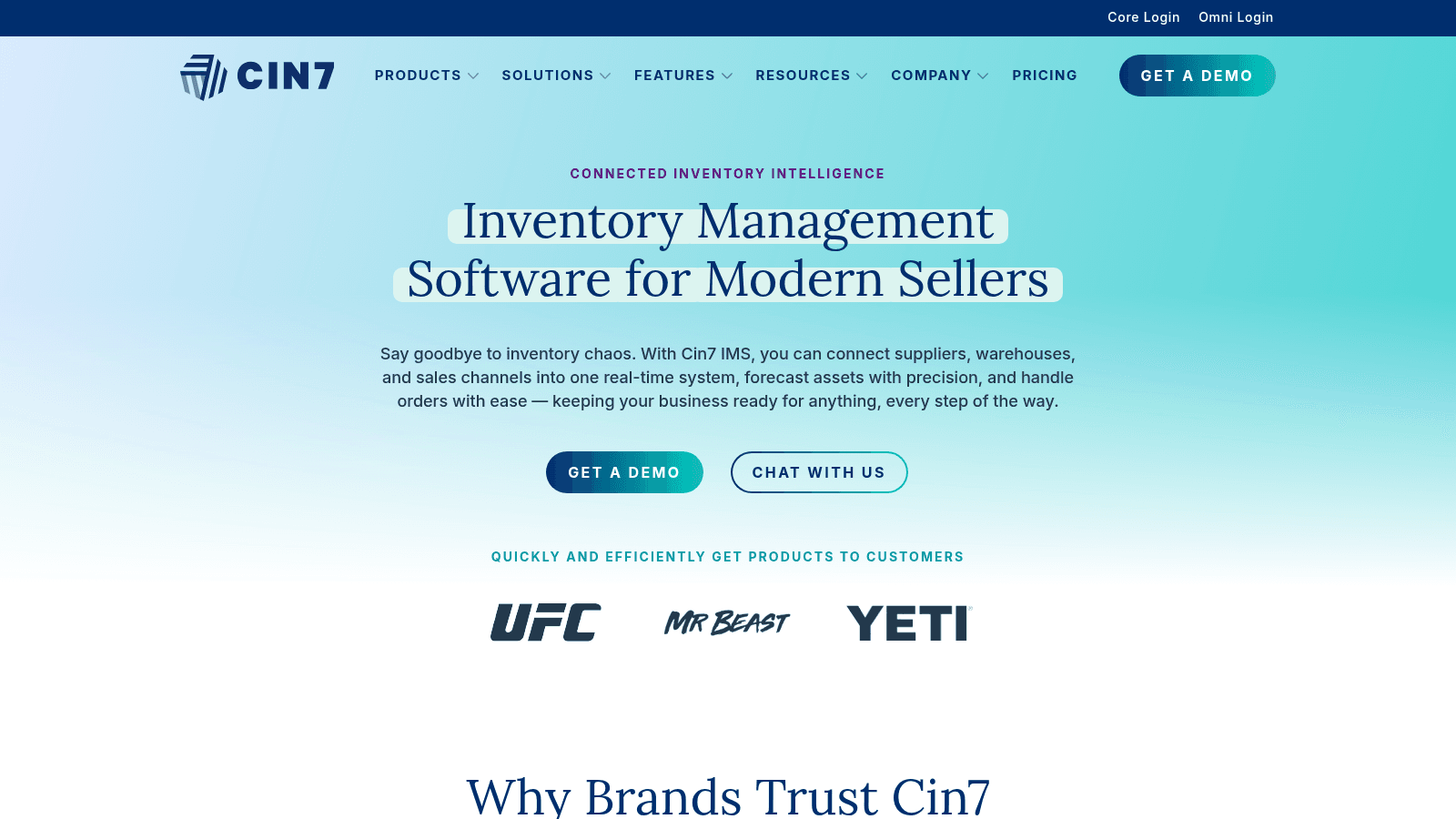
Cin7 is a cloud-based inventory management and small business ERP software. It tracks inventory in real time and manages orders across multiple sales channels and warehouses. The software includes manufacturing tools and syncs financial data with QuickBooks and Xero. It uses AI forecasting to help control stock levels and features automation to simplify workflows. Cin7 connects with over 700 third-party apps such as Shopify, Amazon, and ShipStation.
Key Features
Pricing
Cin7 pricing starts at $349 per month for up to 6 integrations. It scales to support growing businesses with more advanced needs.
Pros & Cons
Why It's a Good Wholesale Inventory Management Software
Cin7 offers tools that address order speed and inventory accuracy, key for wholesale businesses. However, smaller teams might find its price and complexity more than they need.
Final Verdict
Cin7 provides a wide range of inventory management functions suited for wholesale businesses with growing or diverse operations, though it may be less practical for small teams with simpler needs.
Overview
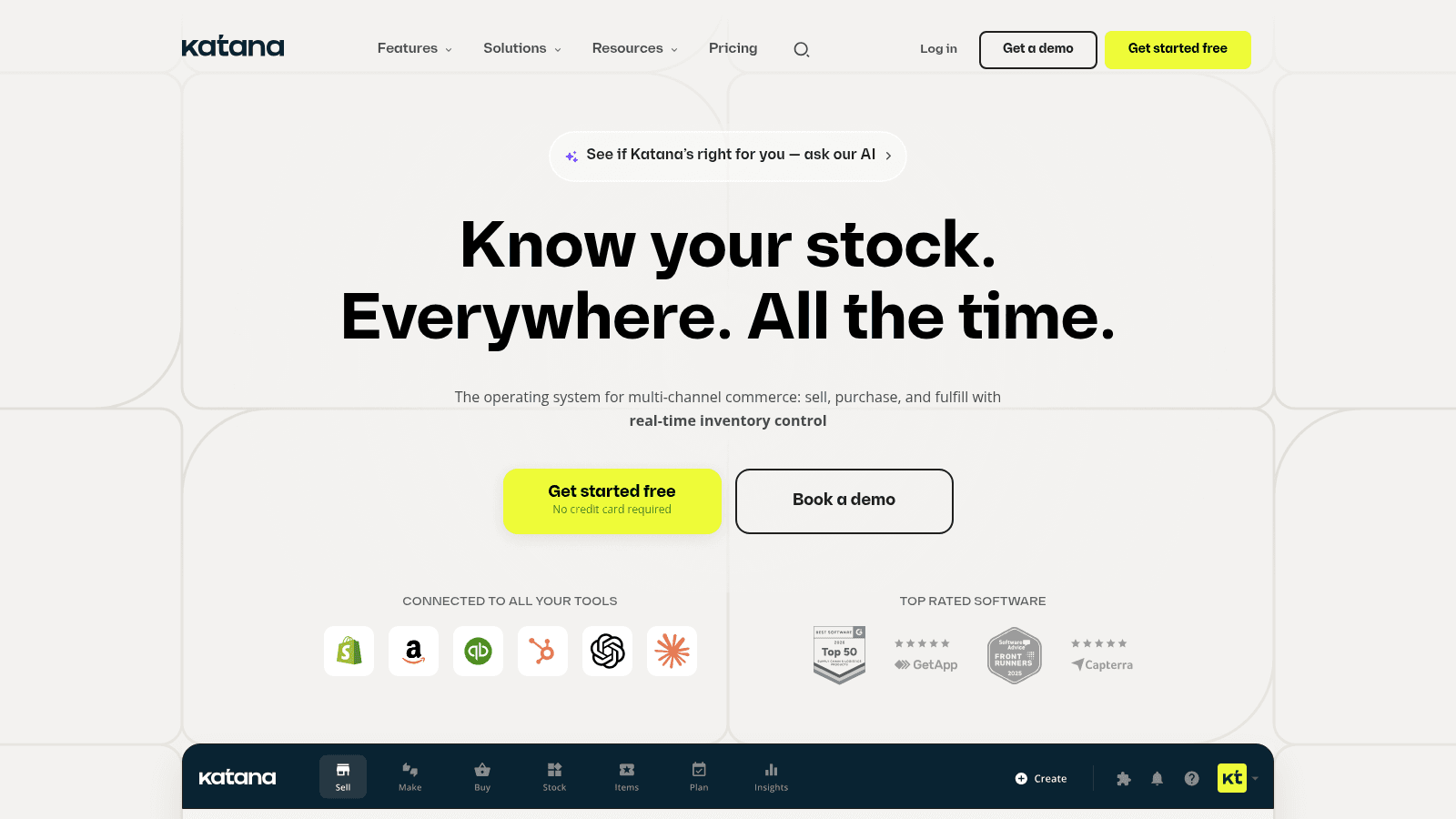
Katana is cloud inventory management software designed for businesses selling products through multiple channels. It shows real-time stock levels across unlimited products and locations. The platform offers tools to track manufacturing stages, sync orders, and manage warehouses. It supports batch and serial number tracking, tariff controls, and managing outsourced production. Katana connects with many services like Shopify, Amazon, QuickBooks, HubSpot, and over 50 others via built-in integrations and APIs.
Key Features
Pricing
Pricing starts with a free plan allowing 30 SKUs, 3 locations, and unlimited users. The Core plan begins at $299 per month and offers unlimited products and integrations. A custom plan is available for more complex needs.
Pros & Cons
Why It's a Good Wholesale Inventory Management Software
Katana organizes stock and production data in one place to help businesses keep track of orders and supplies. It also works with many sales platforms, allowing teams to manage orders and inventory across multiple channels.
Final Verdict
Katana provides a set of inventory and production tools suited to businesses managing products through various sales channels, with pricing and features that may suit mid-size operations more than small teams.
Overview
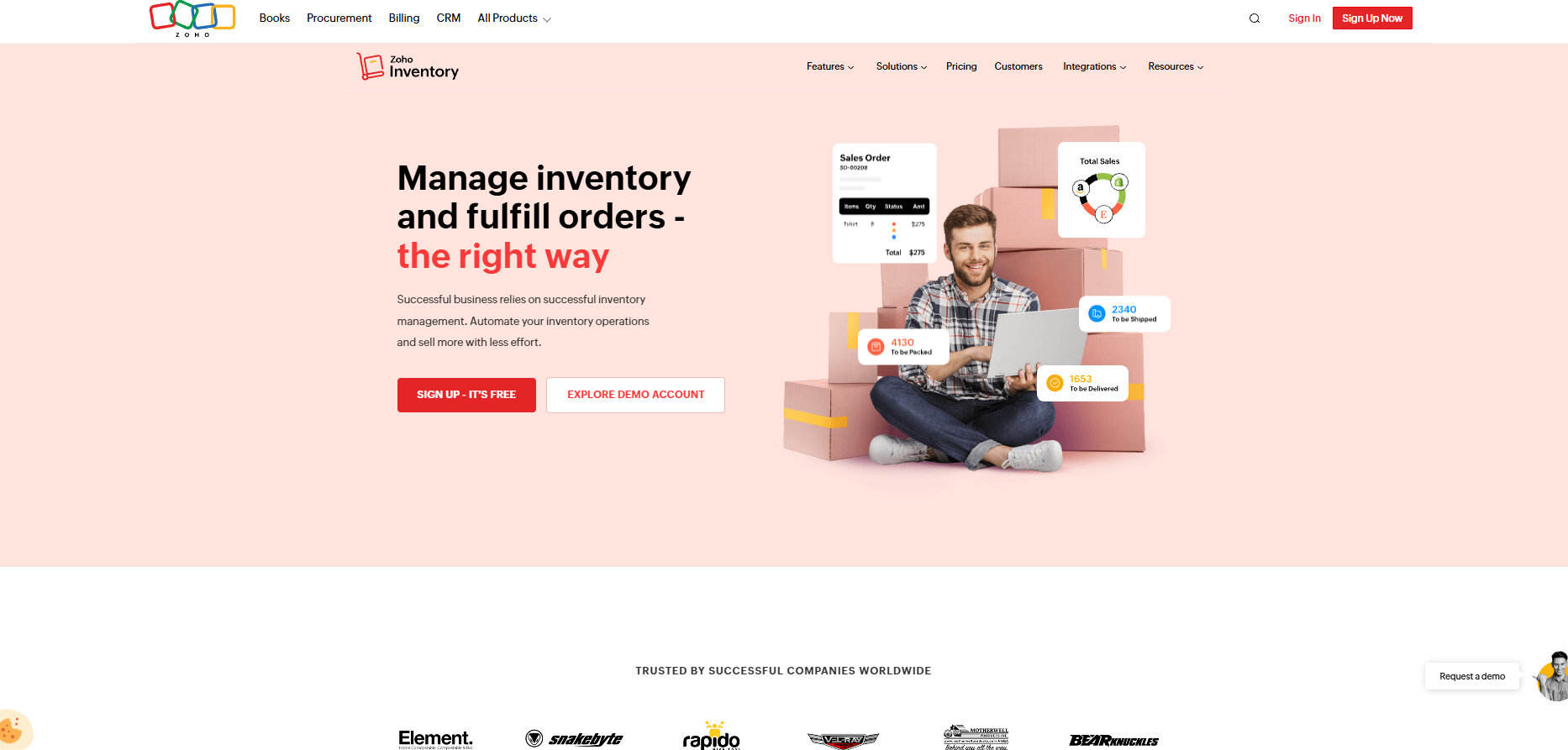
Zoho Inventory is an online inventory management software that suits businesses of varying sizes. It supports order and stock management across multiple warehouses and sales channels. The platform offers tools like barcode scanning and serial tracking that help keep inventory details precise. You can link it with marketplaces like Amazon and Shopify and payment services such as Stripe. It also provides shipping integrations for common carriers including UPS and FedEx, plus mobile apps for managing tasks on the go.
Key Features
Pricing
Zoho Inventory pricing starts with a free plan for up to 50 orders per month and 1 user. Paid plans rise to an enterprise option at $249 monthly, which allows up to 15,000 orders and more users.
Pros & Cons
Why It's a Good Wholesale Inventory Management Software
It combines multichannel sales and order management, making it easier to handle inventory and ship orders efficiently. The real-time data and workflow automation reduce errors common in wholesale processes.
Final Verdict
Zoho Inventory provides a comprehensive set of features designed for wholesalers who handle multiple sales channels and want detailed stock control.
Overview
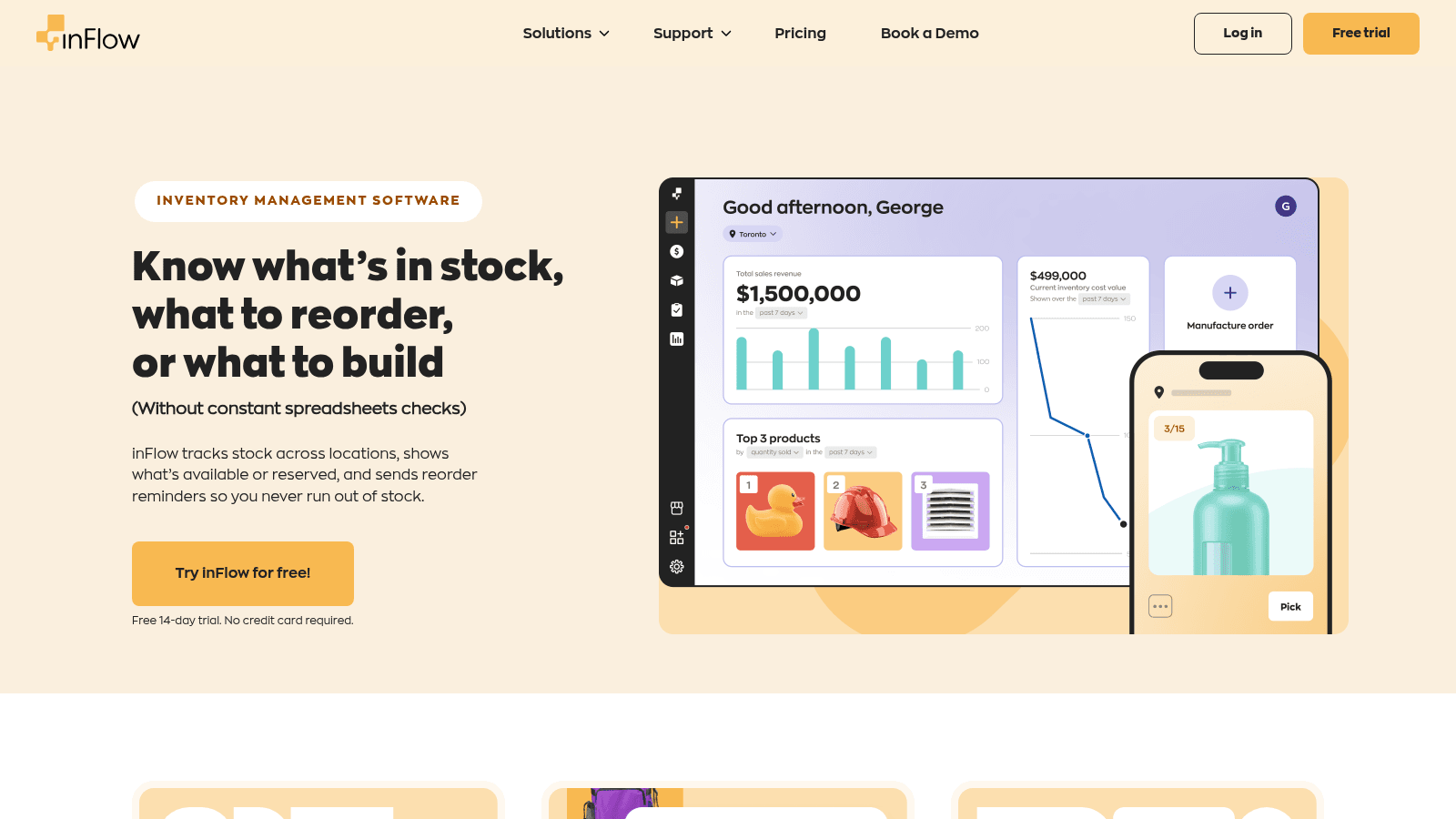
inFlow Inventory is inventory management software built to keep stock updated automatically across locations and sales channels. It syncs orders, returns, and inventory in one shared system to help avoid overselling. You get real-time visibility of available, reserved, and incoming stock in multiple warehouses. The software also supports manufacturing tasks with bill of materials and auto updates inventory after production. Reporting tools offer data on inventory value, stock levels, margins, and reorder points. inFlow integrates with payment and accounting systems like Square, QuickBooks Online, and Xero to keep financials in sync.
Key Features
Pricing
Pricing starts at $89 per month for the core plan, with a free 14-day trial to test real inventory accuracy. More advanced plans and add-ons are available, depending on your needs.
Pros & Cons
Why It's a Good Wholesale Inventory Management Software
inFlow offers continuous stock updates and centralized control, helping speed up order processing and reduce manual errors. Its mobile and integration features support faster order fulfillment in multi-location businesses.
Final Verdict
inFlow Inventory provides detailed stock management and order automation but may involve a learning curve and cost that smaller teams should consider.
Overview
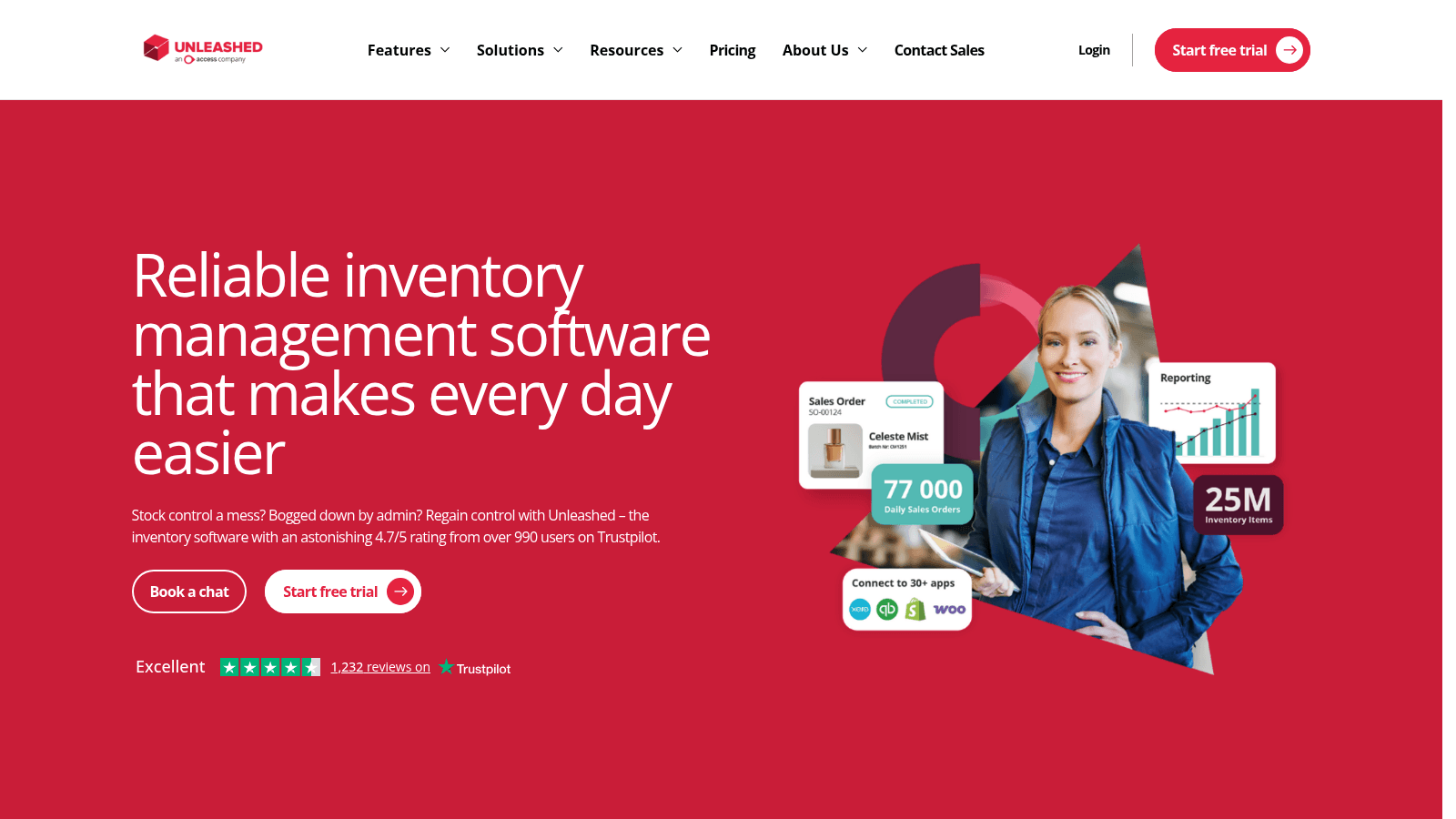
Unleashed is an inventory management software used by businesses to track and control stock. It handles thousands of sales orders and manages millions of stock items. The system allows users to work with multiple warehouses and supports features like batch tracking and serial number management. It connects with popular tools such as QuickBooks, Shopify, and Amazon for smoother operations. This software updates stock levels in real time and includes automated purchase order creation. Available subscriptions scale from small businesses to mid-sized companies with up to 500 employees.
Key Features
Pricing
Pricing starts at $299 per month for the basic plan, with higher tiers offering advanced options. There is a 14-day free trial available for new users.
Pros & Cons
Why It's a Good Wholesale Inventory Management Software
Unleashed handles multiple warehouses and online sales channels with automated features that can speed up order processing and improve accuracy.
Final Verdict
Unleashed provides comprehensive inventory management tools suited for small to mid-sized businesses with multi-location needs but may be complex and costly for smaller teams.
Overview
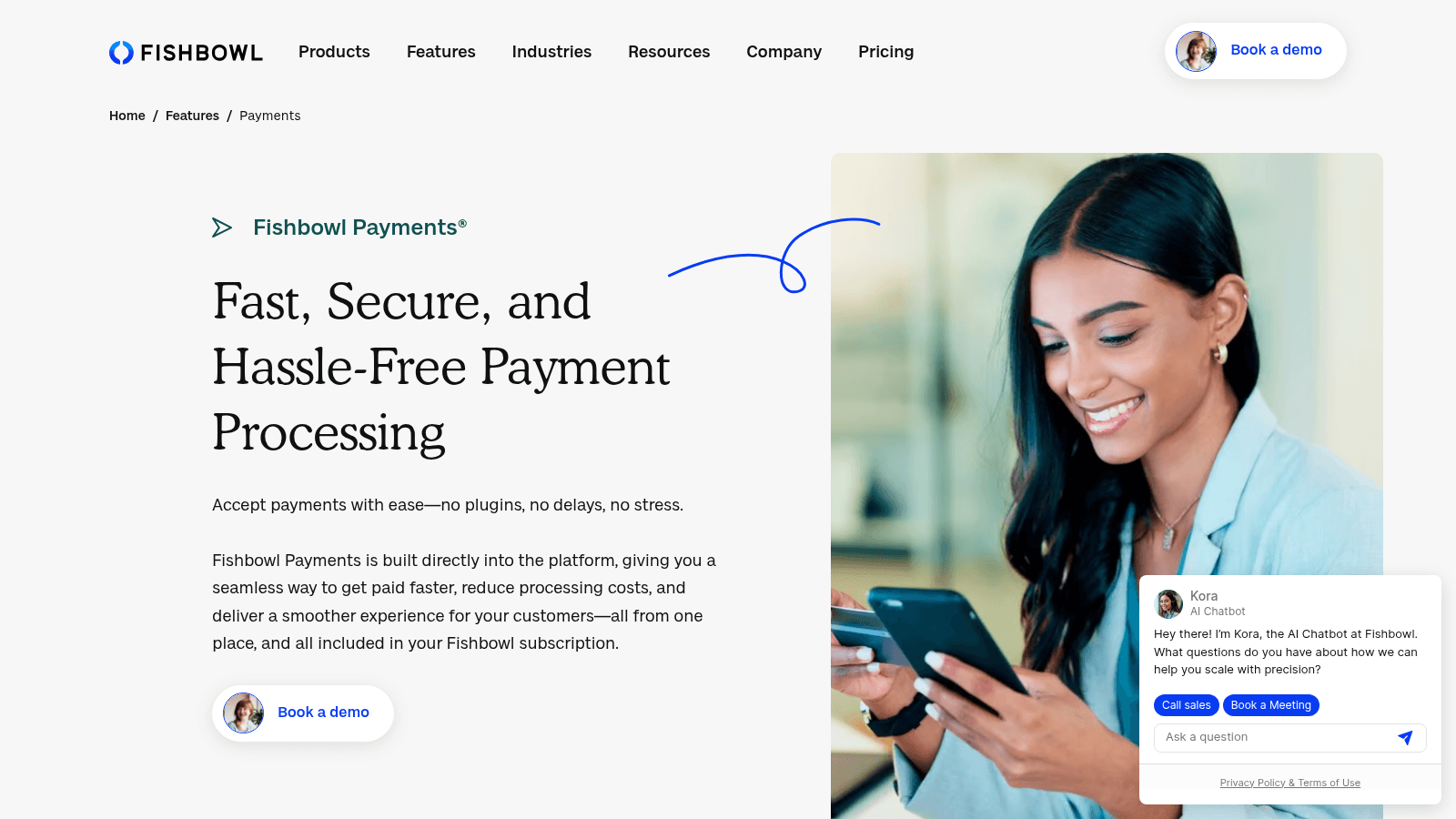
Fishbowl is an AI-driven inventory and manufacturing software built for QuickBooks and Xero users. It aims to save time by automating purchase, work, and manufacturing orders. The system tracks inventory across multiple warehouses in real time. It also flags supply shortages, capacity gaps, and pricing issues. Fishbowl connects with accounting, ecommerce, CRM, and shipping platforms for data flow. Implementation usually takes between 2 to 6 weeks with in-house support available.
Key Features
Pricing
Fishbowl pricing starts at $4,395 for a single license with optional annual maintenance fees. Custom quotes are available for additional features and users.
Pros & Cons
Why It's a Good Wholesale Inventory Management Software
Fishbowl's automation and multi-warehouse tracking can speed up order management and reduce errors. Its integration with accounting solutions helps maintain consistent financial records.
Final Verdict
Fishbowl offers automated inventory management tools suited for companies needing detailed stock control and accounting integration, but it may be less accessible for smaller teams with limited budgets.
Overview
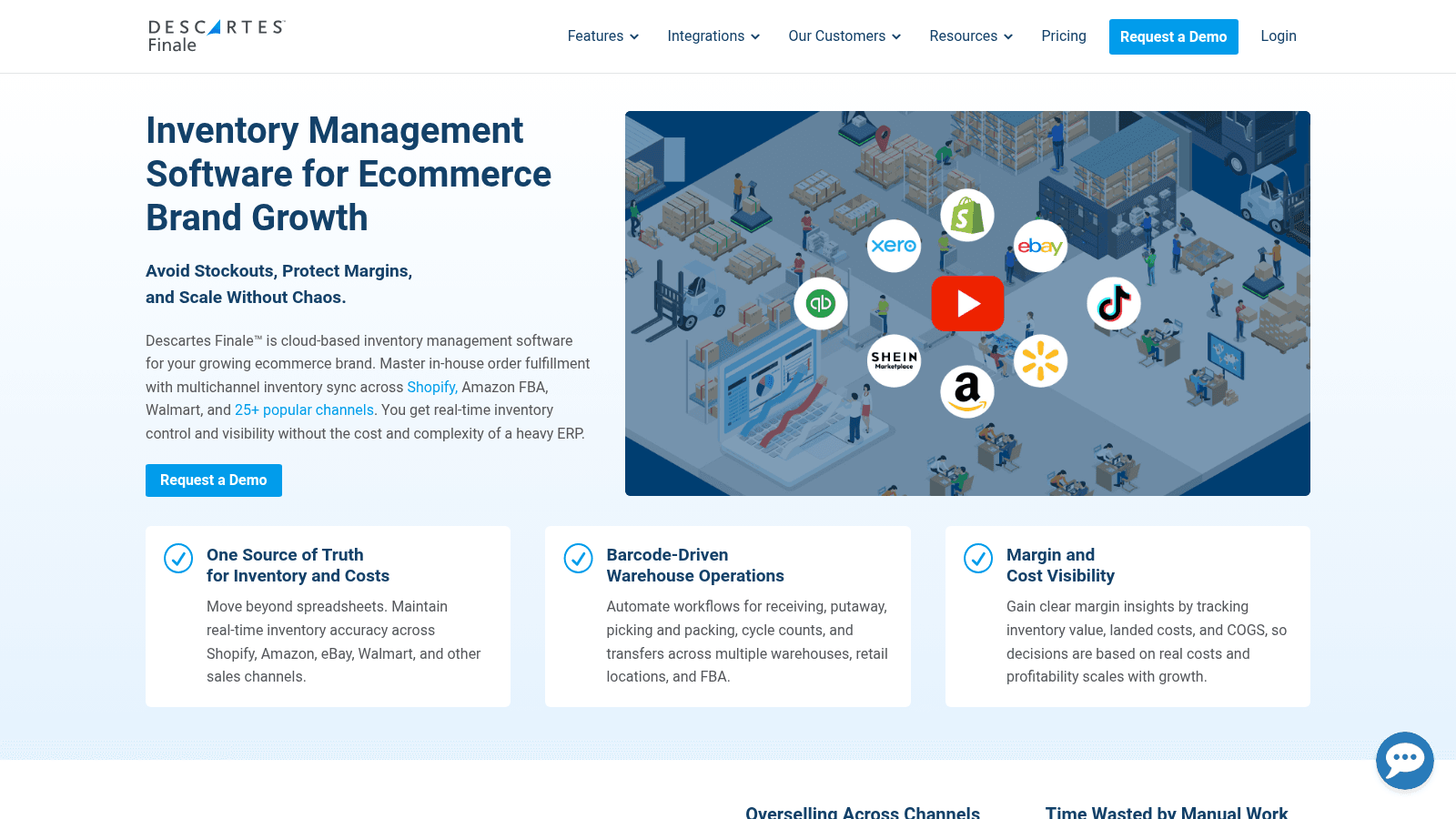
Descartes Finale is cloud-based inventory and accounting software made for growing ecommerce businesses. It syncs your stock levels in real time across Shopify, Amazon FBA, Walmart, and more than 25 other sales channels. This helps keep your multichannel order fulfillment up to date.
The software uses barcode scanning to automate warehouse tasks like receiving, picking, packing, cycle counts, and transfers between warehouses and FBA locations. It also integrates with QuickBooks Online and Xero to track inventory value, landed costs, and cost of goods sold, giving you clearer margin insight.
Users report faster warehouse operations and improved inventory accuracy when using this tool. The platform offers over 100 training videos and supports 50+ integrations. Onboarding is designed to be completed within a few weeks, though smaller teams might find the setup effort more demanding due to its broad feature set.
Key Features
Pricing
Descartes Finale pricing starts at $299 per month and scales based on order volume. Custom pricing options are available for high-volume or enterprise users.
Pros & Cons
Why It's a Good Wholesale Inventory Management Software
It combines inventory tracking and accounting functions in one platform, supporting faster and more accurate order handling across multiple channels. The warehouse automation and real-time syncing help reduce manual work and errors.
Final Verdict
Descartes Finale provides a comprehensive solution for wholesale inventory and warehouse management but may require commitment in time and budget, especially for smaller teams.
Overview
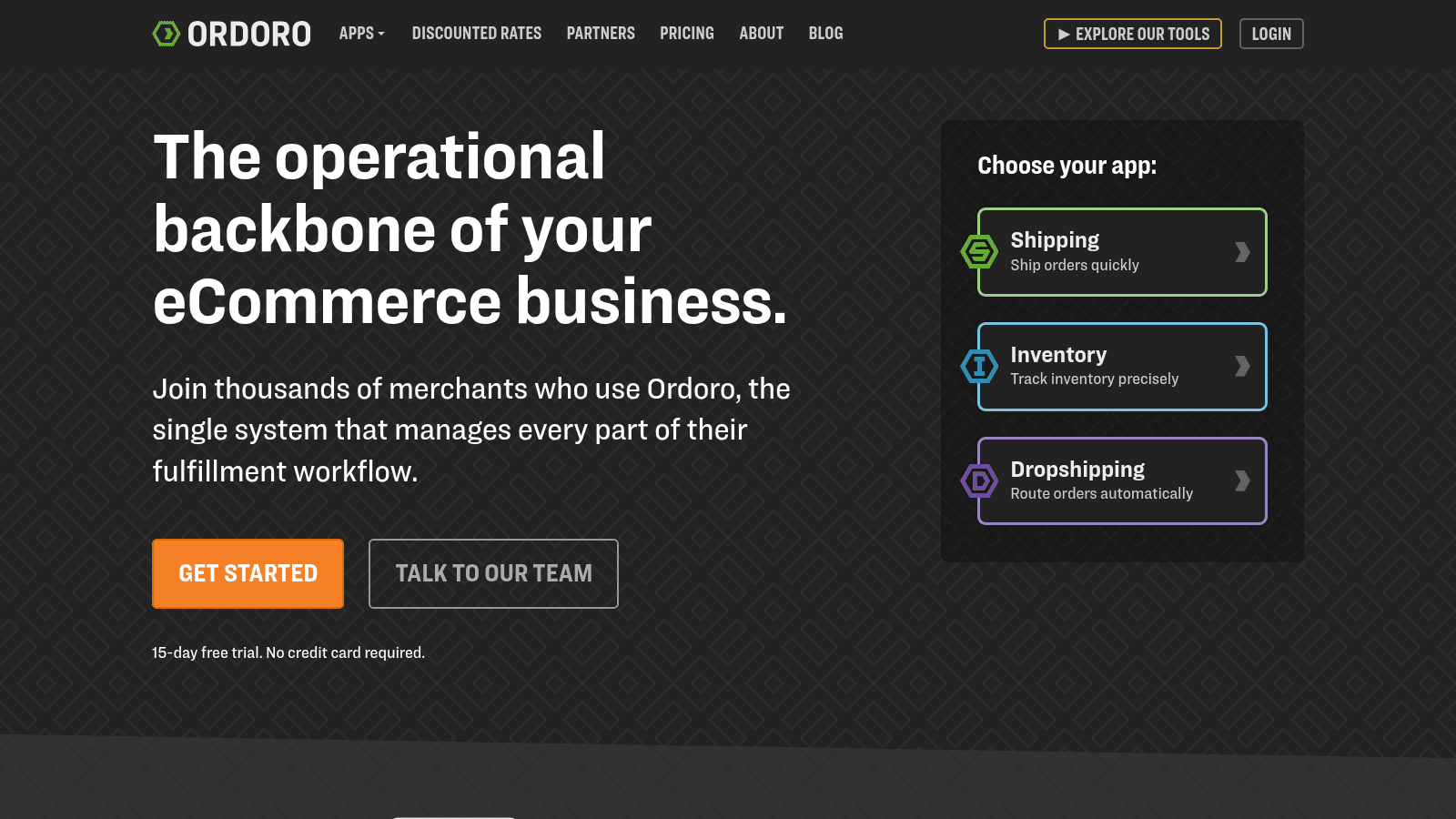
Ordoro is an all-in-one platform that manages shipping, inventory, and dropshipping for eCommerce. It connects to many sales channels, marketplaces, shipping carriers, and accounting tools to keep your data in sync. The platform automates tasks like order allocation, picking, packing, and shipping to reduce mistakes and speed up processes. It supports businesses handling anywhere from a few to thousands of orders daily. A 15-day free trial is available without needing a credit card.
Key Features
Pricing
Ordoro offers a free 15-day trial with no credit card required. Paid plans start at $59 per month and vary based on order volume and features.
Pros & Cons
Why It's a Good Wholesale Inventory Management Software
Ordoro automates key workflows that speed up order fulfillment and reduce stock errors. Its integrations help keep inventory synced across channels, which is important for wholesale order accuracy.
Final Verdict
Ordoro is a platform that handles shipping and inventory tasks for growing businesses but may be more than needed for smaller wholesalers focused mainly on inventory management.
Overview
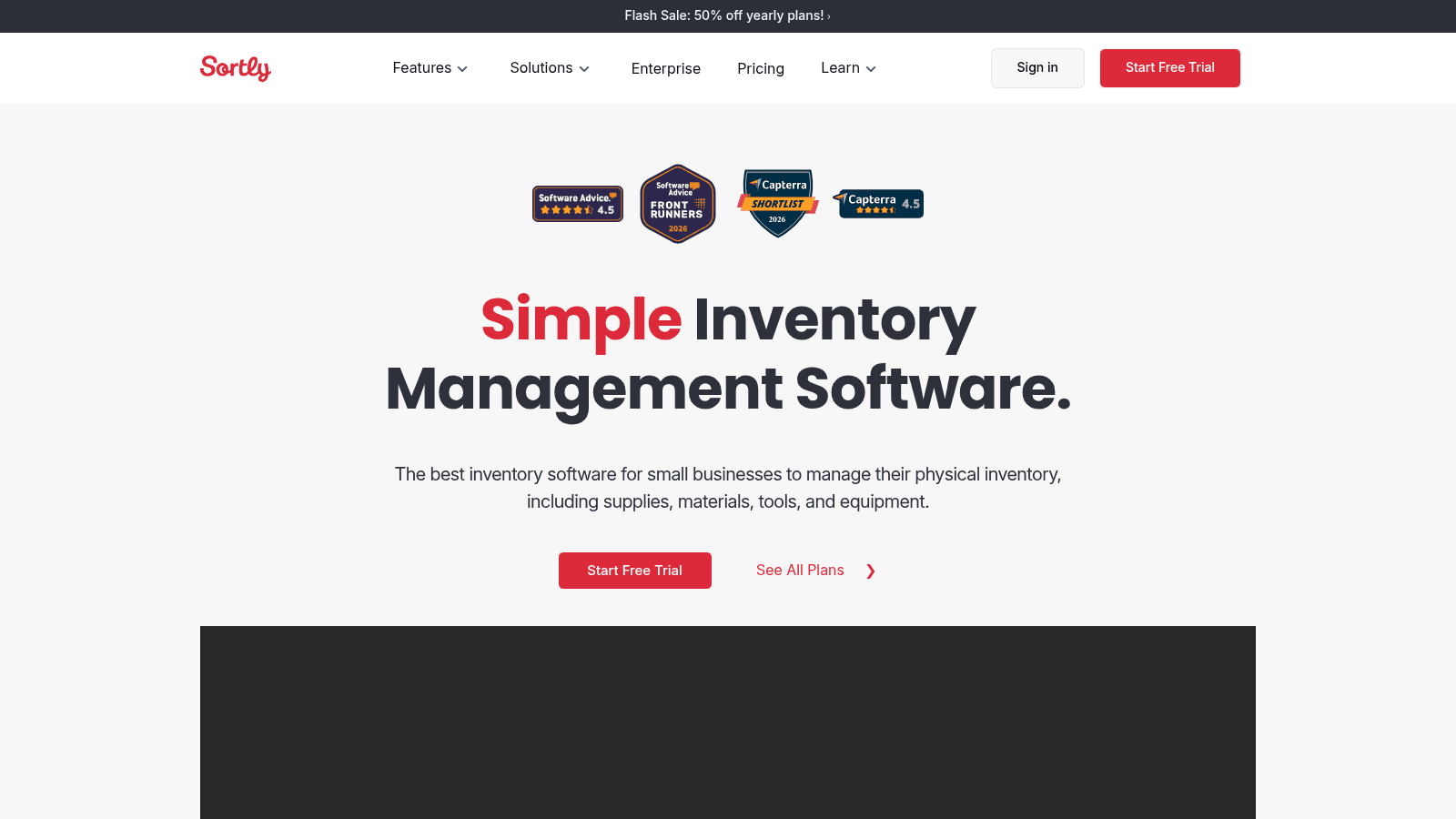
Sortly is an inventory management software designed to help businesses track their stock with detailed organization. It offers mobile app access that works online and offline, so you can update inventory anywhere. The software supports barcode and QR code scanning to speed up item entry and tracking. It also organizes inventory by location, type, and custom fields, which helps keep things clear. Real-time cloud syncing ensures all team members see the latest data on any device.
Key Features
Pricing
Sortly has a free 14-day trial and annual plans with a 50% discount currently available. Pricing varies based on features and user count, starting with basic plans suited for small to mid-size businesses.
Pros & Cons
Why It's a Good Wholesale Inventory Management Software
Sortly's ability to organize items by multiple categories and update inventory in real time helps teams process orders more efficiently. Its mobile and offline capabilities support quicker order handling in fast-paced wholesale settings.
Final Verdict
Sortly offers organized inventory tracking and mobile access, but smaller teams may need to consider its complexity and cost as their business grows.
Overview
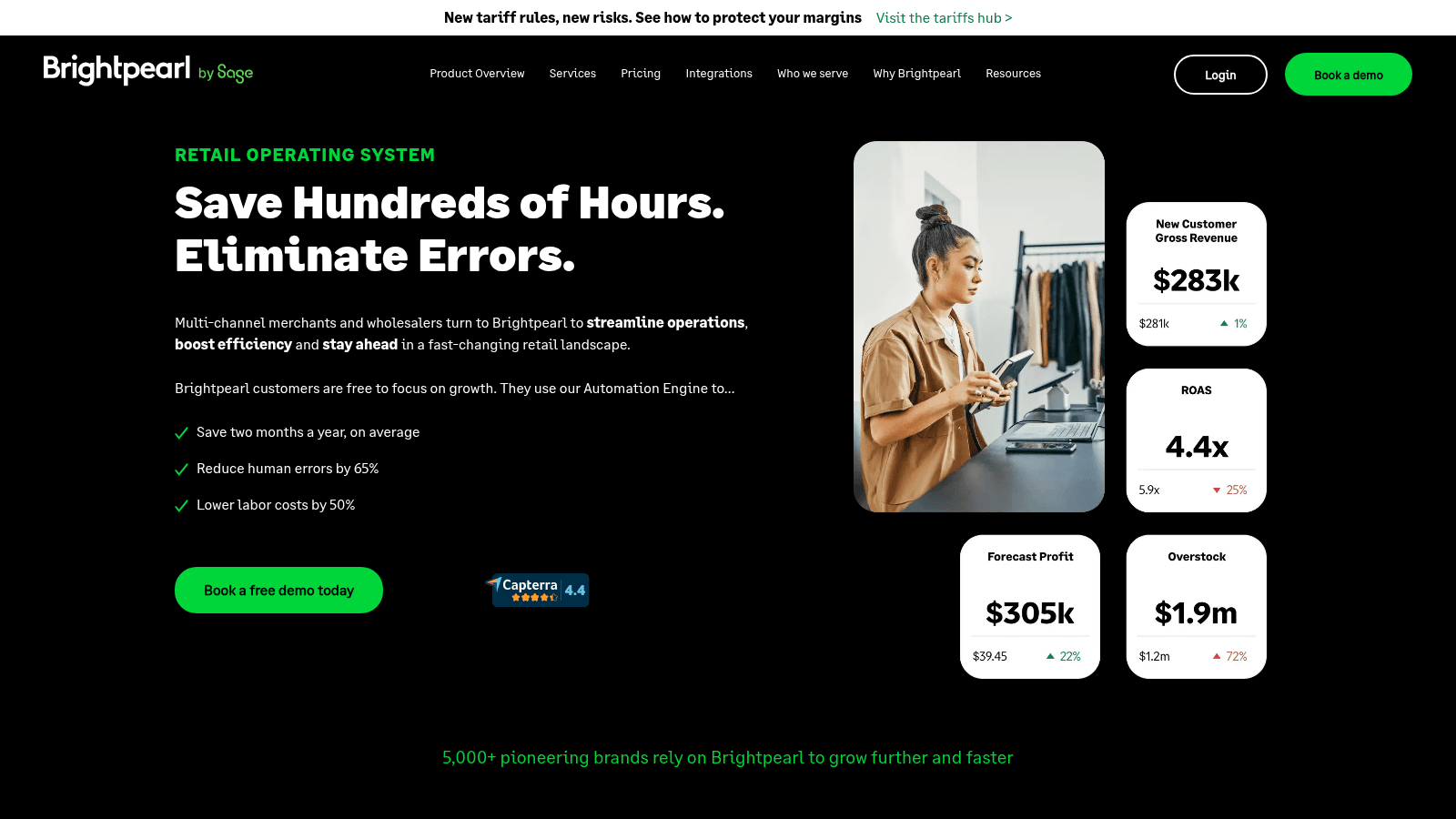
Brightpearl is an operating system for merchants and wholesalers managing multiple sales channels. It aims to organize operations by automating key tasks to reduce mistakes and save time. Users can handle complex order fulfillment and track inventory across various locations. The software also supports shipping and accounting tasks.
It offers tools for forecasting sales and planning inventory to respond to supply chain changes. Brightpearl integrates with platforms like Shopify and Amazon through pre-built apps. It includes consulting and around-the-clock support, helping setup and ongoing use.
Key Features
Pricing
Brightpearl pricing starts at $500 per month. They offer tailored packages based on business needs, with additional consulting and support services included.
Pros & Cons
Why It's a Good Wholesale Inventory Management Software
It automates many order and inventory tasks, saving time in busy wholesale operations. Its multi-location tracking helps maintain stock accuracy across warehouses.
Final Verdict
Brightpearl is a multifaceted system suited for wholesalers needing integrated order, inventory, and accounting management, though it may be more than smaller teams require.
Overview
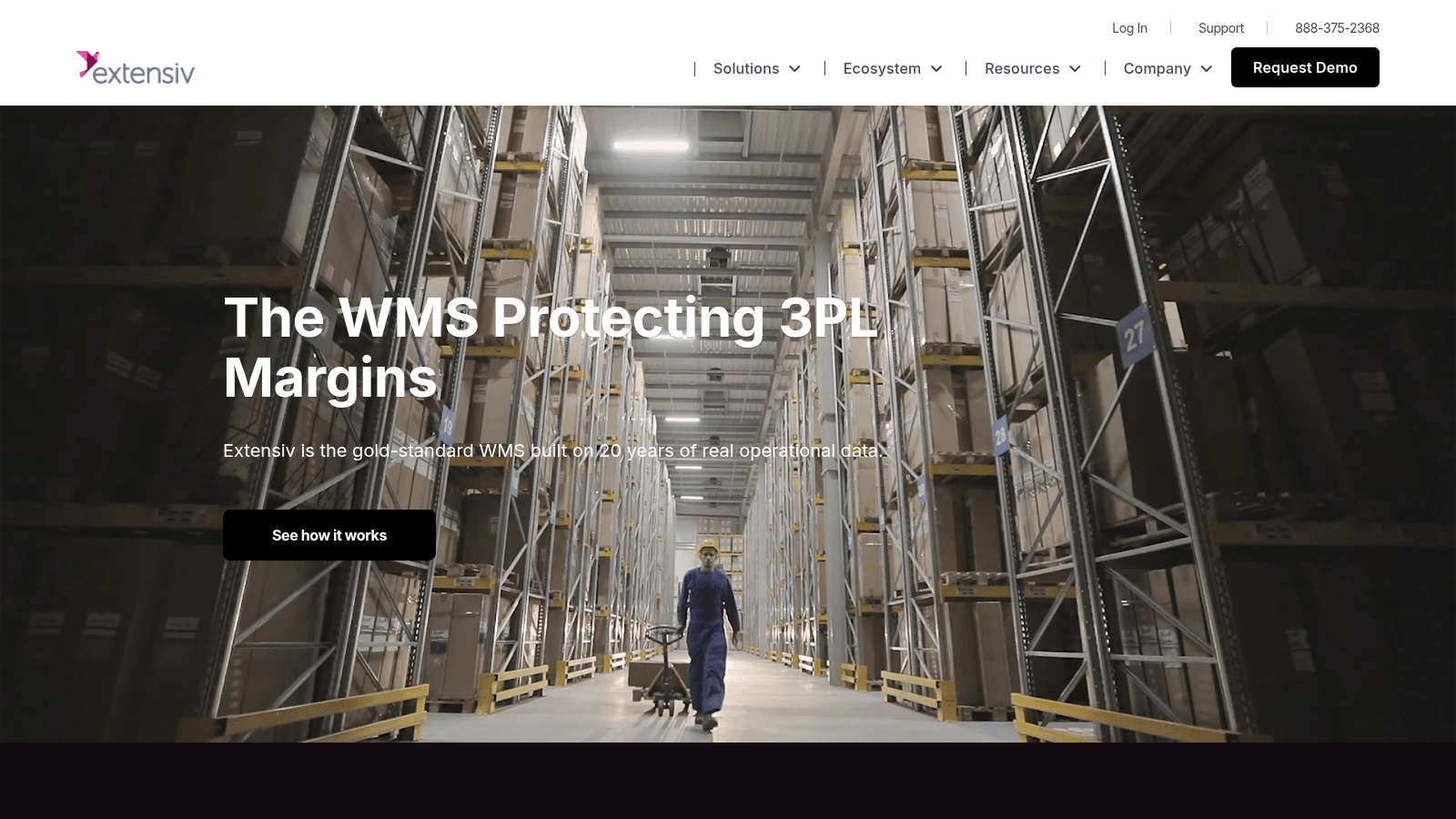
Extensiv is an omnichannel fulfillment software built for third-party logistics (3PL) warehouses and medium to large-scale distribution operations. It automates warehouse workflows including receiving, picking, packing, and shipping to reduce manual work and processing time. The platform includes labor analytics, smart scanning integration, and supply chain automation tools that help track productivity and control costs. Extensiv connects with multiple warehouse technologies and scales with order volume, making it better suited to complex operations than simple inventory tracking.
Key Features
Pricing
Extensiv pricing depends on the chosen modules and custom solutions. Interested users must contact the company for a detailed quote as no standard rates are publicly listed.
Pros & Cons
Why It's a Good Wholesale Inventory Management Software
Extensiv helps cut order processing times through automation and better labor tracking. It supports growing warehouses needing to manage more orders and customers without increasing errors.
Final Verdict
Extensiv is designed for warehouses that handle high order volumes and want detailed operational control, but it may be too complex for smaller teams looking for simple inventory management.
Overview
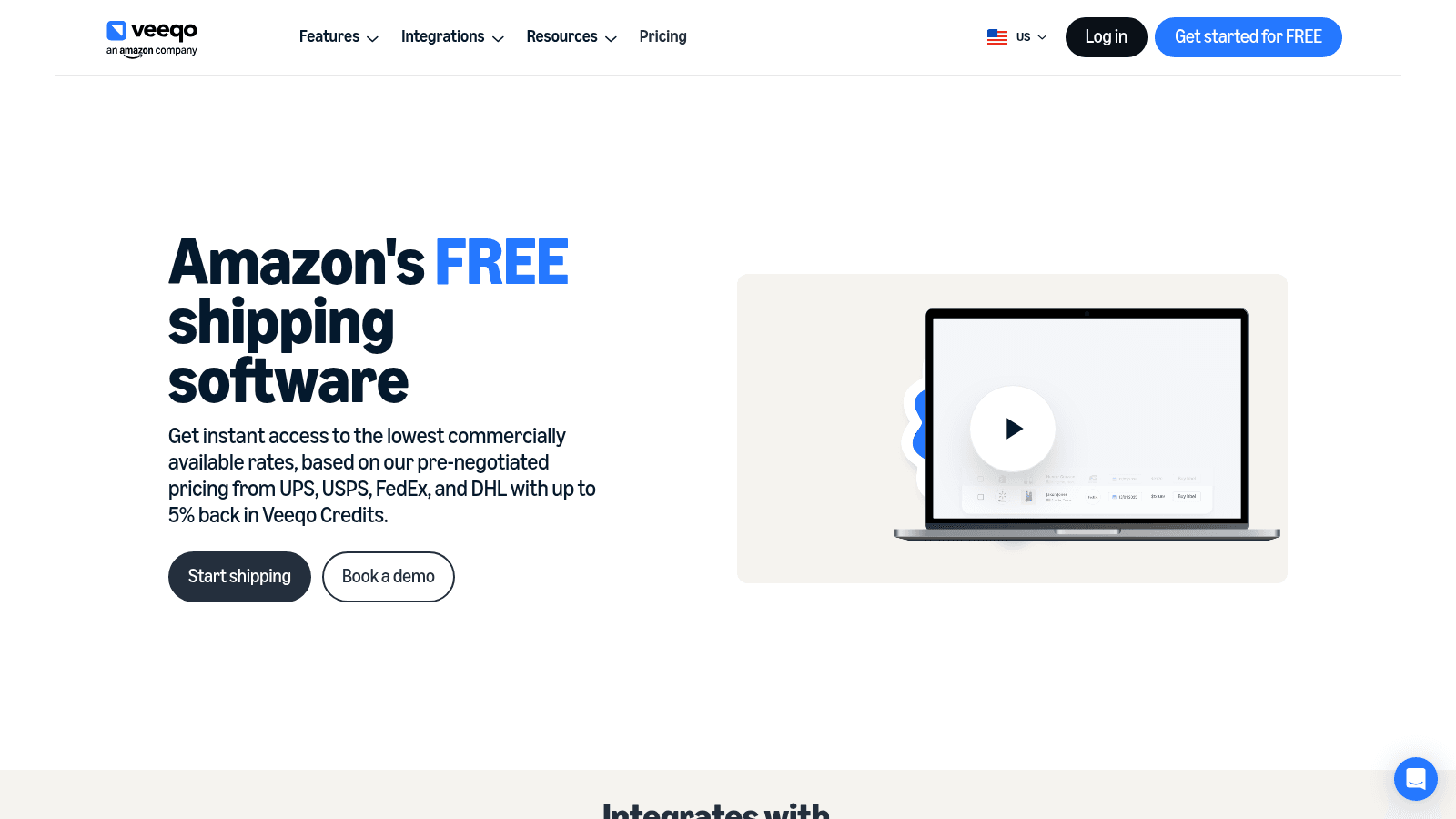
Veeqo is a multichannel shipping and inventory management software owned by Amazon since 2021. It supports unlimited users and shipments, with shipping features available free alongside up to 5% cashback in credits. Inventory management starts at $19 per month and offers real-time stock syncing and automation. The system includes digital picking to speed up order fulfillment.
It integrates with popular platforms like eBay, Shopify, Amazon, Etsy, Walmart, and WooCommerce. Veeqo supports major shipping carriers including UPS, USPS, FedEx, and DHL. The software also includes protection for Amazon seller accounts, helping to safeguard important seller metrics.
Users can buy and print shipping labels in bulk, up to 100 at a time. Customer support runs 17 hours on weekdays and 9.5 hours on weekends, with an AI assistant available 24/7. Setup takes only minutes, with over 100,000 sellers using the platform.
Key Features
Pricing
Inventory management starts at $19 per month, with shipping features available for free up to a certain limit. Additional costs vary based on the volume of shipments and added features.
Pros & Cons
Why It's a Good Wholesale Inventory Management Software
Veeqo provides a combination of inventory control and shipping management in one platform. It helps users manage large order volumes while syncing stock across multiple sales channels.
Final Verdict
Veeqo offers a mix of inventory and shipping features suited for wholesalers needing multichannel order management integrated with major carriers and marketplaces.
Choosing the right wholesale inventory management software means looking past the feature list and focusing on what actually affects day-to-day operations. Here's what we prioritized:
We also looked at how well each platform integrates with existing tools like accounting software, shipping carriers, and ERP systems. The goal was to identify solutions that genuinely reduce manual effort and help wholesale teams move orders faster, not just add more software to manage.
When picking wholesale inventory management software, focus on features that speed up order processing and keep stock accurate. Look for tools that make your daily work easier and cut down on mistakes. Here are the key features that matter most:
For food distributors specifically, tools that handle procurement ordering can reduce the time spent on restocking. VoiceOrder Solutions works alongside inventory platforms to let buyers place supplier orders by voice, cutting down manual entry for that part of the workflow.
Most wholesale inventory tools can tell you what a case cost on the purchase order. Fewer can tell you what it cost by the time it reached your shelf, and that second number is the one your margin runs on.
Landed cost is the purchase price plus everything you paid to get the goods into your warehouse: inbound freight, customs duty, insurance and handling fees. Microsoft's Business Central documentation gives a clean example. Buy 100 units at $10.00 each, assign $200 of freight and $100 of duty to the receipt, and each unit lands at $13.00.
Price that product at $12.00, a 20% markup on the purchase price, and you lose $1.00 on every unit you sell.
Freight and duty usually arrive on one bill for a whole shipment, so the software has to split them across the lines on the receipt. Business Central offers four ways to do it: equally, by amount, by weight or by volume.
Match the method to what drives the charge. Freight on a mixed pallet follows weight, so a case of canned tomatoes should carry more of it than a case of napkins, while duty charged as a percentage of value is better spread by amount.
A product inventory management system for wholesale should store landed cost per unit, recalculate it when a late freight bill arrives, and pass it to your accounting integration. Four questions settle it in a demo:
If the answer to the last question is purchase price, every imported or freight-heavy line will look more profitable on your reports than it is, and you will find out at year end rather than when you quote.
Finding out usually means a price has to move, and before you move one it is worth knowing how much volume the new price can afford to lose.
Before you move a price, see the new margin, the profit swing per case, and how much volume you can lose or must gain to come out ahead.
Today's price
The change
Put the landed cost in the cost field, not the purchase price, because it changes the answer. On a $30.00 case, a 5% cut needs 23.1% more volume to hold profit at a $22.00 cost, and a third more once that cost lands at $24.00. Thin real margins punish price cuts hardest, which is exactly what a purchase-price report hides.
Start by matching the software to the size and complexity of your business. A platform built for enterprise 3PL warehouses is likely to overwhelm a small wholesale team, while a simple tracking tool may not scale as your order volume grows.
Next, check what integrations you need on day one. If your business runs on QuickBooks and Shopify, confirm the software connects with both before committing. Missing integrations often lead to manual workarounds that cancel out the time savings.
Consider how your team will actually use it. A complex system that requires weeks of training may create more disruption than it solves, especially if your team is small. Look for platforms with a free trial or guided onboarding so you can test fit before committing to a contract.
Finally, factor in total cost of ownership, not just the monthly fee. Some platforms charge per user, per order, or for integrations on top of the base price. Others include setup fees or require third-party consultants for implementation. Getting a clear picture of all-in costs helps avoid surprises after you have signed up.
Pricing across the platforms covered in this article ranges considerably. Entry-level options start at around $19 per month (Veeqo) or $59 per month (Ordoro), with mid-range tools like inFlow Inventory ($89 per month) and Katana and Unleashed (both $299 per month) offering more inventory depth. Cin7 starts at $349 per month, and Brightpearl at $500 per month for larger or more complex operations. Fishbowl uses a one-time licence model starting at $4,395. Extensiv does not publish pricing and requires a custom quote.
Zoho Inventory offers a free tier for low-volume businesses, which makes it a reasonable starting point for teams with fewer than 50 orders per month.
Most vendors offer a free trial or demo period before purchase. When comparing options, look at total cost including users, integrations, and any onboarding fees, not just the headline monthly rate.
Implementation timelines vary depending on the platform and the complexity of your existing systems. Cloud-based tools with straightforward setups, like Zoho Inventory, Sortly, or Veeqo, can be operational within a few days. Mid-range platforms like inFlow Inventory and Ordoro typically take one to two weeks, particularly when integrating with existing accounting or shipping tools.
More feature-rich systems like Cin7, Katana, and Unleashed generally require two to four weeks due to data migration and integration configuration. Fishbowl estimates two to six weeks with in-house support. Brightpearl and Extensiv, designed for larger operations, often involve a structured onboarding project that can run four to eight weeks or longer.
In most cases, vendors provide onboarding support, training resources, and integration guides. Preparing a clean export of your current stock data before starting speeds up the migration significantly.
Free tiers can be a good starting point for small businesses with low order volumes and straightforward inventory needs. Zoho Inventory's free plan supports up to 50 orders per month for a single user, making it practical for early-stage wholesalers testing the software before upgrading.
Most free options, however, carry real limitations: restricted order volumes, fewer integrations, limited user seats, and no access to automation features like reorder alerts or demand forecasting. As order volumes grow, those gaps become harder to work around without manual effort.
For businesses already processing significant order volumes, a paid platform typically pays for itself through time savings on manual tracking, fewer stockout incidents, and reduced order errors. The right question is not whether free software costs less upfront, but whether the limitations slow your team down enough to offset the saving.
A demo shows you the vendor's sample data at its best. A trial with your own data shows you the gaps, and gaps are what separate the top inventory management software for wholesale, because every tool on this list can track stock and sync orders in a slide deck.
Before the trial starts, export 50 to 100 of your real SKUs with their units of measure, quantities and costs, plus a week of real customer orders. Then run these six tests in order and time each one:
Speed matters as much as the result. A task your team repeats 40 times a day that takes 20 seconds longer in one system costs more than an hour a week, and no feature list will show you that.
Score each tool on the six tests and take the scores into the pricing conversation. The best inventory management software for wholesale is the one that passes your tests with your data at a price you can defend, and that is often not the tool that looked strongest in the demo.
Wholesale inventory management software makes a real difference when it is matched to the size and complexity of the business. Platforms like Zoho Inventory and Veeqo suit smaller teams or those starting out, while Brightpearl, Cin7, and Extensiv are built for higher-volume or multi-location operations.
The tools covered here handle the stock tracking, channel syncing, and order automation that keep wholesale businesses running smoothly. For food distributors who also want to cut the time spent calling in or manually entering restocking orders, VoiceOrder Solutions works alongside any inventory platform, letting buyers place supplier orders by voice in a fraction of the usual time.
Matching the right inventory software to your workflow, and adding complementary tools where they genuinely help, is what keeps orders accurate and operations moving. If you're ready to explore what a faster ordering setup could look like, contact VoiceOrder Solutions for a demo.
Begin by syncing your current inventory and orders into the software. Use simple features first, like real-time tracking. Gradually add more tools as your team gets familiar. Keep training short and hands-on to make the transition smooth for everyone.
Yes, it helps a lot. Mobile access means team members can update stock right on the floor or out in the field. This cuts down mistakes from delayed or manual updates. Real-time info means orders reflect what's actually available.
Automation cuts repetitive tasks like manual stock checks and order entry. Faster updates and alerts mean you know exactly when to reorder. Voice or mobile ordering can save minutes per order, adding up over time to big gains.
Look for real-time syncing, easy mobile access, and smooth integration with your sales tools. Alerts for low stock and batch tracking are also important. The simpler the system handles these, the less time your team wastes on fixes.
Yes, some affordable options offer key features like stock tracking and order syncing. However, very cheap or free software might miss advanced tools like automation or voice ordering. It pays to balance cost and functionality for your needs.