See what it really costs to move one more case, and whether the extra volume is worth taking on.
Your operation today
$
Warehouse, trucks, salaries, insurance. Costs that do not move with volume.
$
Product cost, freight in, pick and pack, fuel per case.
cases/mo
$
The extra volume you are considering
cases/mo
Volume after the new account or route is added.
$
Per month. An added truck, driver, route, or cooler space. Enter 0 if it fits in what you already run.
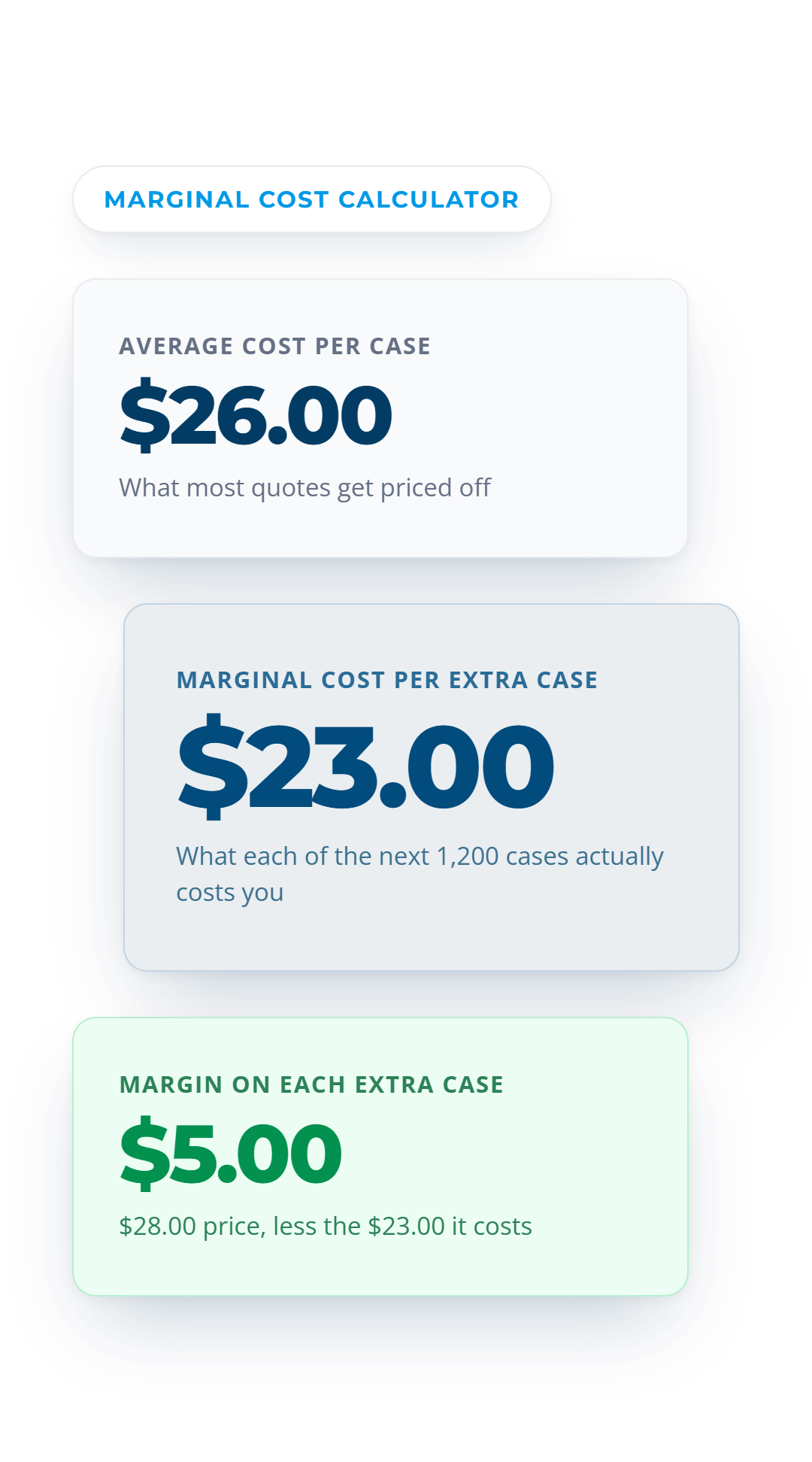
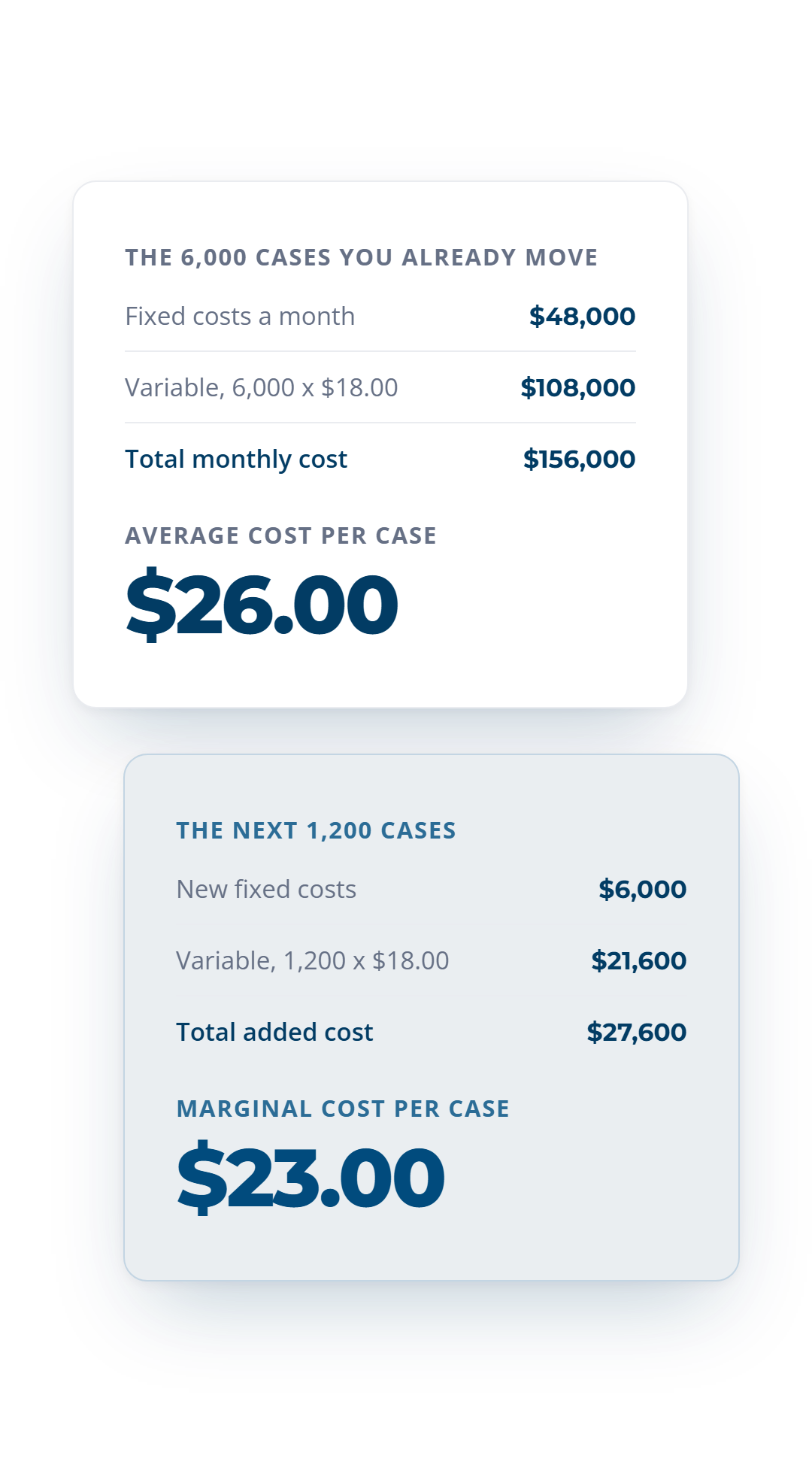
Marginal cost per extra case
$23.00
What each of the 1,200 extra cases actually costs you
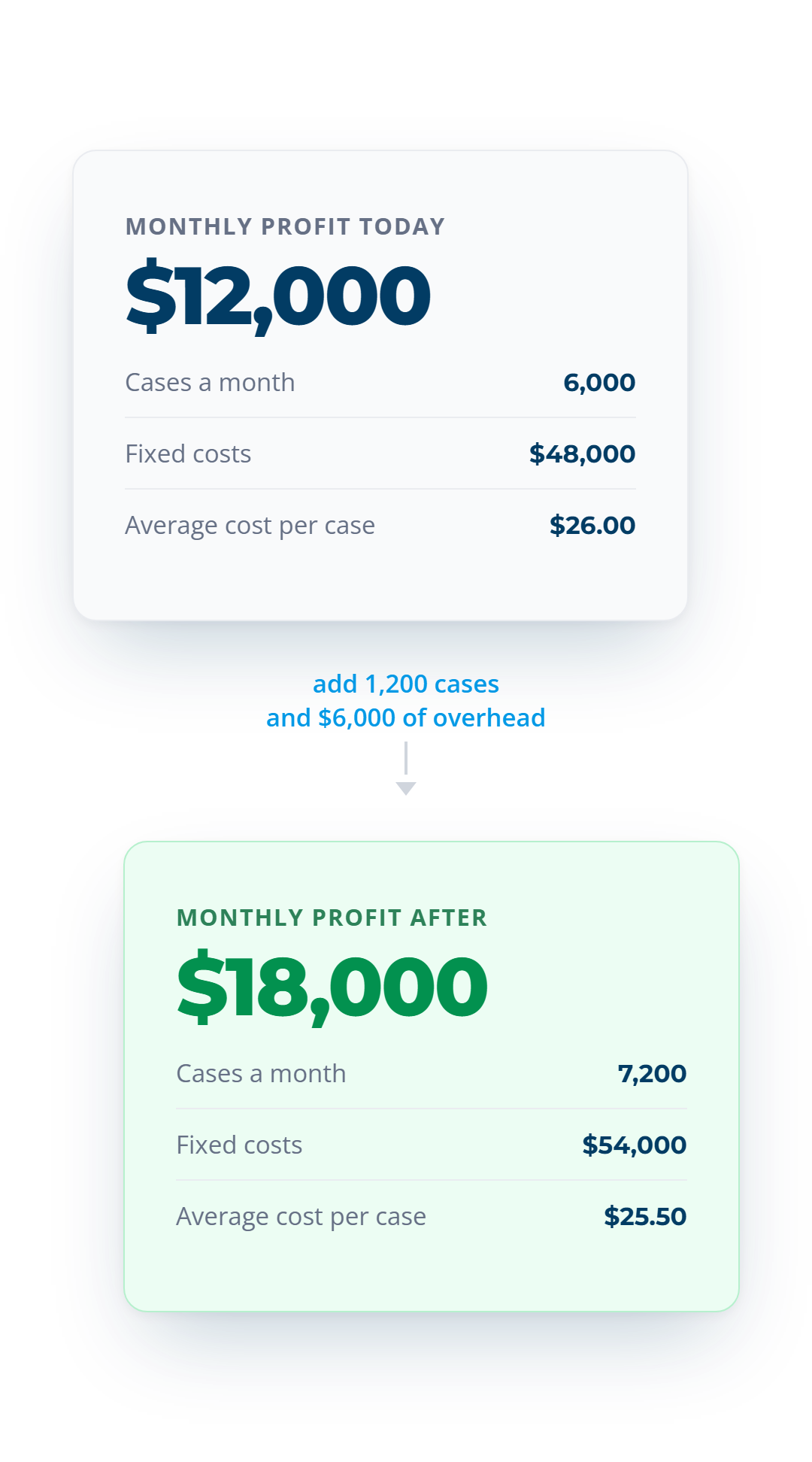
Monthly profit change
+$6,000
$12,000 today, $18,000 after
Margin on each extra case
$5.00
Selling price minus marginal cost
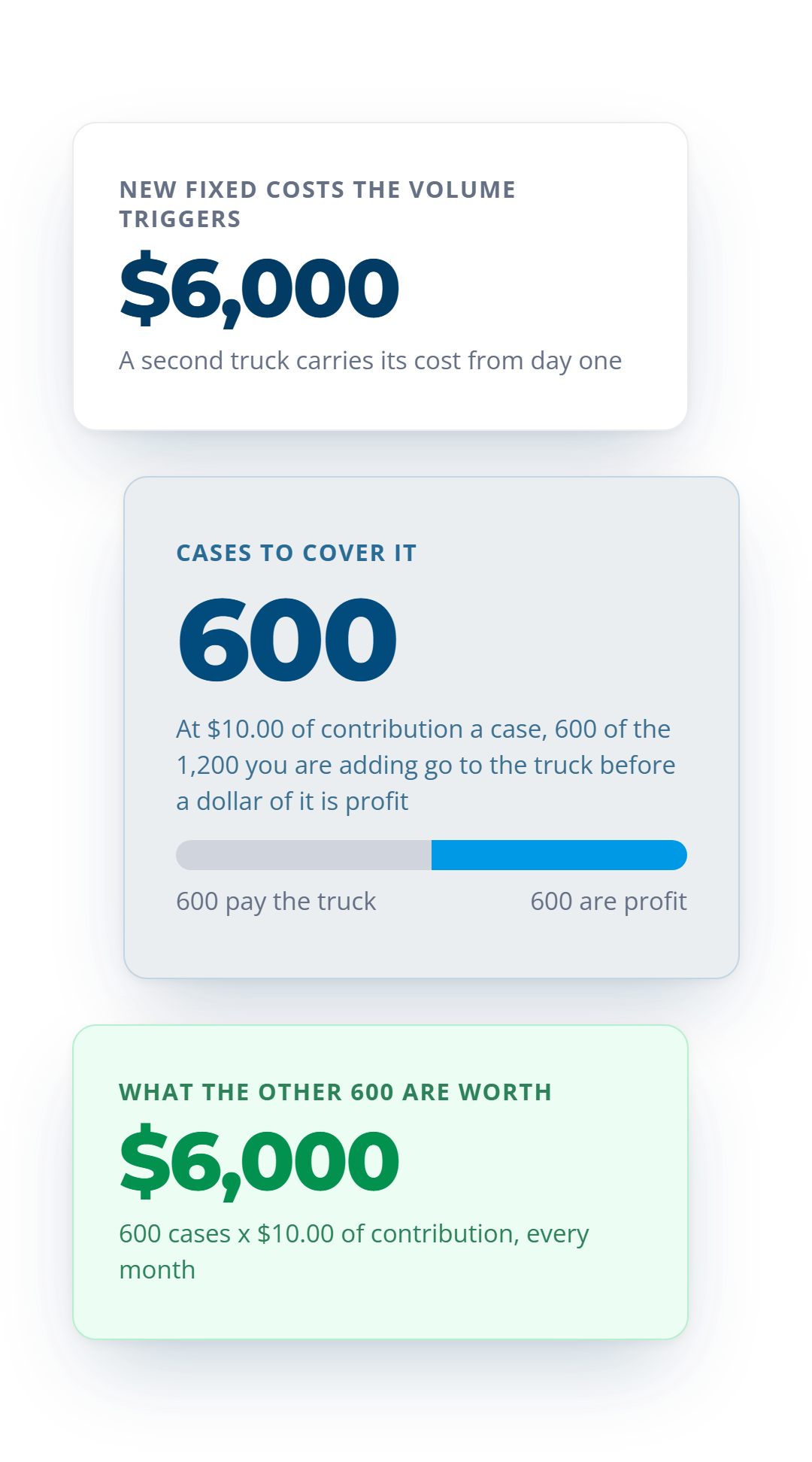
Cases to cover the new fixed cost
600
Break-even on the added overhead
Average cost per case
$26.00 → $25.50
Today, then after the extra volume
Contribution margin per case
$10.00
Price minus variable cost, before fixed costs
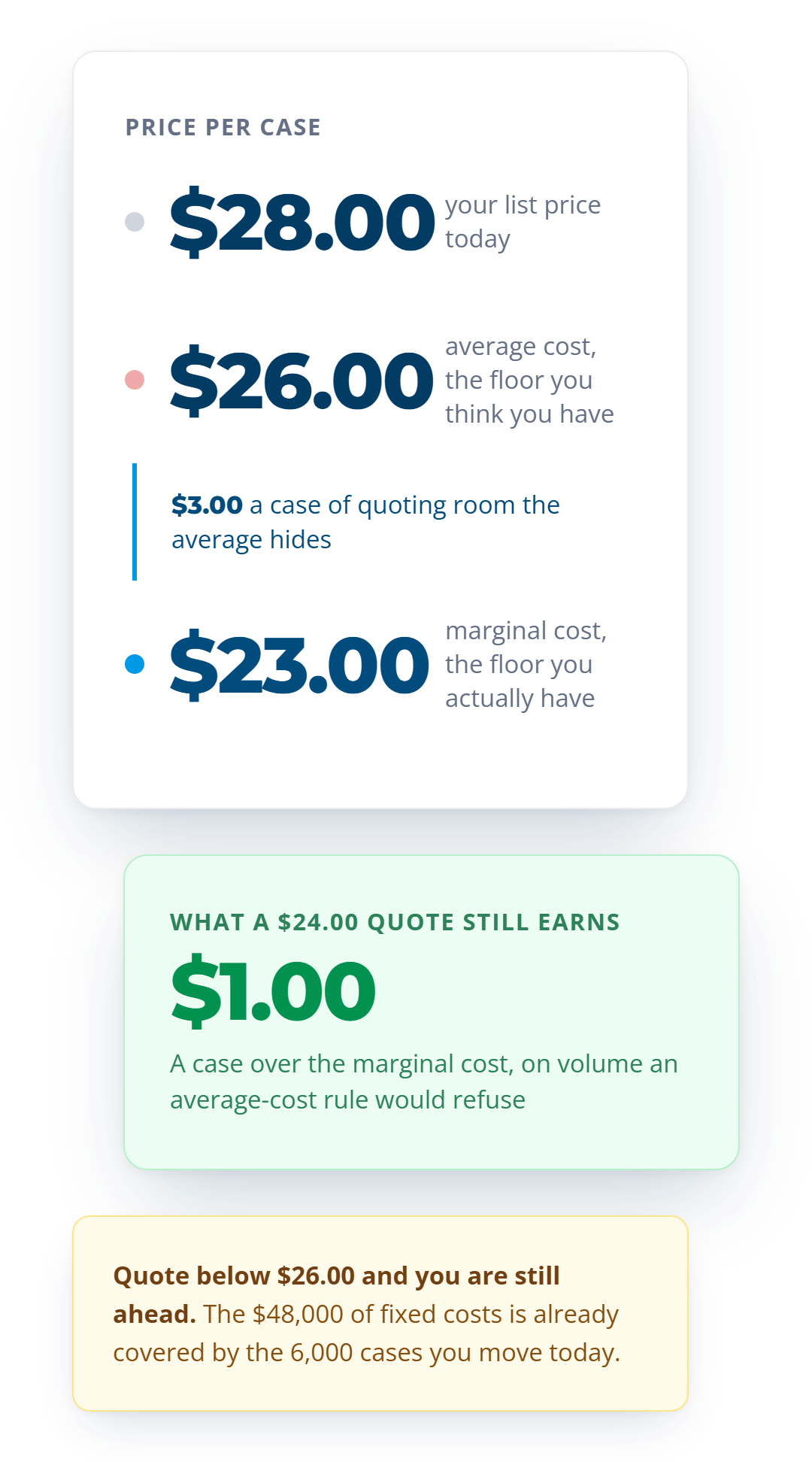
Your average cost is $26.00 per case, but the next case only costs $23.00. Price off the average and you will turn down volume that would have made you money.
Growing volume should not mean more order entry.
VoiceOrder Solutions captures orders 24/7 and sends them straight to your system, so your reps can add accounts instead of retyping them.
Estimates only. Confirm your cost figures before committing to new volume.
$23.00
what the next case costs, against a $26.00 average
$5.00
margin on each extra case at a $28.00 price
600
cases to cover an added $6,000 route
Sound Familiar?
Your average cost is telling you to turn down good volume
Most distributors still price new volume off their average cost per case. Here is what that habit costs you.
"We passed on a load because the price looked below our cost"
A $27.00 offer looks like a loss against a $26.00 average. The next case only costs $23.00, so the volume would have paid.
"We added a route and the margin never showed up"
A new truck carries its fixed cost from day one. Without a break-even in cases, you find out it was early a quarter later.
"My rep quoted a number he could not defend"
Reps need a floor on the spot. Without one the number comes from memory, and the margin on the load is a surprise.
Three Steps
How to use the marginal cost calculator
Enter what you run today, add the volume you are weighing, and read the cost of the next case.
1
Enter your operation today
Fixed costs per month, variable cost per case, your current cases, and your selling price per case.
2
Add the volume you are weighing
The new total cases, plus any step cost the volume triggers, like a second truck or an added route.
3
Read the marginal cost and compare
Put the cost of each extra case next to your price. If the price clears it, the volume pays, even below your average cost.
Built For Distributors
What the calculator shows you
Marginal cost
The cost of the next case, not the average
Your average spreads fixed costs over the volume you already move. The marginal cost counts only what the next case adds, so it is the number a new account has to clear.
A second truck carries its cost from the first day. The calculator turns that into a case count, so you know how much volume the route needs before it pays.
Volume that looks good per case can still shrink profit once a step cost lands. The calculator shows profit before and after, so the decision is a number.
Marginal cost is the cost of moving one more case: the product, freight and handling, plus any new fixed cost the extra volume triggers, like an added route.
How do you calculate marginal cost?
Divide the change in total cost by the change in cases. Work out total cost before and after the new volume, including any step cost, subtract one from the other, then divide by the extra cases.
What is the difference between marginal cost and average cost?
Average cost spreads every cost across every case. Marginal cost counts only the next case, which is usually cheaper because your fixed costs are already covered by today's volume.
Why does marginal cost matter for pricing?
It sets the floor for new volume. As long as the price clears the marginal cost and covers any new route, the account makes you money, even when the price sits below your average cost.
What is a step cost?
A fixed cost that appears all at once when volume crosses a line, like a second truck, a driver or extra cooler space. It belongs in the marginal cost of the volume that triggered it.
How can a distributor lower marginal cost?
Fill the trucks and routes you already run before adding new ones, since an added truck raises the cost of every case on it until the volume catches up.
Should you ever price below your average cost?
Yes, when the price still clears the marginal cost and any step cost the volume adds. Below that floor the volume costs you money.
Adding volume should not mean adding order entry.
VoiceOrder Solutions captures your customers' orders 24/7 and sends them straight to your system in your format, so the accounts you win do not bury your team in typing.
.webp)